One of these hypoallergenic breeds might help reduce your allergic reactions.
Have you been longing to add a cat or dog to your home but thought your allergies prevented you from joining the ranks of happy pet owners? While no animal is completely free of allergens, several cat and dog breeds are considered “hypoallergenic,” meaning they have fewer allergens than other breeds, making them less likely to cause allergic reactions in people.
Take a look at the sampling of hypoallergenic breeds described below; talk to your doctor about the severity of your allergies; and then consider adding one of these adorable breeds to your home. Please note: These lists are not all inclusive—many other breeds enjoy reputations as hypoallergenic pets.
Airedale Terrier: The largest of all the terrier breeds, the Airedale Terrier can reach 23 inches in height and can weigh from about 50 to 65 pounds. The dog’s coat has two layers: a dense, wiry topcoat and a short, soft undercoat. The fur does not shed excessively, which helps contribute to the breed’s hypoallergenic reputation. This is a high energy dog who thrives when he has a job to do—otherwise, he might give himself the job of digging up your vegetable garden.
Bichon Frise: This small, fluffy white dog makes a friendly, playful companion while enjoying a reputation as a breed that causes fewer allergic reactions. The distinctive coat does not shed as much as those of other breeds, though they do require regular grooming. When full grown, the Bichon Frise stands about 10 inches tall and weighs 7 to 12 pounds.
Poodle: This affectionate, clever, elegant canine has won the hearts of dog lovers for hundreds of years. The distinctive curly coat—which can be professionally groomed into a work of art or clipped close for easier care—is known for its non-shedding qualities. Still, owners will need to groom them frequently to prevent the coat from matting. The breed comes in three sizes: toy (10 inches tall, 6 to 9 pounds), miniature (11 to 15 inches tall, 15 to 17 pounds) and standard (15 to 22 inches tall, 45 to 70 pounds).
Cats
Colorpoint Shorthair
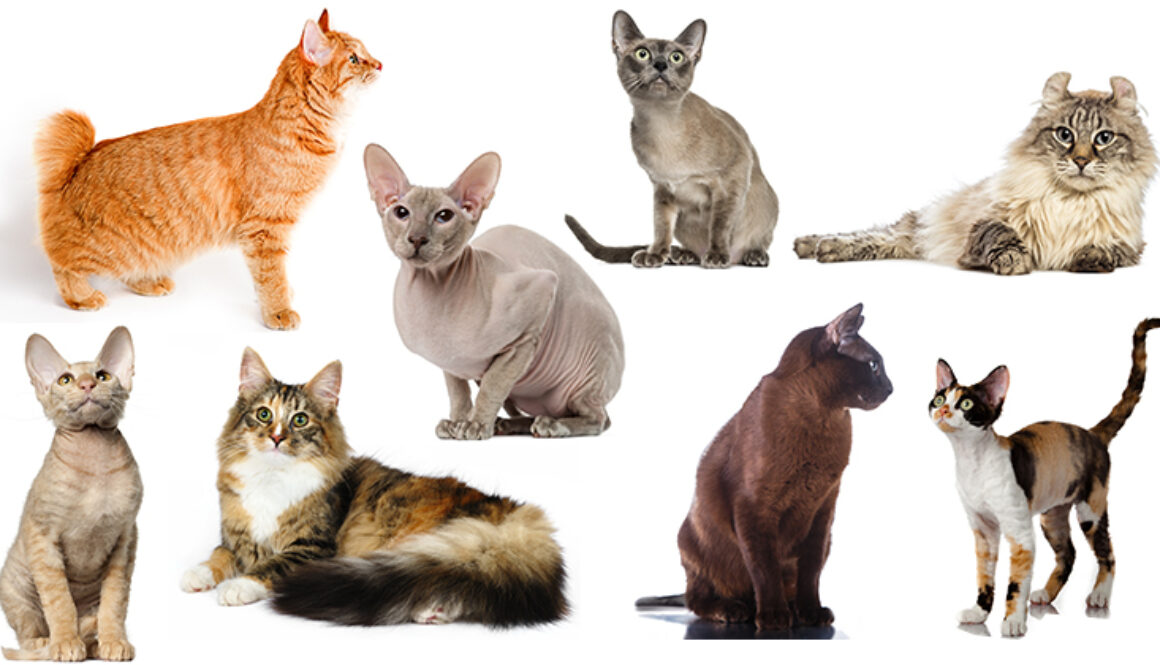
Colorpoint Shorthair: A cross between a Siamese and an American Shorthair, the Cat Fanciers Association considers the Colorpoint Shorthair to be a distinct breed. It shares the Siamese’s long, lithe body but comes in a rainbow of coat colors and patterns. The cat’s short, fine coat (courtesy of the American Shorthair) requires minimal grooming—just comb it every few weeks to remove dead hair. Because the coat is so short, it sheds less than those of longer haired breeds, making it less likely to cause allergic reactions in its human companions.
Cornish Rex/Devon Rex: With their super short, curly coats, the Cornish Rex and Devon Rex enjoy reputations as being two of the more hypoallergenic breeds in the cat world. And while both breeds have long, slim bodies, the Devon Rex has a more impish look to its wedge-shaped head and slightly stockier body, while the Cornish Rex maintains a longer, leaner look from head to tail. Both breeds come in many colors and patterns.
Sphynx: This instantly recognizable breed is known for its lack of coat, which many people associate with a lack of allergens altogether. And while the Sphynx certainly seems to produce fewer allergic reactions in humans who are prone to allergies, he is not completely allergen free. Still, the sweet, snuggly Sphynx may make an ideal pet for someone with mild to moderate allergies.
About the Author: Stacy N. Hackett is an award-winning writer with more than 25 years’ experience in the pet industry. She is the former editor of Pet Product News and a former staff editor with Cat Fancy, Cats USA, Critters USA and Ferrets USA. To learn more about her work, visit stacynhackett.vpweb.com.
Domestic cats have a long history that originated in the Fertile Crescent nearly 10,000 years ago.[1] Since humans first noticed these independent and willful creatures, cats have functioned as laborers, adversaries, pests, faithful friends and, once, even as gods.[2]
With such a lengthy back story, it’s no surprise that different cat breeds evolved, including those that got a lot of “help” from humans. Cats were and continue to be bred for everything from enhanced coat quality to advanced intelligence—humans have even enhanced recessive genes that nature introduced as a quirky trait then promptly forgot.
New cat breeds are regularly recognized and while some become official breeds in the Cat Fancy Association (CFA) and/or The International Cat Association (TICA), others are forgotten and relegated to the history books. The CFA recognizes 42 breeds for its championship class; TICA recognizes 71 championship breeds. Here are 12 breeds you’ve probably never heard of.
Kurilian Bobtail
asasurov/iStock
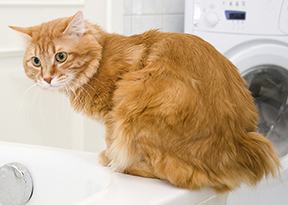
The Kurilian Bobtail hails from the Kurilian islands in Russia. This breed is well-known for its hunting prowess. They have long, silky coats that protect from the cold climate and a very short tail. Despite their somewhat wild appearance, they are considered to be trusting and very gentle. Highly intelligent and playful, Kurilians reportedly bond to their humans quite affectionately and will exhibit signs of anxiety when separated from their people. They are recognized as a championship breed by TICA.
GlobalP/iStock
Norwegian Forest Cat
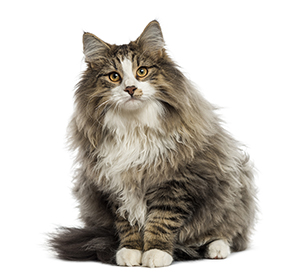
You might have heard of these lovable giants, but you probably don’t know their backstory. It’s believed the Norwegian Forest Cat migrated to Norway on Viking ships around 1,000 C.E. Their long-hair and double coat helps protect them from extreme cold and their personality (intelligent, semi-active and social) has ensured their survival for hundreds of years. Norse legends refer to these cats as “mountain-dwelling fairy cat(s) with an ability to climb sheer rock faces that other cats could not manage.” This giant cat has successfully earned its place in the CFA as an official breed, as well as with TICA.
GlobalP/iStock
Peterbald
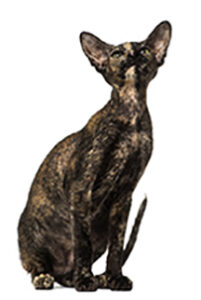
Peterbalds are a mix between a sphynx cat and an oriental shorthair that originated in Russia. At first glance, they appear frail and thin, yet their average body temperature stays consistent around 105 degrees, giving them an incredibly fast metabolism and making them naturally immune to many common illnesses and communicable diseases. Peterbalds come in a variety of coat lengths and patterns, including a hairless version. The Peterbald is recognized as a championship breed by TICA.
GlobalP/iStock
Egyptian Mau
Hailing originally from Egypt, the Egyptian Mau is one of the fastest moving cats, clocking speeds of more than 30 mph. They are one of the few cats sporting a naturally spotted coat, and are renowned for their striking exotic looks. Highly interactive, they adore their humans and enjoy riding on shoulders or perching atop refrigerators. Maus are also exceptionally intelligent and extremely loyal to their owners. These beautiful, elegant cats have earned their place as a recognized championship breed with CFA and TICA.
The Minskin is a cross between a Munchkin (a short-legged breed) and a Sphynx (a hairless breed). The result is a nearly hairless cat—they have fur on the face, ears, nose, legs and tail. Minksins have a round face and wide, round eyes, short legs and a stocky body. Affectionate and outgoing, these cats don’t especially like climbing (understandably), preferring to keep their stocky legs on the ground. The Minskin is a considered a new preliminary breed by TICA.
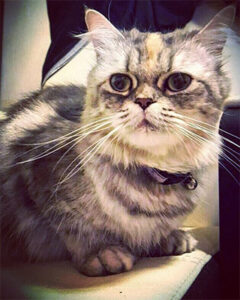
Shirazi
The Shirazi is a semi-domestic breed that naturally occurred in Egypt when Egyptian Maus and Persians began to inter-breed. These unique looking street cats are another “spotted” cat from the Middle East and reportedly sell for up to £300, despite not being listed as an “official breed.” These semi-longhaired cats inherited the coloring of Persians and the personable temperament of the Mau, creating a good-natured breed that requires extra grooming.[3]
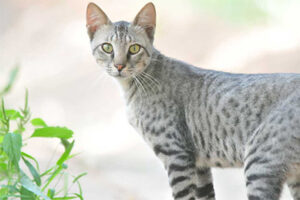
Bahraini Dilmun
There are only a few naturally spotted domestic cat breeds and the Bahraini Dilmuni (also known as a “delmun”) is one of them. Their short, spotted coats help them survive the hot desert temperatures of Bahraini. Although this breed is in danger of disappearing due to interbreeding with abandoned Persian cats in the region, there are a few devoted individuals in the Persian Gulf who are trying to preserve the unique cat.[4]
La_Corivo/iStock
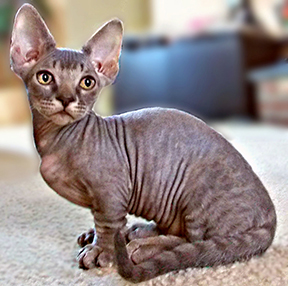
Devon Rex
The Devon Rex has a short, curled coat that feels like velvet. They’re known as pranksters and will keep you entertained with their antics. They’re quite often referred to as “pixies” for their unique personality, large ears and elfin face. Word of warning: they are “food hounds,” so if you plan on bringing one into your home, be sure you watch their diet carefully. This velveteen cat is also recognized as a championship breed by the CFA and TICA.
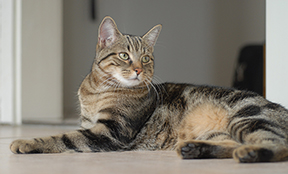
Sokoke
The Sokoke is a striped cat that originated in the Arabuko Sokoke forest in Kenya. Natural hunters, these cats have long, thin legs and a unique gait. Their ears are long (helping them to hear even the slightest sounds) and they walk on the tips of their toes thanks to longer than normal growth in the hind end, which helps them pick up speed during a hunt. Since their natural occurrence in Kenya, they have been standardized for breeding since 1993 by the Fédération Internationale Féline (FIFe). They are, by all reports, quite personable, fairly talkative and highly intelligent.[5]
Evgeny Seagreev/iStock
American Curl
American Curls get their name from the unique curl of their ears. A result of a random mutation in housecats, the breed’s tall, unusually curled ears require extra care. They are very adaptable cats who enjoy being around people and other animals. The American Curl is yet another officially recognized breed by CFA and TICA.
Lykoi
The Lykoi has been bred to highlight a genetic mutation that occurs naturally in domestic cats. Their patchy coat and bright yellow eyes have earned them the name of “Werewolf cats.” Their personality is quite different from the werewolf legend—owners report these cats bond to them quite intensely and have been known to be protective of them.[6] The Lykoi is recognized as a championship breed by TICA.
jstankiewiczwitek/iStock
Tonkinese
The Tonkinese is this writer’s most favorite breed. Tonkinese are a cross between Siamese and Burmese cats, giving the breed an oriental look with a more muscular body than is usually found in Siamese. These friendly cats are stunning with their aqua or violet-colored eyes and short, silky coats that come in eight colors and three patterns (solid, mink or pointed). These cats truly enjoy people and other pets, and in most cases will be found talking to you about their day (they are quite vocal) or curled up on your shoulder as you write, making them one of the most playful, sociable and beautiful cats in the world (not that I’m biased). CFA and TICA have recognized this cat as a championship breed.
About the Author: Stacy Mantle is a fulltime freelance writer, bestselling author and founder of PetsWeekly.com. She resides in the deserts of the Southwest with a few dogs, several cats and a very understanding husband.
[1] Pickrell, J. Oldest Known Cat? National Geographic News, www.news.nationalgeographic.com/news/2004/04/0408_oldestpetcat.html
Rating A+ The BBB only accredits the business management of a school, not the quality of the curriculum, or training programs.
STATE LICENSURE AND APPROVAL
Animal Behavior College is a private vocational school approved by the Bureau for Private Postsecondary Education (www.bppe.ca.gov) under the California Private Postsecondary Education Act of 2009 and Title 5. California Code of Regulations Division 7.5. Private Postsecondary Education. The Bureau for Private Postsecondary Education approval means that this institution and its operation comply with the standards established under the law for occupational instruction by private postsecondary educational institutions. Institutional approval is subject to continual review and the institution must reapply for approval every five years.
DISCLAIMER
Please be advised that Animal Behavior College (“ABC”) is the exclusive entity authorized to provide certifications and/or degrees from Animal Behavior College. Moreover, such certifications and/or degrees are only conferred by ABC following a student’s completion of an ABC-administered program. No other entity or individual has authority to confer certifications and/or degrees on ABC’s behalf. Any other entity or individual who attempts to do so is acting without express or implied authority from ABC.
GI BILL® TRADEMARK ATTRIBUTION
GI Bill® is a registered trademark of the U.S. Department of Veterans Affairs (VA). More information about education benefits offered by VA is available at the official U.S. government Web site at https://www.benefits.va.gov/gibill
Animal Behavior College, 27509 Avenue Hopkins, Santa Clarita CA 91355-3910 Contact Us





 Shirazi
 Bahraini Dilmun
 The Sokoke is a striped cat that originated in the Arabuko Sokoke forest in Kenya. Natural hunters, these cats have long, thin legs and a unique gait. Their ears are long (helping them to hear even the slightest sounds) and they walk on the tips of their toes thanks to longer than normal growth in the hind end, which helps them pick up speed during a hunt. Since their natural occurrence in Kenya, they have been standardized for breeding since 1993 by the Fédération Internationale Féline (FIFe). They are, by all reports, quite personable, fairly talkative and highly intelligent.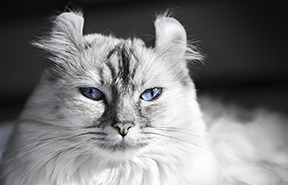
 Lykoi
Lykoi


