


A Happier, Safer Home for the Holidays
By Kong Company Staff
While holiday celebrations will likely be scaled down this year, chances are your clients will still be planning to have special meals with the ones they love—including their pets. Share these tips for ensuring that everyone at—or under—the table safely enjoys their time together.
 Prevent Begging at the Table or in the Kitchen
Think about how the mouthwatering aromas of holiday foods can draw you straight to the kitchen. Now imagine your sense of smell was 10,000 to 100,000 times stronger—like a dog’s is. The temptation to beg in the kitchen (image right) or at the table during the holidays can be especially strong, especially when a dog’s favorite people are gathered together to eat them. Clients can help prevent begging with a bit of preparation—and a treat-stuffed toy. For example, filling Kong Classics with dogs’ favorite treats provides mental and physical stimulation that can help them work off excess energy. The toys not only offer dogs tasty nibbles but also satisfy their natural chewing and foraging instincts—and are fun, too.
Kong has been helping dogs better enjoy the holidays—and the rest of the year—for more than 4 decades. The Kong Classic is available in a variety of sizes and rubber formulas to meet the needs of dogs of all sizes and ages, from teething, zooming puppies to grey muzzled seniors.
Favorite Holiday Flavors for Everyone
Giving a dog a frozen, stuffed Kong before sitting down for a holiday meal—or while preparing one, lets him celebrate the season safely. There are a myriad delicious (and safe) ingredients that can go into the toy, including many holiday favorites. This enables clients to share holiday flavors—and leftovers—with their canine companions. The Kong website has a variety of recipes you can share with your clients. For example:
Pup-Permint
1 cup plain yogurt
1/4 cup chopped mint
1/4 cup chopped parsley
1/2 cup diced apples
KONG Classic
KONG Peanut Butter Spread
Mix all ingredients together in a bowl. Split mixture between Kong toys and freeze for a greater challenge.
Whichever the combination of foods chosen, make sure your clients know to stuff a Kong according to their dog’s ability level. Presenting a dog who is unfamiliar with a toy tightly packed with frozen food can be frustrating, not fun. For Kong rookies, owners should loosely stuff the toy with high-value food in pieces small enough to easily fall out as the dog plays with it. You can refer clients to Kong’s stuffing guide for a visual explanation.
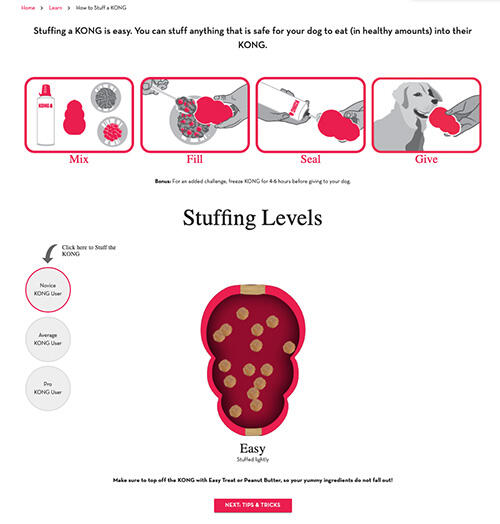
Dog owners can make the task more challenging—and time consuming—by stuffing the toy with a mixture of wet and dry food. The variety of textures keeps things interesting, and ite helps to alternate wet and dry in layers. As suggested above, freezing a stuffed Kong for a few hours creates a more challenging—and longer-lasting—food puzzle.
While there are plenty of holiday foods that can be safely stuffed into a toy, other seasonal favorites can be tempting but toxic to dogs. Chocolate, turkey bones, onions, eggnog (and any alcohol), nutmeg and raisin-stuffed fruit cake are all dangerous to dogs. Remind clients to keep these foods far away from curious snouts and to tell guests not to share their food with dogs. Make sure children especially understand how important this is. Clients could invite visiting children to make a big deal about presenting a special stuffed Kong to the dog instead, making this a fun—and safe—holiday tradition for everyone.

 Everyone at Petco is committed to improving the health and wellbeing, both physical and mental, of every pet that comes into our stores. To help achieve this, we have an outstanding Pet Services Department that includes grooming, dog training and veterinary services. This enables us to help pet owners meet the complete needs of each of their furred. feathered, scaled and finned family members. We pride ourselves on protecting the safety of every pet we encounter. All Petco partners stand behind our vision of Putting Pets First and strive to always be the trusted partner of choice for all pet owners.




 This year’s Coastal Pet Products scholarships are Mr. James Bowman, Ms. Tracy Conley, and Ms. Candice Clark. Mr. Bowman is a commercial diver and Army veteran who retired from the service after wounds sustained in combat. He has trained dogs for rescue centers. Ms. Conley is a teacher who has volunteered for over 15 years at a humane society, and Ms. Clark is a probation officer with a Master’s degree in social work, who has worked with service dogs and wants to devote her training career to working with people in need.


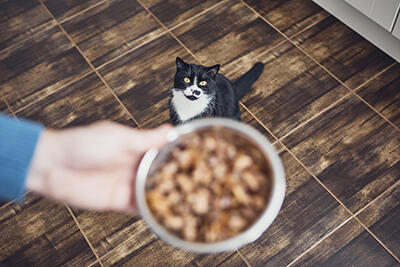 “How can I get my finicky cat to eat?” Pet-care professionals routinely hear this question and it usually comes after a client has tried countless different foods and flavors, only to have their cat turn up her whiskers, or at best, nibble at the new offering, then refuse to eat it outright the next time.
 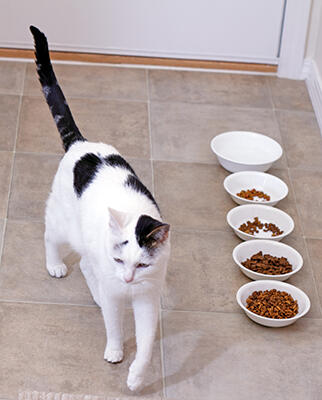 That cats rely heavily on their sense of smell in picking food makes perfect sense. When it comes to scenting skills, felines and humans occupy the exact reverse positions than they do with tasting ability. With 65 million olfactory receptors, cats have a super sniffing capacity that far exceeds our own, given our paltry 15 million receptors. Different food brands may offer a “chicken” variety, but various versions of the same flavor may present totally different aromas because of cats’ highly honed sense of smell. Therefore, owners should not assume that just because their cat has rejected one manufacturer’s chicken, he doesn’t like any chicken.
  At
At  Cats Require Carnivorous Diet

 Hello everyone. I hope you are all healthy and safe. Here is what is happening at ABC. First, I am delighted to report that our entire ABC team remains healthy and safe. I am not aware of a single one of our team members who has contracted COVID-19, which is excellent news. We will continue to operate remotely except for a few people who come to our physical location in Santa Clarita for a variety of reasons. Our lease on this building is up at the end of 2021, so this time next year, we will be looking to rent a much smaller space. How much smaller? Currently, we have a 22,000-sq.-ft building. I suspect we will look for something around 4,000 to 5,000 sq. ft.