Animal Behavior College Announces the Winner of the 2024 Betty White Zookeeper Assistant Scholarship
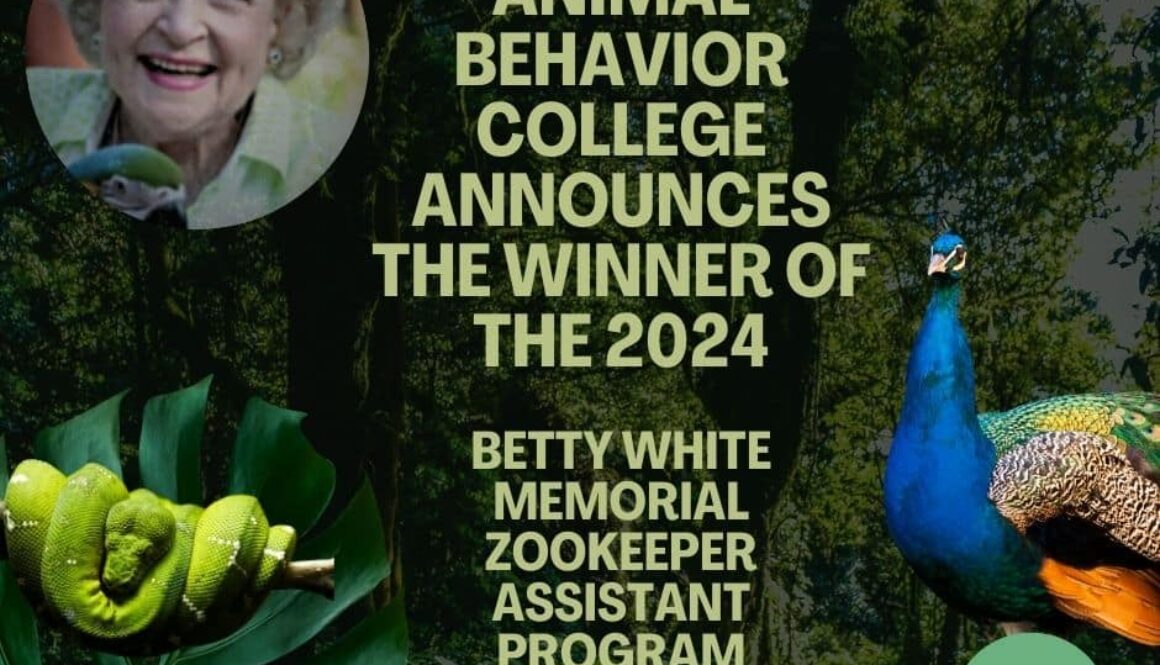
Valencia, CA- Wednesday, May 8, 2024– Animal Behavior College (ABC) has announced the winner of their 3rd Annual Betty White Memorial Zookeeper Assistant Program Scholarship.
In 2022 ABC announced a new scholarship in Betty White’s honor after her unfortunate passing: The Betty White Memorial Zookeeper Assistant Program Scholarship. The scholarship is awarded to 1 chosen applicant every year from ABC. Applicants were to submit short essays telling ABC why they are passionate about exotic animals, what caused them to be interested in working in zoos, and how they can make a difference with a Zookeeper Assistant Certification from ABC. Animal Behavior College received many applicants with many impressive and heart-warming essays. All essays were read and reviewed by ABC’s directors and management team, who all voted on their favorite essay for the scholarship winner.
After reviewing many submissions, Animal Behavior College is proud to announce Christopher Joshua Whitworth as the third recipient of ABC’s Betty White Memorial Zookeeper Assistant Program Scholarship. Like Betty White, Christopher has been extremely passionate about exotic animals at a very young age. He is a Wildlife and Forestry Conservationist, a Level 1 Venomous Handler, a certified Master Herpetologist, and works with Wildlife and Environmental Science. He has pursued his passion through the research of the conservation and preservation of Macrochelys Temminckii, or the alligator snapping turtle. He currently works at an AZA-accredited zoological facility in security and hopes to move up to work alongside the keepers there.
This scholarship will give Christopher an opportunity to pursue his drive, commitment, and dedication to the conservation and well-being of all creatures, both great and small.
ABC would like to thank all who submitted their essays and is delighted to award Christopher Joshua Whitworth with ABC’s Betty White Memorial Zookeeper Assistant Program Scholarship. Congratulations Christopher on your scholarship at Animal Behavior College and ABC looks forward to helping you pursue your dream career!
Animal Behavior College’s Zookeeper Assistant curriculum consists of 10 stages covering a wide variety of topics essential for a zookeeper assistant including zoo biology, zookeeper requirements, animal husbandry, animal behavior, animal housing, recordkeeping, safety, and more.
Fur, Fins, Feathers, and Fangs: 50 Careers for Animal Lovers
Many people who have a passion for animals would love a career working with them. Whether you are zeroed in on one species, like sea turtles or horses; or whether you have a heart for all creatures, your dream job would let you work closely with animals.
Great news! There has never been a better time to start an animal career, especially jobs that are related to pets. The U.S. Bureau of Labor Statistics projects jobs in animal care and services will grow at twice the rate of other occupations.
The growth in this sector of the economy is driven by the explosive increase in the number of pet owners. This number is projected to keep growing.
Dog walkers and trainers are in high demand right now, and just try getting a grooming appointment–pet salons are booked out for weeks! The demand for pet services shows no sign of slowing. If you want a part-time job and enjoy working with animals, those careers will make great side gigs, too! A solid second income can open many possibilities and make things like home ownership and paying off debt happen much faster! Pet grooming, dog training, and dog walking all offer flexible hours and good money. If you are interested in opening your own business, they are all ideal careers for self-employment.
Preparing for an Animal Career
Some of the following jobs require only a high school diploma; others require at least a bachelor’s degree, and salaries range widely. If you earn a college degree in an animal-related field, your opportunities will be much broader and your salary higher.
However, even if college is out of the question for you there are still plenty of rewarding and enjoyable jobs working with animals. Certification programs are available that provide online training and experience in several animal careers, and these look great on resumes! Animal Behavior College is an outstanding example and has been training people to launch careers since 1998.
50 Animal Careers by Category
The following is a breakdown of animal careers by category, along with education requirements and salary potential.
Agricultural Animal Careers
Rural life is beguiling to many folks, and there are many ways for animal lovers to find employment connected to agriculture.
● Livestock/agricultural journalists write articles for publication on topics related to farming, ranching, and other forms of agriculture. A bachelor’s degree in writing, journalism, communication, or agriculture is usually necessary to succeed. The median income is $82,000.
● Farm managers (or stable or ranch managers) oversee daily activities and manage all aspects of production. They hire and supervise workers and make all decisions related to crop planting and livestock husbandry. A Bachelor of Science in Agriculture or the equivalent is a plus. The median income for farm and ranch managers is $75,760.
● Riding instructors teach people to ride horses and feed, exercise, and groom the animals in their care. No degree is required to work as a riding instructor. The average base salary is $55,664.
● Extension agents have many jobs in a community, but helping farmers is high on the list. They also work closely with community youth in a variety of 4-H programs, many of which revolve around animals. A bachelor’s or master’s degree is required. The average salary for extension agents is $54,847.
● Range management specialists study natural resources and work to protect them by developing programs and standards governing the use of rangelands.
A degree in range management is required. The median salary is $51,206.
● Apiculturists, also known as beekeepers, maintain beehives and harvest honey. No formal degree is necessary to be a beekeeper, but should you want to get a bachelor’s degree in entomology or biology it would be helpful in your work. The average salary is $50,574.
● Animal/livestock breeders use knowledge of genetics to select and breed animals. They take animals’ genealogy and characteristics into careful consideration and keep detailed records. Most livestock breeders have a bachelor’s degree in animal science. The median salary for an animal breeder is $45,320.
● Shepherds tend and herd flocks of sheep. This oldest of professions requires no formal education but comes with a median salary of $43.221.
● Horse trainers train horses in the behaviors required by their intended discipline, such as racing, rodeo, show jumping, dressage, or pleasure riding. The median salary is $39,288.
● Grooms often work in the horse racing industry. They provide daily care for horses, saddle and unsaddle them, organize tack, clean stalls, and equipment, and sometimes help with training. There is no educational requirement to work as a groom. The average salary is $29,147.
Aquatic Animal Careers
Aquatic life is fascinating. There is no end to the unique creatures that dwell below the surface of oceans, lakes, and rivers. Scientists are still discovering new life forms in the depths of the seas. Anyone with an interest in marine life has a wide range of career paths to follow.
● Marine biologists study ocean life. They may do experiments, rescue marine life, and monitor the behavior of aquatic animals. Being a marine biologist requires an undergraduate degree in a scientific discipline such as ecology, aquatic biology, zoology, or animal science. The average salary is $86,203.
● Aquarium maintenance technicians set up, maintain, and service fresh or saltwater aquatic tanks in homes and offices. They may also work in fish hatcheries, aquarium parks, or any place that maintains aquatic life in tanks. There is no formal degree required, but certification is desirable. The median income is $40,199.
● Marine life rescuers help injured or sick animals; animals that have become entangled in nets or garbage; or stranded animals. They aid in their rehabilitation. Entry-level positions require no special degree or certification. Higher-level positions may require a degree in marine or wildlife biology. The wide pay range may reflect lots of room for advancement. The median salary is $55,632.
● Aqua culturists, or fish farmers, raise several types of fish and shellfish for profit or consumption. The minimum education required is a bachelor’s degree. The average salary is $44,489.
● Marine biotechnologists take advantage of the unique array of marine organisms to develop pharmaceuticals, enzymes, and chemicals. This career requires a Bachelor of Science degree, master’s, or, at the pinnacle of the field, a PhD in Marine Science and Technology. The average salary is $132,303.
● Marine mammal trainers work with dolphins, sea lions, manatees, and seals–usually in zoos or aquarium parks. They teach behaviors, feed the animals, and maintain clean, safe water environments. Most facilities want job candidates with life or animal science degrees. The average salary is $33,908.
● Deep sea marine biologists study the organisms that live far below the surface, sometimes in the deepest trenches of the ocean. Most of these jobs require at least a master’s degree. Salary maxes out at $60K.
● Fish biologists do such jobs as monitoring fish populations and fisheries, making environmental assessments for proposed projects, and identifying areas of needed research. A bachelor’s degree is typically required for entering the profession. The average salary is $64,945.
● Aquatic retailers vary in job descriptions; managers, aquarium technicians, and other staff command different salaries. The average salary is $38K.
● Hatchery assistants usually do not need a college degree, although if you aspire to a more advanced position you will need to earn one. Some people enter their career with an aquarium maintenance certification. The average salary for a fish hatchery worker is $49,095.
Pet-related Careers (Non-medical)
Aside from allowing you to spend your time with dogs, cats, and other animals, many pet careers are super flexible and make great side hustles. And if you have been looking for an opportunity for self-employment, one of these careers may be just the ticket!
● Dog walkers enjoy lots of fresh air and plenty of canine interaction. It is a fun career or side gig you can get into without needing a special degree. The average salary is $33,526.
● Pet groomers are in demand as the pet population continues to expand. Groomers help animals look good and feel good by bathing and trimming them, cleaning their ears, and clipping their nails. They do not need a formal education, but it helps to go through a training program to get certified. Like $37,501.
● Animal assisted- or pet therapists use therapy animals – usually dogs and cats – to help people with mental disorders or health issues. Pet therapy helps a wide range of people such as residents in long-term care facilities, cancer patients, and veterans with PTSD. Most hold bachelor’s degrees, and a master’s degree is necessary if you wish to counsel patients. The average salary is $38,056.
● Pet sitters care for animals when their humans are not at home. They may stay in the home or just drop in to monitor the animals, take care of litter boxes, and feed and water pets. They let dogs out to potty and walk them. Basic grooming may be involved. No special education is necessary. It is a nice side hustle if you can work it into your schedule. The average wage is $16 per hour. The median salary for a full-time pet sitter is $33,377.
● Dog obedience trainers are also in high demand these days. They train dogs to follow the basic commands for being good citizens, and they help owners understand how to properly continue training at home. Dog trainers do not have to be degreed or licensed, but certification is recommended. The average salary for a dog trainer is $40,348.
● Cat trainers are called to help curb feline problem behaviors, such as counter surfing, biting and scratching people, and litter box refusal. As with dog training, no degree is required, but certification is encouraged. The average salary is $46,748.
● Animal shelter attendants care for homeless animals waiting for their forever homes. They feed, water, groom, and exercise animals, and keep kennels and cages clean. No education beyond a high school diploma is needed, just a heart full of love for animals. The average salary is $30,522.
● Kennel attendants take care of dogs in a kennel. Duties are similar to animal shelter attendants. Again, no degree is required. The average salary is $28,914.
● Pet store retailers do a variety of jobs, most requiring nothing more than a high school degree. The average salary is $34,745
● Doggy daycare providers offer dog owners an approximation of childcare for canines. No degree is required to operate or work at a doggy daycare facility. The average salary is $29,511.
Careers Working with Wildlife
If wild or exotic animals are your passion, there are lots of careers that allow you to work with them.
● Animal control officers are called in to help rescue hurt, lost, or stray animals, trap animals that are endangering people, and provide first aid to wounded animals. A high school degree is usually required. Average salary is $47,913.
● Zoologists study non-domesticated animals, focusing on behavior, ecosystem, and impact of humans on habit. Zoology and wildlife biology are good degrees to pursue to become a zoologist. The average salary is $54,791.
● Park rangers do not necessarily work with animals, but they have regular opportunities to view wildlife during their job. A formal degree may not always be required, depending on the position. The average salary is $42,977.
● Wildlife photographers take amazing images of animals in their natural habitat, often selling them for publication. Self-employed wildlife photographers do not have to have degrees. Their average income is $42,345.
● Conservation officers, also known as fish and game wardens, help protect wild animals in their natural habitats by enforcing conservation and environmental laws and regulations. They work outside in all kinds of weather. Many states require only a high school diploma. The average salary is $50,144.
● Wildlife rehabilitators care for sick, injured, or orphaned animals. The goal is to release the animals back into the wild as soon as they can function normally in their habitat. Biology or ecology are the most commonly desired degrees. The average salary is $44,859.
● Venomous snake milkers extract venom from poisonous snakes for research and emergency lifesaving procedures. Snake milkers are not simply thrill-seekers; they enter a career with a degree in biology, chemistry, biochemistry, or herpetology. They earn an average salary of $33,609.
● Wildlife advocates seek protection for animals and their habitats. They advocate for such things as species conservation, ocean clean-up, or rainforest preservation. The average salary is $64,945.
● Wildlife biologists study animals both in the wild and in captivity. To be a wildlife biologist requires a Bachelor of Science degree in biology, zoology, or some other natural science. The average salary is $61,173.
Animal Health Careers
Those who want to help animals often lean toward veterinary medical careers, but there are other options.
● Animal massage therapists study animal physiology and anatomy. They use massage techniques to improve the well-being of their patients. You can enter the field with a two-year associate degree. The average salary is $71,679.
● Veterinarians are the animal equivalent of human physicians. They must have a four-year degree followed by another four years of veterinary school. The average salary is $103,260.
● Veterinary technicians work in veterinary clinics and can do certain medical procedures, such as give vaccinations, take, and expose x-rays, and assist with surgeries. They must have an associate’s degree. The average salary is $39,293.
● Veterinary dentists have extensive training in oral surgery, medicine, and dental care for animals. In addition to the regular education required of a veterinarian, they must also do a residency in veterinary dentistry. The average salary is $189,979.
● Animal nutritionists make recommendations for food and diets for farmers, zookeepers, pet owners, and others in charge of animals’ well-being. The job requires a four-year degree in agricultural science, animal science, or related field. The average salary is $54,137.
● Veterinary practice managers oversee clinics and animal hospitals, handling staff, payroll, schedules, and related duties. While a degree may not be required, a management or business degree is excellent preparation. The average salary is $82,725.
● Laboratory animal caretakers monitor and care for animals in a research setting. A high school degree is all that is required but, certification in vet assisting may help secure a job. The average salary is $33,907.
● Farriers care for horses’ hooves, trimming them, and shoeing them, when necessary. No degree is necessary, but an apprenticeship or horseshoeing school can prepare you for your career. The average salary is $36K.
● Kennel technicians maintain a clean facility and provide care for animals, such as grooming, feeding, and exercising. A high school diploma is usually the only requirement. The average salary is $28,701.
Launch Your Career with Animal Behavior College
People ask these questions all the time – Where can I find service dog training near me, where can I find dog training near me, or where can I find pet grooming near me? You need not look any further than Animal Behavior College to learn these traits, and how to teach others these skills.
There are lots of well-paying jobs working with animals, even for those who do not have an advanced degree. If you are passionate about finding a rewarding animal career, Animal Behavior College would love to start on the right track.
With online programs for vet assistants, dog obedience trainers, zookeeper assistants, aquarists, service dog trainers, cat trainers, and pet groomers, we can help you launch your career. To talk to an admissions counselor, call 800-795-3294.
When you’re weighing potential careers, you might have to make some hard choices.
What really matters to you? Can you find a career that lets you follow a passion for something? Are you willing to go to school for years and take on student debt in order to earn the necessary degree to work in your chosen field? Are you willing to move to where the jobs are in your field? Does prestige matter? Is it more important to follow a meaningful passion or to make a lot of money?
Zookeeper Assistants Enjoy the Most Meaningful Work
While the zoo profession may not be the most lucrative one, the job satisfaction reported by zookeepers is extremely high. In fact, a study of zookeepers revealed the profession to be unique among modern jobs because it was the only one in the secular sphere considered a “calling.” Despite being physically demanding and not highly paid, there’s something meaningful about zookeeping that satisfies the soul.
This is not the type of manufactured job-satisfaction hype that managers try to pass off as meaningful to their uninspired staff tirelessly working away their lives in cubicles. Zookeepers and zookeeper assistants find reward and joy in a career working with animals where every day brings something different. Many say that they knew from the time they were young children that they were destined to work with animals.
Zookeepers are so committed to their calling that they will move across the country for a job, make personal sacrifices like spending Christmas day scooping poop and chopping vegetables for animal diets and work outside in the most uncomfortable weather, often carrying heavy things like full water buckets.
(Fun fact: Sylvester Stallone once worked at the Central Park Zoo cleaning lion cages and Brooke Shields interned at the San Diego Zoo during high school.)
Responsibilities of a Zookeeper Assistant
Zookeeper assistants do much of the same work as a zookeeper, just under supervision. Among other things, zookeeper assistants:
Clean, repair, and maintain habitats
Exercise, groom, bathe, feed, and water the animals in their care
Observe animals closely so that they learn their routines and habits and can pick up subtle cues that might indicate a problem
Interact with zoo guests, educating them and monitoring their behavior and safety
Keep written records about the animals in their charge
Move/shift animals between their indoor and outdoor enclosures
Zookeepers and their assistants must pay attention constantly. Safety should always be a priority. Locks and latches must always be secured. Barriers must be kept up minimizing contact between human and animals. Zookeepers have to be prepared ahead of time so they know what to do in emergency situations, such as an escaped animal or an injury.
Hygiene is also very important in zoos. Proper procedures prevent the spread of diseases between animal species or between humans and animals. Different personal protective gear may be necessary, depending on the species. Just know going in that there’s a lot of cleaning and scrubbing in zoo work!
Zookeepers Get to do Some Really Cool Stuff
Sure, they sometimes get to play with baby monkeys and tigers, but they also get to do the nearly impossible job of bringing species back from the brink of extinction! Zookeepers help conservation biologists as they follow Species Survival Plans for saving everything from big cats to tiny toads. Zoos have been responsible for saving the black-footed ferret, the red wolf, the California condor, Prziwalski’s wild horse, and Pere David’s deer, among other species.
Increasingly, better zoos are training animals to help in their own care. Instead of having to physically manhandle or force an animal to do something, which is frightening and stressful for all involved or resorting to a tranquilizer dart, zookeepers patiently work with their charges. When they are young, big cats learn to present their paws for nail trimming; giraffes are trained to lift their hooves for inspection. Animals can learn to calmly accept shots, get eye drops, or have their teeth cleaned without stress.
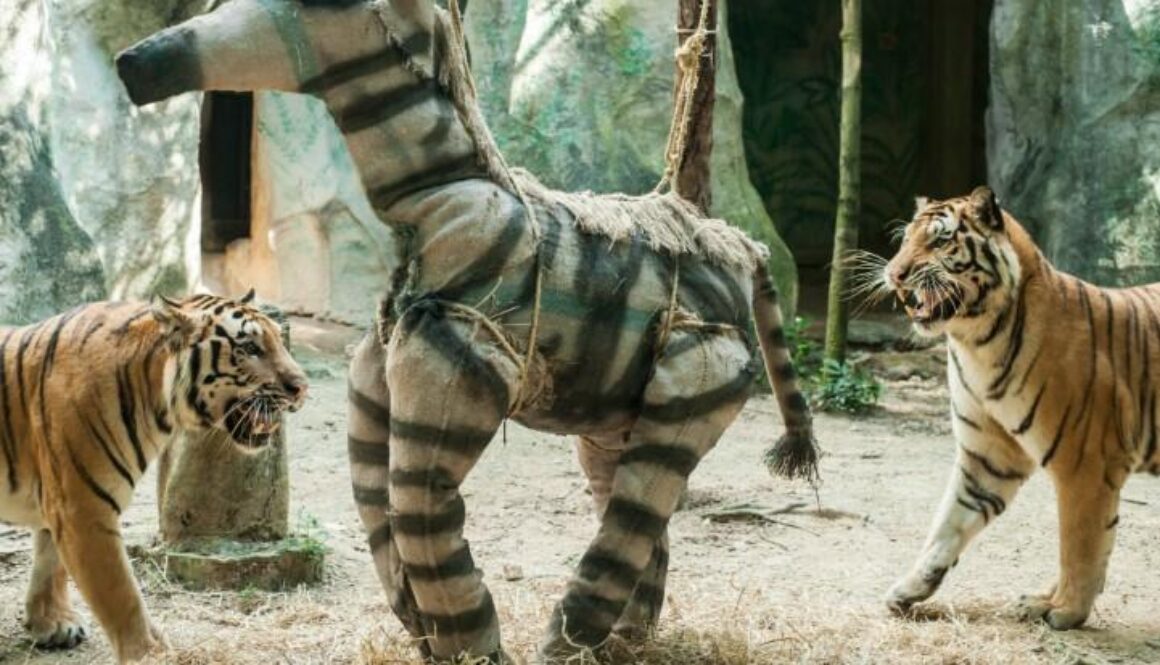
Environmental enrichment is another large part of a zookeeper’s job. Enrichment provides a creative outlet for zookeepers as well as the animals themselves. Zookeepers want to encourage natural behaviors like hunting and foraging for food. Being able to mimic things the animals do in the wild keeps them engaged and learning. Enrichment activities seek to find challenging ways of getting at food. Instead of glopping down a giraffe’s food to be gobbled up in seconds, for instance, some zookeepers are beginning to fabricate tree trunk “puzzles” that force a giraffe to use its 18-inch tongue to get dinner.
Several years ago, it was discovered that big cats of all breeds go crazy for Calvin Klein’s “Obsession for Men.” Many zoos ask for donations of the perfume, which for enrichment is spritzed on balls, toys, trees, leaves on the ground, etc. The carnivores rub their cheeks against the scent for minutes at a time, entranced and sometimes, drooling. It’s a cologne form of catnip!
The search for engaging new enrichment activities is a never-ending quest for zookeepers and their assistants. A lot of time is spent brainstorming and crafting, and the results engage animals and delight zoo visitors.
Requirements for a Zookeeper Assistant
When it comes to being a zookeeper assistant, positive personality traits matter. The best zookeepers possess friendly, patient, reliable, detail-oriented, and observant characteristics.
A zookeeper assistant can technically get by with just a high school degree, but because the demand for these jobs is high the chance of getting a job is slim unless you have something on your resume to attract attention to yourself.
What Can You Do to Help Yourself Get a Zoo Job?
For starters, educate yourself as much as possible. Read and learn as much as you can about a variety of species, their habitats, and species conservation. Learn as much as you can about the zoo where you want to work and visit in person beforehand.
In addition to learning as much as you can, try to get experience working with animals. You may be lucky enough to live near a zoo that offers internships, seasonal work or volunteer opportunities, but these are very competitive. Fortunately, there are lots of places to get work or volunteer experience. Get as much experience as you can, and don’t be shy about listing it all on your resume! Some places you might get animal experience include:
aquariums
farms
stables
vet clinics and animal hospitals
animal shelters
wildlife sanctuaries
kennels
wildlife management facilities
Make sure you know when zoo jobs are posted by signing up for apps that provide job alerts using the keyword “zookeeper” or “zoo jobs” or other related terms. Check the job boards on these three main national sites:
The Zoological Association of America
The American Association of Zookeepers
The Association of Zoos and Aquariums
If you are really serious about zookeeping, think about enrolling in the online Zookeeper Assistant Program at Animal Behavior College (ABC). The course takes about eight months and includes stages on animal habits, health, behavior, species conservation, breeding, animal husbandry, zookeeping safety, visitor education, and more.
ABC has been providing online education in animal careers for 25 years and has an excellent reputation. Students love the amount of support the staff provides as they work their way through the program.
Above all, be patient! This is a career that can take a while to break into but it is oh so worthwhile! If you love exotic animals and you dream of a job that affords opportunities to get up close and personal with them in ways most people never will, you owe it to yourself to stick with it.
Are you an animal lover who dreams of turning that passion into a career? Do you often wish you could find an animal job that lets you work with pets, wild animals, or even exotic animals, but worry that it isn’t practical?
Time to silence that nagging inner voice and remember the wise words of Confucius:
“Choose a job you love, and you will never have to work a day in your life.”
That timeless advice holds true—especially when you consider how many fulfilling animal care careers are available today.
Okay. What Animal Jobs Are Out There?
When most people think of animal care careers, a few familiar titles come to mind:
Veterinarian
Zookeeper
Dolphin trainer
But the world of animal jobs is far more diverse than that. In fact, there are hundreds of careers that connect people with animals every day. Some require a degree in veterinary medicine or animal science, while others can be pursued with just a high school diploma and a deep love of animals.
You could work in animal health, train detection dogs, care for injured wildlife as a wildlife rehabilitator, or provide therapeutic services to animals. Many professionals specialize in rehabilitating wild animals, managing animal shelters, or enforcing animal control and animal welfare laws.
There are also specialized roles like animal scientists, animal husbandry experts, and veterinary pathologists that contribute to everything from disease control to improving life for farm animals.
Whether you’re interested in helping pet owners or protecting the planet’s most vulnerable species, there’s an animal care path for you.
Growing Demand for Animal-Assisted Therapy Professionals
The use of animal-assisted therapy (AAT) is expanding rapidly across healthcare, education, and mental health fields. Professionals in these roles—such as animal assisted therapists—help individuals dealing with PTSD, anxiety, and learning disorders using trained pets and animal care techniques.
This emerging field combines compassion with veterinary medicine and animal health knowledge—making it ideal for those seeking meaningful, healing work with animals.
Emphasis on Sustainable and Ethical Animal Practices
More animal care professionals and pet owners are embracing eco-conscious, ethical approaches to working with animals. Whether it’s using biodegradable grooming products or focusing on animals’ emotional well-being, ethical animal treatment is central to today’s animal welfare trends.
Careers in animal nutrition, animal cruelty investigation, and sustainable animal health practices are also growing in popularity. Even veterinary clinics are adopting greener practices.
Frequently Asked Questions (FAQ)
Q: What qualifications are needed for these unusual animal jobs?
A: It depends on the role. Some jobs—like animal care technician, wildlife biologist, or snake milker—require specialized training or certifications. Others, like animal shelter assistants or animal care attendants, focus more on hands-on experience and empathy.
Q: Are these careers financially sustainable? A: Many of them are. For example, farriers (who care for horse hooves) can earn a median salary of $116,000, with those working in elite circles exceeding $200,000.
Q: How can I gain experience in these fields? A: Volunteer work, internships, and training programs—such as those offered by Animal Behavior College—are excellent starting points for anyone looking to break into animal care careers.
9 Animal Careers You May Not Have Considered
Animal Colorist
From movies to pampered pets, these professionals give animals standout looks. Want a dog with tinsel or rainbow fur? That’s an animal colorist’s job.
Reptile Breeder Raise snakes, turtles, and lizards, including exotic animals like Panther Chameleons and Bearded Dragons.
Pet Food Tester
Yes, they taste-test pet food—though they don’t actually eat it. Quality matters, even for animals.
Animal Massage Therapist Once common only in horse racing, these experts now help dogs and cats relax, improve circulation, and recover from injuries.
Cat Trainer
It’s real—and surprisingly rewarding. These professionals teach cats skills and behaviors for performances, commercials, and at-home enrichment.
Animal Acupuncturist
An additional certification a DVM may pursue and with using techniques from veterinary medicine and Eastern traditions, these specialists treat pain through needle therapy. It sounds odd, but it works.
Wildlife Control Relocation Specialist
Manage encounters with wild animals—safely relocating them without harming them or the public. A great job for those who want to protect both animals and people.
Detection Dog Handler
Train animals to sniff out drugs, explosives, or even bed bugs. Animal control and safety meet cutting-edge skill.
Venomous Snake Milker Not for the faint of heart, this rare animal job involves extracting venom for research and antivenom development.
How About Something I Can Actually Do?
We hear you. You want a career that:
Gets you close to animals daily
Doesn’t require medical school
Can be started relatively quickly
Is more exciting than pet grooming and safer than snake milking
Good news—becoming a Zookeeper Assistant may be just the fit. These professionals provide daily animal care to wild animals and exotic animals, educate visitors, assist in breeding programs, and contribute to the conservation of endangered species. It’s a great fit for any animal lover who wants to make a difference.
Zookeeper assistants may work in an animal facility or veterinary clinic, helping monitor veterinary care and managing enrichment for animals ranging from miniature horses to birds of prey. You could even help manage animal population programs or assist in wildlife rehabilitation efforts.
It’s also a great stepping stone for future careers such as dog trainer, animal trainer, or even veterinary surgeon—and certification can be earned in just 8 months online.
I’m Going to Follow My Passion!
That’s the spirit! Don’t let doubts keep you from pursuing a meaningful animal job. Whether you’re working in animal rescue, managing an animal shelter as a shelter manager, or training farm animals on a sustainable ranch, your love for animals can absolutely be the foundation of a rewarding career.
2021 is a great year to find jobs working with animals that pay well! Why? The number of people who own pets experienced enormous growth during the pandemic, eclipsing all predictions for an already healthy industry. Though not as fast as 2020, the pet industry is expected to continue growing. The figures include cats and dogs, but the number of aquariums also grew, from modest goldfish bowls to lavish private aquariums.
Skyrocketing pet ownership translates into a steady demand for pet-related goods and services. For example, pets require the services of a veterinarian. Dogs need obedience training. Increasingly, cat owners seek help for curbing unwanted behaviors with training. Both cats and dogs need pet groomers. Those with aquariums frequently hire professional aquarists to set up and maintain tanks. All of these careers allow you to work closely with animals while earning a comfortable salary.
Animal Careers with Wild Animals
Maybe you love animals and want a career working with them but pets are not your “thing.” If you have a passion for wild, exotic animals or are more interested in species conservation or research, there are plenty of different jobs available.
Zookeeper Assistants, for instance, can find work in zoos and wildlife rehabilitation centers and perform a wide variety of duties for the animals in their care. Generally, they work under the supervision of a senior zookeeper but do much of the same work. They feed and water animals, clean and maintain habitats and enclosures, observe behavior, plan enrichment activities, and monitor and educate visitors to their facilities.
Veterinary Assistants also find work in multiple settings, not just veterinary clinics and hospitals. Their services are needed in university research laboratories, rehabilitation centers, kennels, and zoos. Duties vary widely, from clerical work to animal care.
What Do Animal Jobs Pay?
The following are national averages for the preceding animal careers. As with any job, what you earn depends on where you live. This is particularly relevant with dog trainers. In areas like Southern and Northern California, Manhattan, Chicago, Dallas and Houston professional dog trainers can routinely bill at $35-$65 per hour. This means dog trainers in these areas who are working full time or close to full time can earn significantly more than the median average.
You can expect to spend years in college earning a Bachelors, Masters, or Doctoral degree to work in the highest paying animal careers, such as becoming a veterinarian, marine biologist, or wildlife biologist. True, those working with advanced degrees can expect to earn a whole lot of money, but getting that degree is expensive, often incurs major debt, and takes years to begin working in the field.
In contrast, becoming certified to work in an animal career through an online program, can provide you the knowledge necessary to land a job, and being certified can give you a leg up when competing for jobs.
Online courses boast many advantages:
They are far more affordable than a Bachelors degree.
Online classes offer the flexibility to work around a current job or other responsibilities.
Certain certification programs include an externship program which provides invaluable hands–on experience with a local professional.
Instead of taking four years (or more) to graduate from college and begin your career, you could be working in your chosen profession within a year.
With online programs, there is no waiting for a new semester to begin–you can enroll anytime.
Take the First Step Towards an Animal Career
Following your passion can help you find the most rewarding and fulfilling career. If you want to work closely with animals and help them lead their best lives, call Animal Behavior College at 800-795-3294 and speak with an admissions counselor. You could be enrolled and on your way to a dream career today!
Animal jobs offer meaningful employment for those who have a passion for the furry, feathered, or scaly. Some jobs are just that: jobs, but choosing a career working with animals allows you to actually change lives. This may sound like hyperbole, but stop for a moment to consider the difference a dog groomer, veterinary assistant, zookeeper assistant, aquarist, dog trainer, or yes, even a cat trainer can make in the life of an animal.
Is There a Dog Under All That Hair?
One of the most familiar animal jobs is that of dog groomer. Dog groomers do more for your pet than make her look pretty. Failure to take care of your dog’s grooming needs not only looks bad, it can cause serious health problems. An unkempt coat can harbor fleas and ticks, hide cysts, cause wounds or infections, and, in severe cases, cut off blood flow.
Dog groomers learn to recognize skin problems and spot bumps and knots that could indicate underlying health problems. They attend to ear and dental hygiene and keep nail growth in check, all of which contribute to a dog’s health.
Many shelter animals owe their lives to dog groomers willing to tackle their matted and filthy coats.
Veterinary Assistants Help Care for Patients
Veterinary assistants wear many hats and work in a variety of animal facilities ranging from clinics and private practices to research labs. They do clerical work and sanitization, but they also help directly care for animals by restraining frightened patients, calming and comforting those in distress. Vet assistants may even provide first aid until a vet can see a patient. In addition, they feed, medicate, and exercise animals as needed.
Earning your veterinary assistant certification prepares you for a career in which you help maintain animal welfare as well as assist in saving lives!
Zookeeper Assistants Get Up Close and Personal with the Exotic
If your passions tend toward exotic animals or species conservation, zookeeper assistant certification allows you to prepare for a great career in a zoo. Zookeeper assistants get to do most of the tasks a head zookeeper performs, putting them up close and personal with every variety of animal imaginable!
Zookeeper assistants not only fulfill important roles in the daily lives of their charges by feeding them, cleaning their habitats, and providing enrichment, they also help animals by educating zoo visitors and by assisting in breeding programs to save endangered species. Their work is both fascinating and vital.
Fish Need Love, Too!
One of the animal jobs with which you may be less familiar is that of aquarist. An aquarium maintenance program prepares you for a career keeping captive marine life healthy. Who has not seen a poorly maintained aquarium and cringed for the creatures struggling for life in scummy, filthy water? Aquarists help businesses and individuals set up and maintain pristine aquariums that are healthy for their inhabitants and attractive to humans.
Get That Animal Under Control!
One of the biggest differences you can make in the life of dogs is to become a dog trainer. A dog that knows no basic commands, jumps up on people, barks uncontrollably, nips, tears up furniture, or is not housebroken is, through no fault of his own, a menace. Such dogs often get yelled at, hit, locked in crates, chained outside alone, or surrendered to the local humane society. We have all seen their heart wrenching stories shared on social media.
Dog trainers, however, can turn around the lives of exasperating animals and make them a joy to be around. Dogs seem hard-wired to want to please, but they are not born knowing what to do. A well-trained dog is far likelier to lead a happy life. By teaching owners how to properly work with their dogs, trainers foster a bond between them that is mutually beneficial.
Training Service Dogs to Be Invaluable Helpers
Service dog trainers teach dogs to provide support for people with a variety of disabilities or limitations. These highly trained animals undergo rigorous training in order to make them valuable companions and helpers for their owners.
Most people are familiar with the concept of dogs who aid their blind owners in navigating the world, but service dogs can be trained to help people with other physical disabilities as well. For instance, service dog trainers can teach dogs to master complex tasks like pulling a door open, hitting an elevator button, or helping reposition a paralyzed limb.
Psychiatric service dogs provide a different sort of support. Not to be confused with therapy dogs or emotional support animals, specially trained psychiatric service dogs learn to do such things as wake a person during a nightmare, bring medication, get help, allay fears in social situations or crowds, and calm someone during times of emotional turmoil. They can even help with disorientation, such as when their owner gets lost in a store.
These amazing dogs can also assist their owners with mobility issues. For example, specially equipped harnesses help steady their owners when they have balance problems or need help standing or sitting. They can also retrieve dropped items. Service dogs fill a critical role by allowing their owners to live independently.
Did I Read That Last Animal Job Correctly?
Cat trainer? Your eyes did not deceive you. Cat training, while a much smaller field than dog training, is a real job. Similar to dog training, cat training makes living with your pet so much more pleasant.
While cats are not generally taught to do a lot of tricks–though they can learn tricks–their unwanted behaviors can be curbed by cat trainers. Clawing, counter surfing, litter box fails, and spraying are just a few of the more common negative feline behaviors that prompt cat owners to seek help. Teaching a cat better manners saves pets and their owners a lot of grief.
Be a Life Saver!
By embarking on a career working with animals, you cannot imagine the good you will be doing. Providing good grooming, health care, maintenance, or training helps insure that animals lead longer, happier lives, and that is definitely a worthy pursuit.
Most people will never get to see a giraffe in the Serengeti, or an elephant in the jungles of India. The closest they will ever get to these and most other exotic animals is at a humane zoos.
But are zoos good places for animals? Shouldn’t they be running wild, living the way nature intended? Sure, in a perfect world. But in our less-than-perfect existence, zoos are necessary. Not only do they provide a way for people to connect with rare and exotic animals, they also contribute to the continued survival of many species.
That said, not all zoos are the same. Even an untrained eye can tell the difference between a well-designed metropolitan animal park and a rundown roadside zoo. But aside from the obvious aesthetics, how do you know if a zoo is a humane place for the animals kept inside?
The American Society for the Prevention of Cruelty to Animals (ASPCA) considers legitimate zoos and aquariums to be facilities that foster scientific research, technological developments and educational efforts, and contribute significantly to field conservation efforts that preserve wild animals in their native habitats.
Zoos and their staff should be dedicated to providing the best, most enriching environment possible for the animals in their care. The organization also states that stringent criteria must be met to ensure humane care for the animals who are housed there.
The zoos and aquariums described above differ significantly from roadside menageries, which exhibit wild and exotic animals in substandard conditions. (Joe Exotic’s G.W. Zoo comes to mind.) In these poorly run facilities, animals are exploited for money or glory. They are not kept in natural conditions, and are often denied proper nutrition, veterinary care and emotional enrichment.
According to the ASPCA, the organization supports the exhibitions of animal in zoos and aquariums only if the following conditions are met:
The zoo or aquarium is staffed by individuals who are educated and trained in the physical and psychological needs of the animals in their care.
All enclosures meet or exceed the standards set by the Animal Welfare Act and enforced by the Animal and Plant Health Inspection Service of the U.S. Department of Agriculture.
The zoo or aquarium strives to meet the more exacting requirements necessary for accreditation by the American Zoo and Aquarium Association.
The zoo provides educational displays that stress the themes of endangered species, wild habitat destruction and reduced biodiversity.
The zoo or aquarium demonstrates humane treatment of animals by not only meeting the animals’ physical needs, but also by providing safe and appropriate social groupings of animals, and by using positive reinforcement methods to train animals. Training should only be done in order to allow for facilitating necessary medical procedures and for providing mental stimulation believed beneficial to animals in confinement. It should not be for the entertainment of humans.
The zoo or aquarium participates in a tightly controlled breeding program and takes responsibility for all the animals and their offspring, even when the animals are no longer under the zoo or aquarium’s direct care. Excess young are not permitted except to maintain proper gender balances and social groupings. No zoo or aquarium should send their “surplus” animals to “canned hunts,” auctions or medical research facilities, and placing animals with private individuals should not be considered an option for all species.
Finding Good Zoos
Knowing what makes a zoo a humane place for animals is important if you want to make sure you are supporting a good facility. But how do you know if a zoo you’d like to visit meets all or most of this criteria? Here are some ways to find out:
Look for accreditation by the American Zoo and Aquarium Association. The American Zoo and Aquarium Association (AZA), based in Silver Spring, Md., is a membership organization of zoos and aquariums throughout the U.S. The AZA accredits reputable zoos by evaluating each facility to make sure it meets the organization’s standards for animal management and care. The AZA also determines whether the animals are provided with enrichment, which stimulates natural behavior and provides variety in their daily routines. The AZA’s Accreditation Commission evaluates the zoo’s veterinary program, and its involvement in conservation and research, education programs, safety policies and procedures, security, physical facilities, guest services, and the quality of the institution’s staff. And because a zoo or aquarium needs a strong foundation in order to continue to meet high standards, accreditation also includes evaluation of the institution’s finances, its governing authority, and its support organization. If you are considering visiting a zoo, check to see if the facility is included in the AZA list of accredited facilities.
Check for American Humane certification. American Humane has been protecting animals since its founding in 1877, and offers a certification to zoos and aquariums that provide exceptional care to their animals. The certification is independent, and scientific and evidence-based, with standards that help ensure the welfare and humane treatment of the animals in human care at zoos and aquariums around the world. For a facility to receive AHA certification, it must be contributing to conservation efforts for the species it houses. American Humane provides a list of accredited animal parks on its website.
Check for Global Federation of Sanctuaries accreditation. Some zoos actually call themselves “sanctuaries” or “rescues” because they provide homes to unwanted exotic animals, like pet tigers seized from individuals, or exotic animals that are disabled and can’t be returned to the wild. These smaller facilities can be legitimate homes for animals as long as the animals are well cared for and are not being exploited. The animal’s habitats should be natural and provide opportunities for exercise, socializing with other members of the same species (if appropriate), and mental stimulation. If you see an animal pacing back and forth in its enclosure, or cramped pens with concrete floors, you are in a poorly run facility.
Before visiting a sanctuary or rescue, check with the Global Federation of Sanctuaries (GFS) to see if it’s accredited. While not all reputable sanctuaries and rescues are accredited by the GFS (accreditation is voluntary), facilities that appear on the GFS accredited list are guaranteed to be providing a good environment for the animals in their care.Visit the GFS website to search for a facility.
Once you are certain a zoo is providing a humane home for its animals and contributing to the welfare of exotic species, consider becoming a supporting member of the facility. Most established zoos offer memberships to the public that include a variety of benefits, like discounted admission fees, gift shop discounts and even invitations to special events. In turn, your membership fees help the zoo care for the animals in its charge.
By doing your homework and making sure the zoos you visit are working in the best interest of animals, you can enjoy spending time at these facilities without worry. Seeing big cats in a large, natural enclosure playing with one another; watching zebras relax together in a makeshift meadow on a sunny day; or seeing a family of chimpanzees groom one another while they lounge around a miniature jungle can be a wonderful way to appreciate nature’s most special creatures. It’s the next best thing to seeing them in the wild.
For anyone with a passion for animals, a zookeeper assistant position promises a lifetime of working closely with animals of all types, and the job is an engaging and important one. But what is it like?
Zookeeper Assistants Wear a Lot of Hats
Unlike zoos of the past, which existed almost solely for the entertainment of humans and which were notorious for neglecting the emotional well-being of animals, today’s zoos fulfill several critical roles. True, they do still provide recreation for the public, but it is recreation enhanced by education. Zookeeper assistants often serve in this function, acting as the public face of an institution, speaking to groups of visitors, giving tours, monitoring behavior, and offering information. For a zookeeper assistant, it’s not just about caring for animals; good customer service skills are a must.
Zookeeper assistants play roles in other critical areas besides education, including conservation (especially focusing on habitat preservation), research, and captive breeding programs. Zoos stand on the front line in the war for species preservation. Almost three dozen animal species that are considered extinct in the wild are being bred in zoos around the world, and zookeeper assistants have a part in saving them!
A Day in the Life of a Zookeeper Assistant
The day to day role of a zookeeper assistant includes a variety of responsibilities. Often, a zookeeper assistant performs the same work as a head zookeeper, the main difference being that he or she works under the supervision of a senior staff member or animal curator. And if you are considering becoming a zookeeper assistant you should know up front that it is most definitely a physical job!
On a daily basis, zookeepers and their assistants must feed and water animals, attend to any physical ailments, move animals from nightly enclosures to daytime habitats, clean enclosures, care for baby animals, keep daily reports, interact with the public, monitor the animals in their charge, and train animals. Training does not involve teaching an animal to do tricks so much as it involves teaching an animal to participate willingly in routine care. For instance, it can be very stressful for animals to be handled by humans. Learning to lift a paw or hoof for daily inspection, for example, helps both the animal and the zookeeper.
The Role of a Zookeeper Assistant in Animal Enrichment
One of the most challenging and creative tasks facing zookeepers and their assistants is animal enrichment. For their emotional and mental well-being, animals in captivity need the chance to act as they would in the wild. If they remain cooped up in an environment that in no way resembles their natural habitat, if they have all of their physical needs met by humans with no effort on their part, and if they have nothing to occupy them, zoo animals can become bored or stressed. So zookeeper assistants have the fun job of daily enriching the lives of the animals they love–and this means getting creative! Enrichment can involve giving animals the chance to forage for food, providing scents to challenge them, offering toys or food puzzles, and changing up their habitat with such things as rope ladders, new plants, or “furniture,” like crates or boxes. In order to be successful at enrichment, a zookeeper assistant really needs to understand and closely observe the animals in his or her care.
Sign Me Up!
There are a lot of animal lovers out there, so zookeeper assistant positions are highly sought after. Without experience or education, the likelihood of scoring a job is slim. You might think about volunteering at a zoo to gain some experience. You could also earn your zookeeper assistant certification, which will give you an even greater advantage, indicating to potential employers that you have a solid background and are serious about working in the field.
Zookeeper assistant curriculum includes, among other topics, courses in animal health, behavior, training, breeding, nutrition, safety and habitat. You can earn your certification online in approximately eight months and be ready for life in the zoo! What a perfect fit for those with a passion for helping animals.
Scientists predict that over 1 million species are on the brink of extinction – most of them facing this fate in decades, not centuries, thanks to humans exasperating the situation.
When we talk about zoos, we generally see the public split into two camps: Those who recognize the importance of zoos in studying and understanding animals, and those who believe captive animals belong solely in the wild.
Certainly, wild animals are not pets. In the wild, the only interaction they have with humans is as predator or prey. Placing them on exhibit to be gawked at and caged may be among the cruelest of things we can do, is it not? Surely a wildlife sanctuary would be kinder.
But, as we continue to infringe on their natural habitat, zoos and wildlife sanctuaries become even more important. More than half a million species on land “have insufficient habitat for long-term survival”. Of course we would prefer to have wildlife sanctuaries, but these have proven to be sadly inefficient and incredibly challenging to manage and patrol.
The role of zoos has changed dramatically over the years. Not only do zoos play an important role in science and in understanding and preserving the animals of our world, but they fulfill educational and societal roles that help humans develop empathy for wildlife.
Wildlife Habitat Enrichment
If you haven’t been to a well-run zoo, you’re missing out. Years ago, I was invited to the Phoenix Zoo’s grand opening of their Komodo Dragon enclosure. The zookeeper in charge proudly showed us around a beautifully designed glass enclosure, with tropical grasses, a large pond, plenty of places to bask or hide, and a price tag of about $1.2 million. This enclosure would eventually house two visiting Komodo Dragons and raise enough funds to assist the very few (about 3,000) Komodo dragons who still live in the wild.
The San Diego Zoo is currently helping Australia cope with their heartbreaking loss of over 30% of their population of koala bears after fires ravaged over 80% of their habitat. One month later, it was discovered that loggers massacred even more. In the middle of a mass extinction, conservation becomes critically important.
One thing that we can all agree on is that an animal in captivity should still live its best life. It should be a life that protects and encourages instinctual behavior and reproduces an animal’s native environment as closely as possible. This makes wildlife habitat enrichment a key component of animal husbandry. It is both a challenge and a joy for zoo staff to come up with new ideas to keep animals engaged and interested.
Types of Wildlife Habitat Enrichment
Enrichment is the practice of “enriching” an animal’s life through environmental and behavioral activities that optimize the animal’s psychological and physiological well-being. This type of animal husbandry is relatively new; for as our understanding of animals and their emotional and behavioral needs grow, so does our ability to provide for them.
Enrichment is species-dependent and may include increasing the size of a paddock, adding water features to an enclosure, native or novel food sources, other animals as companions, or even audio that is native to the animal’s natural environment. The goal is to keep the animal from becoming bored or stressed.
Environmental Enrichment
Over the years, zoos have grown in size to provide better quality of life and is focused on enhancing “…the quality of captive animal care by identifying and providing the environmental stimuli necessary for optimal psychological and physiological well-being” (Shepherdson, 1998, p. 1). This not only includes room to move with sometimes acres devoted to a single animal, but also a stimulating environment that provides plenty of time out of view, trees and foliage to allow them to engage in natirve behavior and much more.
Enrichment activities may include olfactory enrichment (such as scent markers) that can help improve natural behaviour, enhance exploration, and reduce inactivity or aggression.
For example, the Honolulu Zoo recently allowed a domestic miniature horse, a sheep and a llama to spend the night safely grazing in the big cat enclosure. Having a new place to graze provided stimulation for the domestic animals, while having new scents to explore provided stimulation for the tigers when they were released the next morning. These simple activities can offer tremendous pleasure to different species.
Behavioral Enrichment
No living creature wants to live in captivity. But, behavioral enrichment can assist them in adapting to a new type of life and those who are born into captivity are often even better adjusted.
Behavioral enrichment is largely species-specific. For a reptile, it may mean a water feature that helps them stay or cool, or a heated rock that lets them bask in the sun. For an elephant, it might be novel toys. Lions may enjoy their raw food frozen into a large popsicle that they can gnaw on hot days, while wolves may enjoy new and different scents or special toys that have been hidden throughout their enclosure.
Zoo enrichment toys range from simple cardboard boxes for the big cats to complex feeding puzzles, much as we would use for a dog in our home. Pigs enjoy rooting, while birds enjoy nesting. Behavioral enrichment supports an animal’s native instincts.
Cognitive Enrichment
Cognitive enrichment is most often discussed as giving an animal control over their environment. This not only provides a critical part of emotional and mental development, but may also contribute a great deal to a life in captivity. This is a simple premise: we place more value on things we work for.
In a well-known experiment, one scientist Neuringer (1969) demonstrated that pigeons repeatedly pecked at a disc to receive food even when identical food was freely available. This is one of many studies that prove animals prefer to work for their food. By providing opportunities to work for their food, many species are more content in their surroundings.
Sensory Enrichment
Sensory enrichment includes activities that stimulate all of an animal’s senses. This includes visual, olfactory, auditory, taste and tactile senses.
The Hogle Zoo uses bubbles to stimulate different species. Nearly all zoos offer predators a carcass feed to help utilize their ability to tear meat and crunch bone. Zip lines with food help animals engage chasing instincts and feeding speciality treats from extra tall lures help elephants stretch all of their muscles. Puzzle feeders, novelty foods (such as new plants for herbivores), and other means are often used to stimulate taste.
Enrichment is only limited by the imagination of caretakers. As long as a toy, feature or concept is safe for the animal, it is fair game.This means adding novel ways of accessing foods, rearranging exhibit features, incorporating auditory stimulation and even using scent trails and toys.
Quality of Life
Saving a species is one thing, saving them in a way that doesn’t make them wish they were extinct is another. We have a moral obligation to not only preserve wildlife, but to make certain they are happy during their time with us. While happiness may be subject to interpretation, one thing is certain – zoo enrichment is the best chance we have of keeping them safe, content to be captive, and to be able to influence future generations.
When it all comes down to it, what are our expectations from zoos? Well, with luck, this will result in reduced hunting, improved conditions for animals in the wild and improved outlook for species survival. At worst, it will give us valuable insight into behavior and outcomes.
Enrichment helps resolve behavior issues, stop boredom, improve quality of life, and keep animals happy. Just as humans require these elements in their lives, so do animals.
Rating A+ The BBB only accredits the business management of a school, not the quality of the curriculum, or training programs.
STATE LICENSURE AND APPROVAL
Animal Behavior College is a private vocational school approved by the Bureau for Private Postsecondary Education (www.bppe.ca.gov) under the California Private Postsecondary Education Act of 2009 and Title 5. California Code of Regulations Division 7.5. Private Postsecondary Education. The Bureau for Private Postsecondary Education approval means that this institution and its operation comply with the standards established under the law for occupational instruction by private postsecondary educational institutions. Institutional approval is subject to continual review and the institution must reapply for approval every five years.
DISCLAIMER
Please be advised that Animal Behavior College (“ABC”) is the exclusive entity authorized to provide certifications and/or degrees from Animal Behavior College. Moreover, such certifications and/or degrees are only conferred by ABC following a student’s completion of an ABC-administered program. No other entity or individual has authority to confer certifications and/or degrees on ABC’s behalf. Any other entity or individual who attempts to do so is acting without express or implied authority from ABC.
GI BILL® TRADEMARK ATTRIBUTION
GI Bill® is a registered trademark of the U.S. Department of Veterans Affairs (VA). More information about education benefits offered by VA is available at the official U.S. government Web site at https://www.benefits.va.gov/gibill
Animal Behavior College, 27509 Avenue Hopkins, Santa Clarita CA 91355-3910 Contact Us