

6 Tips for Trimming A Dog’s Nails
If you can hear a dog’s nail clicking on the floor, that is an excellent indication it is time for a nail trim. Dog’s nails should be clipped every two to six weeks depending on the dog’s breed and lifestyle. Here are six tips that will help make the nail grooming process as easy and smooth as possible for the dog and groomer.
1. Start Young
Dogs that never had their nails clipped at a young age, or only intermittently, may be afraid. Especially when you throw in nail grinders that can make a lot of noise.
To avoid having an adult dog afraid of having his nails clipped, remind clients of the importance of acclimating the dog at an early age.
This can be done by handling the puppy’s feet on a regular basis. Play with his paws and squeeze his toes gently. Reward him with praise or treats for staying calm.
Once the puppy is used to having his feet handled, introduce him to the grooming tools. Owners can do this at home with their own set of tools, or slowly introduce them at the grooming salon.
When the owner thinks the puppy is ready for his first nail trimming, remember you should start small. Clip just the tiniest tip on one toenail. Reward him for good behavior and move on. The dog’s reaction can guide your progress. If he seems totally fine with it after the first one or two times, move on to full trimmings. As always, be sure to provide lots of praise and treats for his good behavior.
Over time, the puppy will learn there’s nothing to be afraid of. And, even better, that getting his nails done means he is on the receiving end of lots of love and treats.
2. Choose the Right Trimming Tool
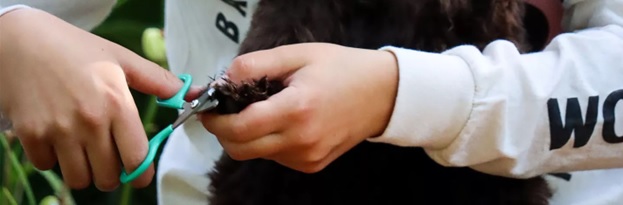
Choosing the right dog nail trimming tool is essential to making the entire process smooth and easy. But how do you know whether a dog needs a scissor- or guillotine-style clipper? Or maybe a nail grinder? Or a doggy version of an emery board?
The first thing to know before choosing a nail trimming tool is that no matter which style you select, it must be the right size for the dog’s nails and the right size for your hand. Choose the wrong size and, at best, you might give a dog a lousy manicure. At worst, you can injure a dog’s sensitive feet.
Scissor-style nail clippers can also be used on bigger dogs and those with thick nails, but you’ll need some decent hand strength to do the work.
Another good choice for small or medium dogs is a guillotine-style clipper. With these, you slip the nail through the hole, then simply slice off the tip. Guillotine-style clippers also come in larger sizes to fit medium to large dogs. An advantage of the guillotine-style clipper is that it’s usually spring-loaded, thereby requiring less force to make a cut than scissor-style clippers. The downside is there’s no safety features to prevent accidents.
While you can use a guillotine-style clipper on big dogs, you can also opt for a nail grinder when it’s time to trim a big dog’s thick nails. As with all tools, be careful using a grinder. The upside to grinders is, if used properly you can make very small incremental nail trimmings. The downside is sometimes those incremental filings means the entire process of using a grinder can take longer, which for some dogs can be stressful. Plus, you need to be careful about friction burns.
Manual nail files are similar to dog grinders in that they slowly file away at the nail rather than clipping. The process is entirely manual and can be time-consuming.

3. Take Your Time
Getting through a nail trimming session with a dog is not a race. In fact, the faster you go, the more likely you are to make a mistake. Take your time. Multiple small cuts to each nail may be better than trying to get the entire nail all at once and risk cutting too much.
4. Have a Light Source
To minimize the chances of an accidental cut to a dog’s quick you need a steady hand and a lot of light. Being able to see clearly is the best way to avoid accidents, especially if the dog’s nails are dark and you have to keep an eye open for the white circle that indicates you’re approaching the quick.
Some grinders come with a built-in light to help, but even so, we’d still recommend avoiding spots with dim lighting while nail grooming.
5. Keep a Blood Clotter Nearby
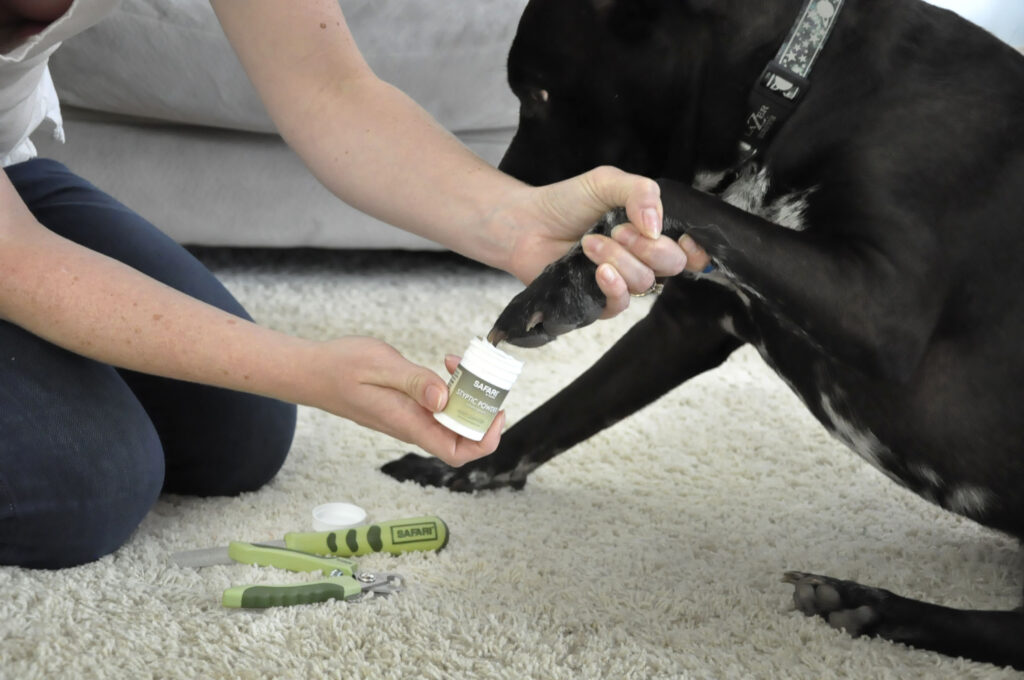
Accidents happen, and even as a professional dog groomer you will nick a dog’s quick from time to time. Having a blood clotter on hand (such as styptic powder) lets you handle the situation quickly. You can also look for a clotter that disinfects and numbs the pain, in addition to stopping the bleeding.
6. Be Patient
More than just taking it slow, groomers need to remember to be patient with the dogs. Not all dogs will always be comfortable with having their nails trimmed. In some cases, like with high-energy dogs, sitting still for 30 minutes might be too much. Be prepared to give the dog breaks in between trimming nails to let them relax.
Try to understand the experience from the dog’s point of view, then respond in a way that will make it better for him, not you.

 Most dog owners want to have their pup by their side whenever possible, but it’s important to set boundaries so that they know when it is and isn’t appropriate to occupy certain areas. Whether your client is cooking, on an important Zoom meeting, or has a sleeping baby in the next room, having a dog who knows their boundaries will prevent unnecessary stress for both your client and their dog.

 Puppies are so much fun to watch as they begin to explore the world around them. Everything is totally new and exciting to these little bundles of energy. They get so charged up they don’t know where to look next. Scampering around with breathtaking speed, they seem to be everywhere at once.
 Positive reinforcement with food treats is, of course, the key to successful training of dogs at any age, and it plays an even more crucial role with puppies. Just as it’s advisable to have customized training sessions, puppies will perform best if they are given reward treats that are tailored to their specialized needs.

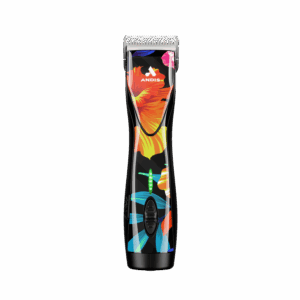
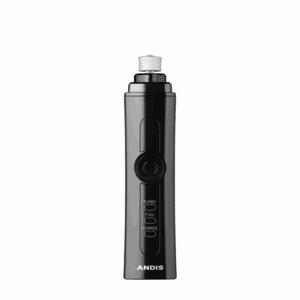 A few of my ‘must-haves’ include a heavy-duty cordless clipper like the Andis Pulse ZR II, spring-loaded metal attachment combs, a large slicker brush, 10” steel comb, regular and fine-tooth rakes, a flea comb and several new blades – including an Andis UltraEdge or CeramicEdge #30 to use with the attachment combs. I also stock up on a variety of skin and coat care products so the salon is prepared for the spring rush.
 Spring shave downs usually come with quite a bit of matting. It is important to check areas such as the armpits, behind the ears and the rear for more heavy matting. The coat must be able to separate and divide in order to allow the skin to breathe. That is necessary in order for the pet to maintain its body temperature and help prevent an array of skin conditions such as hot spots. The Andis large slicker brush and the 10” steel comb are the first tools I use on the majority of the dogs in the salon to help separate and divide the coat. Pay close attention to nails on those dogs that have not been into the salon all winter, and use an Andis nail clipper or Cordless Nail Grinder to get them under control.
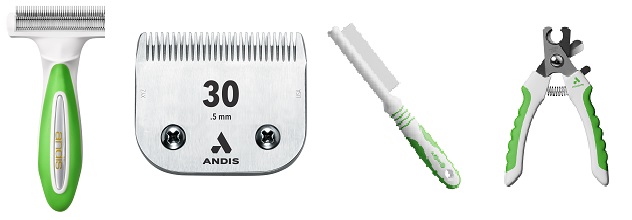 As the warmer months quickly approach, we will also see those pesky fleas and ticks, so make sure you have the rights products and tools on hand like the Andis flea comb. You can also help clients prepare ahead of time by developing a checklist they can use and educating them on the best ways to handle flea and tick season.






 New Program Launch
 Pet Grooming Instruction Program Update
 Pet Nutrition and Diet

 Dogs are not the only domesticated animals who like to explore outdoors. Cats like to adventure outside not only for exercise, but to experience new sights and smells. They can get out safely with leash training.
 As your clients prepare to head outdoors for the first time, let them know that they should always pick up their cat and carry her outside. This helps a cat know their owner is in control and prevents her from wanting to run out of the door any time it is open whether she has her leash and harness on or not.

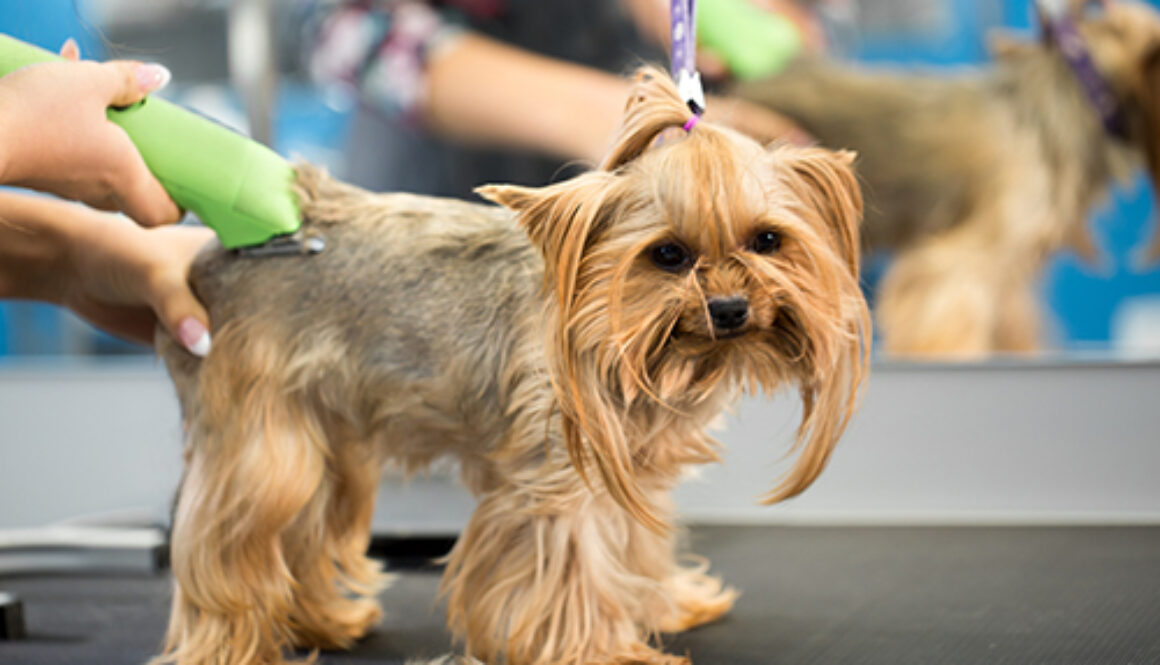
 The Andis Vida™ Clipper boasts a lightweight, ergonomic design that fits smaller-sized hands better, and features a quiet motor plus cordless charging with a USB-C cable. The Vida is great for many parts of a groom such as sanitary trims, paw pad trims, shaving faces and feet, and the lion cut on felines. However, the adjustable blade lengths of 9, 10, 15, 30 and 40 are typically not used for grooming body styles, which require a longer coat length. But now you can—with the new 8-Piece Adjustable Blade Stainless-Steel Attachment Comb Set. This set of attachments will also work with the Andis Pulse Li 5, if that clipper is part of your tool kit.
 Using the adjustable blade Vida clipper and the new Andis attachment comb set, I can groom all my miniature poodles with ease. I use the Vida without attachments for all prep work, shaved faces and feet, and then put on my desired attachment combs to complete the body groom—without ever having to change clippers. I often will use a shorter attachment comb such as the blue #2 for the body and go a little longer on the legs with the yellow #0 attachment comb. A quick fluff and scissor to finish and we are good to go. Another fantastic way to use the Vida with these new attachment combs is to do outline trims. On dogs such as Golden Retrievers or Australian Shepherds, we often do not cut into the coat, but rather clip or scissor the outline leaving a natural look, which is easier for dog owners to manage. The underline, leg feathers, rear and tail can be skimmed off with ease using attachment combs and minimal touch up work with thinning shears as needed. This will speed up your grooming time and help you get more pets on your table throughout the day.

 Some human indulgences are widely known to be hazardous to dogs, such as chocolate, which contains theobromine, a stimulant that is difficult for canines to metabolize, and can cause cardiac symptoms and seizures if consumed in large enough amounts. But many pet owners may be surprised to learn that even foods considered “good” for people can have high toxicity to dogs. Fruits like grapes and raisins can cause canines to vomit repeatedly and may even lead to kidney failure. Macadamia nuts are rich in nutrients and antioxidants beneficial to humans, but as few as six of them can make a dog very sick with muscle spasms, vomiting and fever. And that guacamole dip you made for the whole gang to share during the big game can be downright lethal to Fido. That’s because avocados contain a substance called persin, which not only triggers diarrhea and vomiting in dogs but may also cause fluid to accumulate in their lungs and chest, leading to serious and even fatal breathing difficulties.
 Other human foods may not result in immediate serious illness or death, but can cause pups to feel pretty crummy and may produce health issues over time. The lactose in human ice cream, cheese and pizza is hard to digest and can lead to vomiting and diarrhea. Human jerkies and processed meat are loaded with salt, sugar, nitrates and preservatives. And cookies and baked goods are full of sugar, high fructose corn syrup and chemical preservatives.
 For example, at the next cookout, instead of hot dogs or other fatty human meats, why not give pups their own healthy homestyle barbecue treats. Cloud Star’s USA-made
  Also on the sweet side from Cloud Star are Wag More Bark Less Sandwich Cookies, and Wag More Bark Less Iced Treat, a frosty non-dairy “doggy ice cream.” The Sandwich Cookies are just like the ones humans eat with a real peanut butter filling layered between two crunchy cookie biscuits. The Iced Treat is made with a delicious coconut cream base and either natural peanut butter or natural banana.