No one wants to sit down to cuddle with the family cat or dog, only to have a flea crawl across their hand. Preventing flea and tick infestations reduces those types of “ew” encounters—and also has many health benefits for your pet and, as it turns out, for you and your family.
Fleas and ticks can pose health risks to cats, dogs and humans. You might have heard of Lyme disease (transmitted by ticks) and tapeworms (passed by fleas), but the creepy bugs can pass other diseases to cats and dogs, which they can pass to you in turn.
And those don’t include the conditions your pet can suffer without transmitting them to you. Just one bite from a flea can cause flea allergic dermatitis, an allergic reaction to flea saliva. The allergy typically causes persistent itching and scratching, which can result in hot spots and other skin infections. Enough scratching and licking of the itchy spots can lead to bacterial infections of the skin.
Luckily, you can take steps to prevent fleas and ticks from biting your pet in the first place. Manufacturers offer a range of pest prevention products, from spot treatments to oral medications. To keep your pet pest-free, talk to your veterinarian about over-the-counter and prescription flea and tick preventive products to determine which product is best for your pet and your household. Keep these tips in mind:
Use only those products that are EPA-registered (for pesticides) or FDA-approved (for medications).
Talk to your vet before using a “spot” treatment on your pet’s skin or fur.
Read the entire label of a product before using it, and always follow the label directions.
Never use products intended for dogs on a cat.
Pay close attention to the weight scale on the product’s label. Your pet’s weight matters when using flea and tick prevention products. Too much product could harm your pet.
Watch your pet closely for signs of an adverse reaction to a flea- or tick-control product. Contact your vet immediately if your pet shows signs such as vomiting, excessive itching or scratching, anxiousness, or skin redness or swelling.
A few preventive steps taken today can help your pet avoid the discomfort of fleas and ticks this summer—and can help protect both you and your pet from health risks.
About the Author: Stacy N. Hackett is an award-winning writer with more than 25 years’ experience in the pet industry. She is the former editor of Pet Product News and a former staff editor with Cat Fancy, Cats USA, Critters USA and Ferrets USA. To learn more about her work, visit stacynhackett.vpweb.com.
Researchers discovered that the presence of other canines can help reduce a dog’s stress levels. annaav/Adobe Stock
If you have a shy or naturally fearful dog, I have some good news: the condition is now easier to manage.
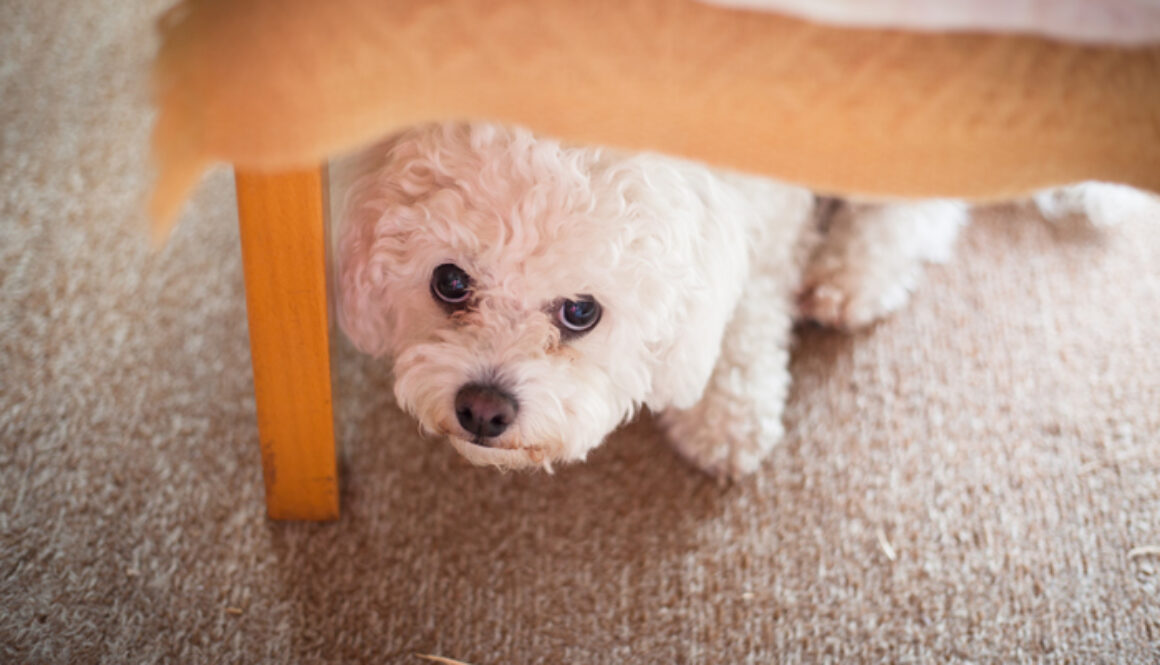
Just like humans, animals vary dramatically in how they relate to new experiences and to one another. Some are social butterflies, while others prefer to view the world from under the bed. Fortunately, there are ways to help your dog manage the fear. I’ve been watching and trying out the new advances in the pet product industry. The good news is there are plenty of options to help these naturally fearful dogs; the bad news is it will take some time for you to find the solution that works best for your dog.
There are some who believe that interacting with their dog can a) result in decreased stress levels or b) result in increased stress levels, or worse, reinforce the behavior. In 2005, scientists decided to find out. They discovered that interaction with the owner (positive or negative) did nothing to either increase or decrease a dog’s cortisol levels (cortisol is an indicator of chronic stress). What did lower the cortisol level was the presence of other dogs.¹ ²
Socialization
Owners can begin socializing their shy dogs through controlled encounters, such as having visitor in the same room who purposely ignores the dog. mdennah/Adobe Stock
The most powerful thing you can do as a new puppy owner is to socialize your canine. The more experiences a dog has, the more comfortable he becomes in dealing with change; the more he learns to trust you and the less fearful he will be. Even if you have an older dog who is fearful, it’s still not too late.
Begin the new experiences early and in baby steps. For instance, if your dog is fearful of people, begin by inviting a friend over for an afternoon. Choose a room to spend the time in, for instance a family room or den, and bring your dog in with the two of you. Instruct your friend to ignore your dog completely and allow him to approach on his own timeline.
Training
Dogs don’t like uncertainty any more than you or I do. We want to know that things will work out and while we do seek out new opportunities, we enter those with the certainty that all will be well because we understand out to deal with nearly any situation. This same certainty should be given to your dog. Training helps your dog understand that whatever new opportunity presents itself, he will be safe. Training also helps give your dog a chance to focus on a task, which helps him navigate the challenge.
Pheromone therapy, soothing music, calming wraps and treats: Used alone or in combination, these products might help your dog adapt to stressful situations. Lili/Adobe Stock
No matter how much training and socialization your dog receives, there are some animals that are just more easily frightened than others. The following are tips that could help your pets adjust to noise, new people and new challenges.
By planning ahead, you may be able to reduce your dog’s anxiety. From calming coats such as the Thundershirt (which use natural pressure points to relieve stress) to pheromone therapy from Adaptil in the form of sprays, collars and diffusers (which uses natural pheromones to help calm dogs), there is indeed a solution for every pet.
Music
While music has charms to sooth the savage breast, specific types might also help soothe canines even more effectively. Pet Acoustics has created a playlist that has been tested on stressed out dogs. It has placed the music on a Bluetooth speaker and all you need to do is plug and play when you’re away from home.
Herbal and Other Natural Remedies
A few studies indicate that some herbal remedies, such as lavender aromatherapy, might be effective in helping minimize stress and alleviate fear in dogs.³ Aromatherapy products, such as Canine Calm from Earth Heart, also appear to be effective in helping minimize stress and alleviate fear in dogs, based on anecdotal evidence. Other products combine herbs and other ingredients in supplement form. Licks Zen, for example, uses chamomile, tryptophan, L-theanine, eleuthero toot and ashwagandha root, while Pet Naturals of Vermont’s Calming chews uses colostrum calming complex, L theanine, and thiamine to help relax pets
With just a little research, you can find a solution that will help calm your fearful, shy or scared dog.
1 Nancy Dreschel, DVM, & Douglas Granger, PhD. 2005. “Physiological and behavioral reactivity to stress in thunderstorm-phobic dogs and their caregivers,” Applied Animal Behaviour Science 95:153–168.
2 J.S.J. Odendaal & R.A. Meintjes. 2003. “Neurophysiological correlates of affiliative behaviour between humans and dogs.” The Veterinary Journal 165:296-301.
3 Migiwa Komiya, DVM; Akihiko Sugiyama, DVM, PhD; Kazuko Tanabe, DVM; Tomiya Uchino, DVM, PhD; Takashi Takeuchi, DVM, PhD. (2009) Evaluation of the effect of topical application of lavender oil on autonomic nerve activity in dogs. American Journal of Veterinary Research 70:6, 764-769
About the Author: Stacy Mantle is a fulltime freelance writer, bestselling author and founder of PetsWeekly.com. She resides in the deserts of the Southwest with a few dogs, several cats and a very understanding husband.
No one wants to hug a beloved dog or cat and receive reciprocal affection accompanied by bad breath. In addition, bad odors emanating from a pet’s mouth could be a sign of more serious dental issues. Sadly, approximately 70 percent of all cats and 80 percent of all dogs over of 3 years of age suffer from some form of periodontal disease.1
Dental problems start in a pet’s mouth the same way it does in yours. All animals, from cats and dogs to monkeys and lions, need to take care of their teeth. Zookeepers are diligent about dental care for the animals in their care, and pet owners should do the same. By not taking care of teeth, plaque develops, which is nothing less than bacteria build-up on the teeth. Yuck! If the plaque is not removed, the minerals in saliva combine with the plaque to form tartar. This in turn irritates the gums, resulting in gingivitis, which causes the gums to look red and inflamed.
When gingivitis is left unchecked, the inflammation can cause the bone around the teeth’s’ roots to begin deteriorating. In turn, the teeth become loose and fall out. This stage of deterioration is irreversible.
Apart from periodontal disease, more than 50 percent of felines have at least one feline odontoclastic resorption lesion (FORL) by the time they are 3 years old.2 Like human cavities, they are extremely painful and can cause difficulty in eating.
In humans, decay causes the tooth to disintegrate from the outside inward, so that the cavity is visible to the dentist. However, the exact opposite happens in cats. FORLs cause the tooth to decay from the inside outward. Consequently, the damage isn’t visible until it’s very advanced and irreversible, which means the tooth has to be extracted. FORLs are said to be even more painful than human toothaches because the decay attacks the nerve. This type of tooth resorption happens to dogs, too.
All these various dental issues, apart from being very painful and possibly preventing your pet from eating properly, can also lead to serious medical issues. Bacteria left unchecked in the mouth spreads internally and can affect organs, such as the kidneys and the heart, and cause serious diseases such as diabetes.
All these scenarios can be prevented with proper dental care that starts with brushing your dog’s teeth. There are toothbrushes for cats, too, but we all know what a task this can be. Instead, Dr. Jan Bellows, of Weston, Florida, who is one of only 130 board-certified veterinary dentists practicing in the United States, suggests taking a Q-tip dipped in tuna juice and rubbing it against the teeth and gums. The very action of the Q-tip on the teeth provides a cleaning effect. And if you can’t do the entire mouth, do what you can, there is always tomorrow.
Fortunately, there are lots of dental products, such as water additives, dental treats and chews, as well as foods that help address dental issues.
Without a doubt, regular inspections of your pet’s mouth along with an annual professional teeth cleaning is among the most important health care you can give your dog or cat. It’s important to remember that teeth cleaning needs to be done by a veterinary professional and not someone who offers “gentle dental cleaning.” During the visit, be sure to ask your veterinarian about general dental care. She can offer advice about suitable treats, chews and food.
February is Pet Dental month and many veterinary offices around the country offer special discounts for teeth cleaning and care visits. Take advantage of these savings and don’t be shy to ask for a special price if you have multiple pets.
About the Author: Sandy Robins is the 2013 winner of the “Excellence in Journalism and Outstanding Contribution to the Pet Industry Award.” Her work appears on many of the country’s leading pet platforms, such as MSNBC.com, MSN.com and TODAYShow.com. She is a regular contributor and columnist in multiple national and international publications, including Catster, as well as the author of the award-winning books “Fabulous Felines: Health and Beauty Secrets for the Pampered Cat” and “For The Love of Cats.” Learn more about Sandy on her website or Facebook page. #welovecats
Here are eight steps you can take to ensure your cat stays in tip-top shape.
The start of a new year tends to encourage us to renew our focus on our health and welfare. It’s also the perfect time for cat owners to focus on the health and well-being of our feline companions. In recognition of National Cat Health Month, make time to schedule your cat’s annual veterinary checkup, and consider these ways you can help your cat live a longer, healthier, happier life.
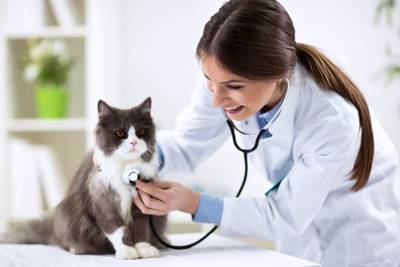
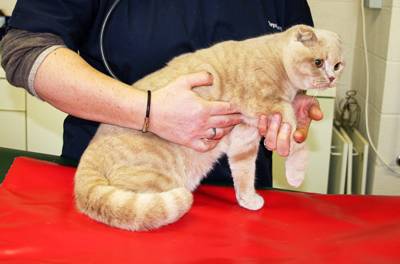
A yearly checkup is one of the best ways to keep your cat in her best possible health. These annual visits allow your veterinarian to notice any changes in your cat’s condition from year to year, and help you catch potentially serious issues early.
Keep Your Cat’s Vaccinations Up-to-Date
At your cat’s annual exam, your vet will review any necessary booster shots and updates to your cat’s vaccination schedule. These regular inoculations will help prevent your cat from contracting serious illnesses if he is exposed to other cats.
Neuter Your Cat
One of the best ways to maintain your cat’s good health is to have him or her altered. These procedures prevent many illnesses and conditions related to a cat’s reproductive organs as well as help eliminate many unwanted behaviors. The procedures also prevent unwanted litters and help reduce animal overpopulation.
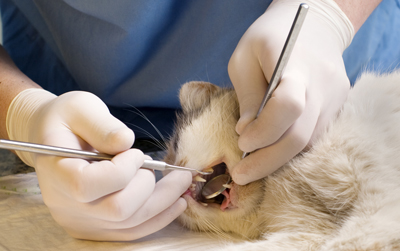
While it is not easy to brush a cat’s teeth (unless you train your cat to accept the process from the time it is a kitten), regular teeth cleaning and exams are an important component of your pet’s overall health. Your vet will check your cat’s teeth at her annual exam.
Monitor Your Cat’s Weight
The life of an indoor cat can lead to lazy afternoons napping in the sun—and less time being active. Help your cat maintain a healthy weight by making playtime a regular part of his day. Interactive feeders, a rotation of interesting toys, even a feline companion can help get your cat moving. Get involved with playtime with wand toys, doing so strengthens the bond with your cat while he gets necessary exercise.
A high-quality food specially formulated to meet the specific nutritional requirements of your cat’s age and lifestyle also can help your cat maintain a healthy weight. Ask your veterinarian which types of food could work best for your cat and follow the feeding guidelines provided by the manufacturer. Treats can be part of your cat’s life, too, but remember that the calories from treats can add up quickly.
Notice Any Changes in Your Cat’s Litterbox Habits
Cats are quite adept at hiding signs of illness, but one place where early signs often show up is the litterbox. If your cat’s litter habits change (he starts urinating more frequently or urinates inappropriately) or if you notice a change in the condition of the box contents, take your pet to the vet as soon as possible.
Maintain a Regular Grooming Routine
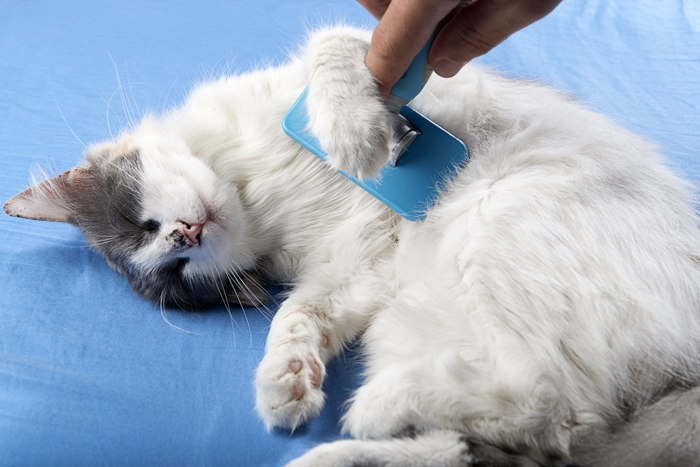
You can create a strong, loving bond with your cat by brushing or combing her regularly. Such a routine also will help you identify any issues with her fur, skin and claws. Pay attention to any changes in your cat’s coat or skin, such as dry or flaky patches of skin, red or irritated skin, missing fur, dull fur or reddened areas around her claws. If you see any of these signs, schedule a visit to the vet.
About the Author: Stacy N. Hackett is an award-winning writer with more than 25 years’ experience in the pet industry. She is the former editor of Pet Product News and a former staff editor with Cat Fancy, Cats USA, Critters USA and Ferrets USA. To learn more about her work, visit stacynhackett.vpweb.com.
No matter where you opt to go, daily walks outdoors (or in a shopping center) provide your dog with essential physical exercise and mental stimulation. Photo credit: frank1crayon/Adobe Stock
When it comes to daily exercise, if it’s good for you; it’s good for your dog. All the incentive you might need to get out there and walk is your dog eagerly wagging his tail in anticipation—and possibly even bringing you his leash.
Even if you have a backyard for your dog to play in, there is no substitute for a nice long walk or a romp at a park. Dogs are great explorers and whether you are walking around the neighborhood, on country road or a in a mall, your dog will benefit physically and mentally—the myriad smells he encounters will add to his entertainment.
Dogs left alone at home for long hours offer suffer from “cabin fever,” leading to stress and anxiety, which could result in unwanted chewing behaviors. Daily walks allow a dog to blow off steam that might otherwise be acted out by such negative behaviors. It’s the same for people—a change of scenery can do wonders.
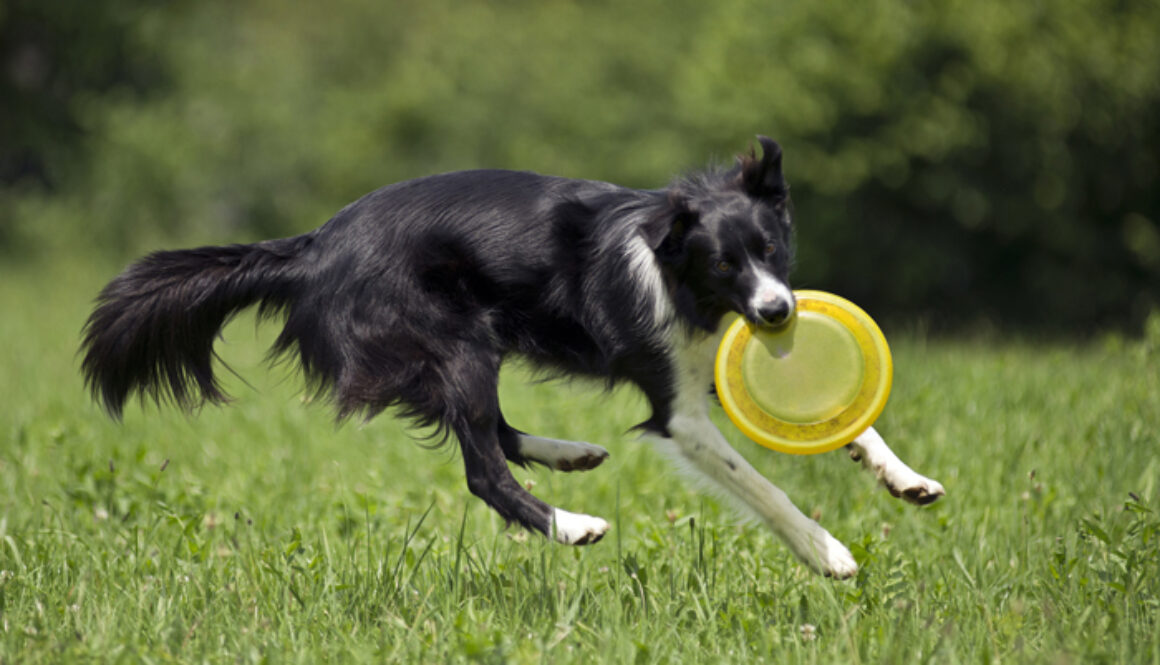
Various breeds, such as working and herding dogs, have high activity requirements. A rousing game of fetch or fly disc at a park, combined with daily walks, can help burn off their excess energy. Photo credit: fibena/Adobe Stock
Many dogs were initially bred to perform tasks and/or work; it’s in their DNA. This is why it’s vital that you understand your dog’s breed(s) characteristics so that the exercise you provide satisfies his natural instincts. For example, most herding dogs would jump at the opportunity to go to livestock-herding classes. And games of fetch engage many breed’s retrieval instincts.
Whatever size your dog is—large, medium, small or somewhere in between—regular exercise is essential. It’s a misconception that small dogs such as Yorkies don’t need as much exercise as a large Labrador does. All dogs benefit, irrespective of size. However, you do need to take your dog’s age and health into consideration. Always check with your vet if you’re not sure of the distance your dog can handle on a daily walk. You should also be cognizant of the route and its gradient, too, especially if you have an older dog with joint issues.
Small dogs need regular exercise, too! Just like working and herding dogs, many terriers need plenty of activity throughout the day to keep them healthy and happy. Photo credit: alexei_tm
However, this doesn’t mean you should not take your older dog for walks. A study by researchers at the University of Veterinary Medicine in Vienna looked at how well physiotherapy—walking uphill, walking downhill and walking over low obstacles—helps relieve arthritic pain and immobility in dogs. The researchers found that walking downhill did not have much therapeutic benefit but walking uphill could help improve a dog’s joint flexibility, particularly at the hip, and that providing low obstacles could aid in improving the bending of the joints in the fore- and hind limbs.
Ideally, dogs should go for walks at least twice a day along with other forms of exercise, especially if they are home alone a lot. Another benefit of daily outings is that it allows a dog to develop good social skills and learn to deal with common situations when out and about. And you just never know what new friends you could make, too.
About the Author: Sandy Robins is the 2013 winner of the “Excellence in Journalism and Outstanding Contribution to the Pet Industry Award.” Her work appears on many of the country’s leading pet platforms, such as MSNBC.com, MSN.com and TODAYShow.com. She is a regular contributor and columnist in multiple national and international publications, including Catster, as well as the author of the award-winning books “Fabulous Felines: Health and Beauty Secrets for the Pampered Cat” and “For The Love of Cats.” Learn more about Sandy on her website or Facebook page. #welovecats
There’s a good reason why your cat is acting like a jerk.
Let’s face it—cats get a bad rap. Ailurophobes around the world have (more or less) based their entire phobia on the idea that all cats are jerks. However, those of us who love and adore our feline friends know the only reason cats are ever jerks is because something is bothering them.
To make your cat stop being a jerk, you need to discover the reason he’s being one in the first place. There is always a reason (because cats aren’t naturally jerks). Here are a few reasons why your cats might be acting like a jerk and some tips on how to stop them from escalating their behavior.
Your cat might be acting like a jerk because he is in pain. A quick trip to the veterinarian will help ensure he doesn’t have any physical ailments. Photo credit: Dogs/Adobe Stock
This is the No. 1 reason your cat might be a jerk. After all, how happy are you when you’re in pain? Just because your cat is youngish or happens to have a beautiful coat doesn’t mean he’s not in pain.
His stomach might be acting up, he could have the beginning of a urinary tract infection, perhaps he jumped off that tall canopy bed you’re so proud of and landed on his foot wrong.
If your cat is suddenly hissing when you try to touch him or lying in a corner growling at nothing, there’s a reason—he is quite likely in pain and it’s time to get him to a veterinarian.
They Are Bored
Boredom is a valid reason for jerk-like behavior in a cat. Daily interactions with your cat can help prevent boredom-induced behavior. Photo credit: Stefano Garau/Adobe Stock
Yes, being a jerk is a completely valid response to being bored. Try to view the world from their perspective and you’ll see what I mean: We take these perfect predators out of their native environment and ply them with dry kibble, ban them from exploration, expect them to defecate in an (often unclean) box and then we wonder why they’re being jerks. Certainly domestication is a great deal for them, but it’s still a weak attempt to stop centuries of conditioning.
Make your cats’ lives a little more interesting by ensuring they’re not bored. Encourage their hunting instinct by hiding their food (I love the NOBowl Feeding System for this task), encourage them to stay active (the NekoFlies toys are a favorite due to ease of changing out their high-quality lures) and change up their environment by adding climbing areas, tunnels or even cardboard boxes.
Cats need to be stimulated and we need to embrace their ancient instincts to help them successfully integrate into our modern indoor culture.
Your new perfume might be driving your cat to distraction—and bad behavior. Photo credit: irinaorel
Unusual odors are a big culprit for cats who are suddenly exhibiting jerky behavior. Remember, what your cat thinks is an odor and what you consider to be a nice. rose-scented bath are two entirely different things.
A cat’s sense of smell is about 14 times better than most human’s. That means they are highly sensitive to any unusual smells, including room deodorizers, perfumes, cleaners or a thousand other things. If you’ve suddenly been bitten by the essential oil bug and are diffusing new citrus oils in your bedroom each night; that might be the reason. If you use a new laundry detergent, that might be the reason. Hanging out with someone new? Your cat will know what type of person they are before you do—all based on their smell.
Observe your cat—she will tell you more than you think. Is she staying away from a specific room? Identify what you’re doing different and either work with your cat on learning to accept it or stop doing it.
Someone was a Jerk First
External factors, such as an annoying cat outside, could cause your cat to act like a jerk toward you. Photo credit: photosaint/Adobe Stock
This happens a lot more than you might think, particularly in multi-species (or multi-cat) homes. One cat decides she wants to eat first, the other cat disagrees. That new puppy you brought into your home wants to play but your cat has other ideas.
However, it doesn’t have to be a multi-species home. For example, there was once a time when one of my cats was biting at me for no reason at all. She spent her evenings staring out a window and if we tried to move her or chastise her for growling, she would let loose the felines of hell.
Turns out, there was a bully of a tomcat who had taken over our yard at night when the dogs were in and the cats were sitting in the window. He would flout his freedom by parading along the windowsill, basically irritating my cat all night as she steadfastly stood guard.
Once we got that tomcat neutered and taught him to stay out of our backyard, our cat went right back to her old loving self. Don’t be too quick to judge your cat—she might have a very good reason for acting like she does.
Something is New
Cats tend to view any type of change as bad. If your cat doesn’t like your furniture rearrangement or your new friend, pheromone products could help. Photo credit: basnik_bna
Cats generally aren’t really fond of change. Other than some environmental enrichment now and then, they prefer everything to stay the same. They don’t want new people wandering around, they don’t like the new baby who takes up all your time and they really don’t like the funny-smelling new comforter you bought for your bed.
To help them through this difficult adjustment, pheromones are your best friend. Be sure to use the right kind; if you’re bringing in a new foster cat or dog, stay with the community cat pheromones. Feliway room diffusers can help solve these types of “adjustment” problems.
Cats are complex creatures, for sure. But they’re not nearly as mysterious as we think. It’s not hard to figure out what’s wrong with your cat if you choose to take the time and listen. Just like us, they have a reason for acting the way they do. No cat is truly a jerk and no cat acts like a jerk without a reason.
About the Author: Stacy Mantle is a fulltime freelance writer, bestselling author and founder of PetsWeekly.com. She resides in the deserts of the Southwest with a few dogs, several cats and a very understanding husband.
There are several steps you can take to help your dog cope with various situations.
A dog’s body language (tucked tail, ears down, crouched posture) can clearly indicate when he is fearful or stressed out. Photo credit: dashabelozerova/Adobe Stock
Have you ever taken your dog somewhere and wondered if he’s having a good time? If you know canine body language, it’s not hard to tell. A dog who is having fun has an alert expression on his face. His eyes are bright, his ears are up and he moves with purpose and confidence.
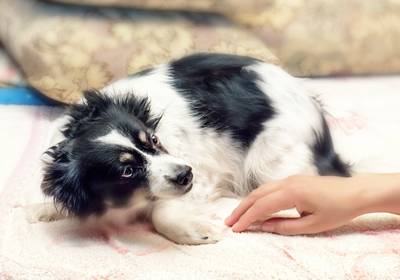
A stressed-out dog, however, is a whole other story. When a dog is in a situation he can’t handle, he will let you know it. Some dogs react submissively by putting their ears down and tucking their tails between their legs. They might flick their tongues out repeatedly, avoid looking you in the eye and could even cower.
Some dogs react to stress with a more aggressive posture. They might bark obsessively, dart around at the end of the leash and even become aggressive toward people or other dogs.
How do you handle it when your dog is stressed out? What can you do to help him relax? Here are a few tips to help your dog distress.
Know Your Dog
First off, try to avoid exposing your dog to situations you know he can’t handle. Loud noises, throngs of people and a bunch of other dogs in close quarters can be big triggers for many dogs, especially if they haven’t been well socialized.
Calm Your Dog
Dogs can become overwhelmed in a variety of settings. If your dog becomes stressed, talk to him a confident voice and give a few pats to reassure him all is well. Photo credit: Daxiao Productions
If your dog is showing signs of fear and stress, reassure him that everything is OK. Resist your first impulse to stroke him gently while quietly telling him “It’s OK, don’t be scared.” Your dog can interpret this kind of reaction as a reward for being stressed out, so handling it this way could make it worse. Instead, show your dog there’s nothing to be worried about. Speak reassuringly to him in an upbeat voice. Give him some pats rather than stroking him and act confident yourself. Because he sees you as his leader, he will take his cue from you.
Rescue Your Dog
Some situations are just too much for dogs to handle. Even the most well socialized dog can become very stressed out over the sounds of fireworks or gunshots, for example. If your dog is extremely stressed in a situation, take him out of it. You don’t want to traumatize him.
Consider Medication
If you have a very high-strung dog who can’t handle traveling, strange people coming over or thunderstorms, talk to your veterinarian about medication. Acepromazine, Xanax and other prescription sedatives can help your dog feel calm when he might otherwise freak out.
You can also consider Dog Appeasing Pheromone (DAP) or Adaptil products that mimic the soothing scents emitted by a mother dog to help calm her puppies.
Expose Your Dog
To help your dog learn to cope better in stressful situations, gradually expose him to these events in small doses, offering lots of praise and treats when he endures them without coming unglued. This is best practiced when your dog is a puppy, but no dog is too old to learn to rely on you for comfort when he’s feeling stressed out.
About the Author: Audrey Pavia is an award-winning freelance writer and author of “The Labrador Retriever Handbook.” She is a former staff editor of Dog Fancy, Dog World and The AKC Gazette magazines. To learn more about her work, visitwww.audreypavia.comandhollywoodhoofbeats.net/
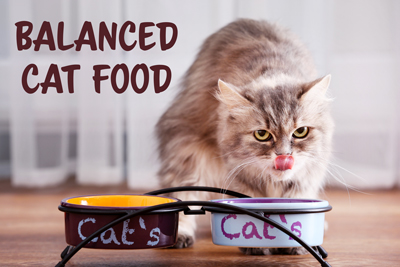
You can choose from a buffet of dry, wet, frozen and freeze-dried varieties for your cat.
A stroll down the cat food aisle at the local pet or grocery store can boggle the mind. Dozens of options line the shelves, from dry kibble to canned products, with frozen and freeze-dried varieties also available to cat owners. Which formula should you put in your basket?
Your selection likely depends on the needs (and sometimes the whims) of your cat and the boundaries of your budget. Here’s a run-down on the types of premium and super-premium cat foods available, and the features of each.
Dry aka Kibble
One of the most convenient types of cat food, dry foods come in a range of formulas and flavors. As a discerning pet owner, you might look for brands featuring unique protein sources, such as lamb, turkey, salmon—even kangaroo or venison. A current trend is “grain-free” formulas, which eliminate corn, wheat and other grain ingredients. Such formulas can help with cats experiencing allergy symptoms.
David Bovard, owner of Pioneer Pet Feed & Supply in Seattle, recommends feeding dry food as a source of entertainment for cats. He suggests putting a small amount of the kibble in “treat-dispensing toys and slow feed and puzzle bowls to encourage interactive feeding and better digestion and mental stimulation.”
Wet aka Canned or Pouched
The range of wet cat foods available rivals that of dry foods. Canned foods come in several sizes as well, and Bovard said the smaller 3-ounce size may work well for many owners.
“Unless you’re feeding an army of cats, it helps cut down on waste and keeps the food fresher,” he explained. “Plus it tends to have a lower price point.”
As with dry foods, wet foods are available in many varieties, from kitten- or senior-specific formulas to those designed for weight management. Many companies also source their ingredients exclusively from suppliers in the United States—simply look for the “Made in the USA” claim on the label.
Frozen Raw
Because cats are obligate carnivores—meaning they are natural meat eaters—many companies now offer frozen raw foods that offer complete and balanced nutrition for cats. Like dry foods and canned foods, these also come in a range of protein sources, from beef to rabbit to salmon.
To feed frozen raw food, you need simply thaw the appropriate-sized portion for one meal. This can become somewhat of a science, as the uneaten portion should be discarded. Still, Bovard is a fan. “I believe in the benefits of feeding raw food to cats,” he said.
Freeze-Dried
This type of food combines the nutritional value of frozen raw food with the convenience of dry food.
“I find people who are less likely to feed frozen raw are more likely to feed freeze-dried raw,” Bovard said.
To feed freeze-dried food, you add a bit of water until the food is about the consistency of canned food. Small bits can also be used as treats, Bovard added.
Still not sure which food to serve for your cat’s next meal? Talk to your veterinarian or ask your local pet store owner for advice. With the range of premium and super-premium foods on the market, it is easier than ever to feed your cat a food that is both tasty and nutritious.
About the Author: Stacy N. Hackett is an award-winning writer with more than 25 years’ experience in the pet industry. She is the former editor of Pet Product News and a former staff editor with Cat Fancy, Cats USA, Critters USA and Ferrets USA. To learn more about her work, visit stacynhackett.vpweb.com.
Fun, engaging activity is vital for your feline’s wellbeing.
Cats are predators by nature. You can’t take hunters out of their natural environment and expect them to do well in one where potential prey is nonexistent. Cats have spent millennia finely tuning their hunting instincts and if you don’t replace their primal need to pursue, you’ll become their prey and/or they will act out in destructive ways to communicate their needs.
A tunnel provides a great place for cats to play, hide or even sleep in. Photo credit: Wild_Strawberries/iStock
“Your cat is like a Ferrari,” said Pam Johnson-Bennett, a cat behaviorist. “You can’t just leave it in the garage to rust away. You need to get your cat playing to see how great she really is.”
Providing myriad opportunities for play is the best way to satisfy cats’ hunting instinct. However, there are ways to play that will make it a lot more fun for you and your cat. While you might think play involves nothing more than dangling a toy in front of your cat, most likely, you are just making her more frustrated.
Play is primarily about hunting to a cat and that means it can be broken down into four main components: stalk, chase, pounce and eat.
“Cats need to have their natural hunting instincts stimulated in a healthy indoor environment,” said Ellen Tsuyaki, founder of Neko Flies Cat Toys. “Using wand toys allows cats to use their various skills of hunting, such as stalking, jumping and running, while chasing prey. It also helps keep your cat fit and minimizes obesity issues, which are a problem in many indoor cats.”
Choosing a Toy for Your Cat
Cats love to climb and scratch, which is why you should provide yours with a variety of objects that let her satisfy these instinctual behaviors. Photo courtesy of The Refined Feline.
How you choose to play with your cat depends on her personality. No matter what your cat’s favorite method of play is, be sure you provide her with a variety of items that will stimulate all of her instincts, including:
Hiding: cardboard boxes, tunnels, cat caves, etc.
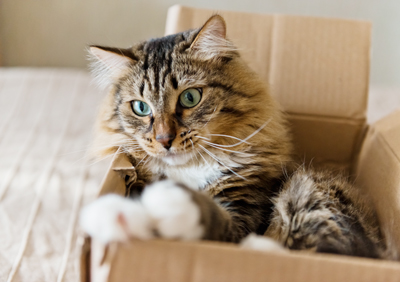
As with many cats, yours might need to have several places to hide in, particularly if household activity becomes overwhelming. Provide her with a cat play tunnel she can crawl and hide in or set out a few different sized boxes for her to explore. (I’ve never seen any cat turn down a good cardboard box.)
Climbing: cat trees, cat perches, tall scratching posts, etc.
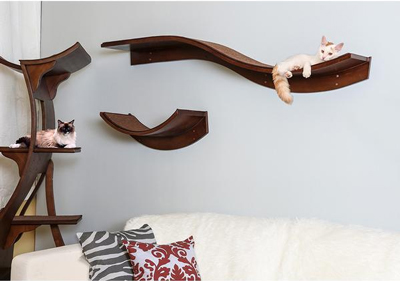
In the wild, cats seek out high places to observe unobtrusively and safely. Climbing is important for your cat because it not only satisfies this natural urge; it also enables her to use and sharpen her claws. As such, your cat should have scratching posts and tall items to climb and explore. Be sure you invest in a sturdy tree/scratching post or your cat could become injured if falls over on her.
Stalking and Chasing: Wand toys, lasers, stuffed toys, ball track toys, electronic prey toys, etc.
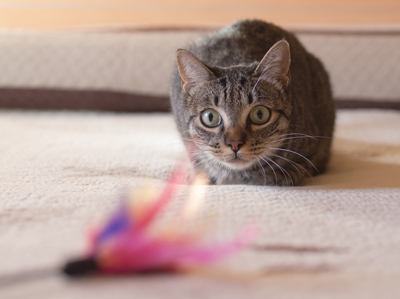
Getting your cat to stalk a feather toy is a great way to engage her in play—and you get to enjoy watching her pre-attack “butt wiggles.” Photo credit: Ramonespelt/iStock
Because your cat is a master hunter, she will need a way to stalk “prey.” This can be done by drawing a wand toy across the floor in front of her or by playing a game of hide and seek. Cats also love to chase things, so you’ll need to identify what types of things your cat prefers to chase. Sometimes a cat will be scared of a mouse or bird and prefer to chase a bug or a lizard. You shouldn’t encourage your cats to go after live prey because that’s just cruel; however, you should select a toy that mimics the action and size of what she likes to chase most.
Pouncing: wands toys, stuffed toys, electronic prey toys, etc.
The pouncing part of catching prey is very important to cats because it gives them the opportunity to “complete” a mimicked kill. Always remember to let your cat eventually catch whatever it is you’re encouraging her to chase. If you don’t, your cat could become frustrated and refuse to play.
You should provide your cat a snack or meal after a solid play session. This helps complete the cycle of hunt, catch, kill, eat. Cats like to earn their dinners so be sure you keep her active prior to feeding. You won’t find many freeloaders in the feline world.
When To Schedule Playtime
Not many cats can resist an empty box. You can give your cat endless hours of fun (and great places to nap) by placing various-sized boxes around the house. Photo credit: Valeriya/iStock
Cats are crepuscular (most active at dusk and dawn), which often makes those hours the best time to play. This is when your cat will most likely want to engage in play. Remember, though, all cats are different. You should pay attention to when your cat is most active and set your playtime for those hours—unless, of course, that time is two in the morning.
While the types of activities you engage your cat in are important, what ultimately matters is the actual engagement. Cats, particularly indoor ones, need their owners encouragement to stay active; not doing so can jeopardize your cat’s mental and physical well-being. Whatever activity you choose for your playtime, be sure your cat is enjoying as much as you are.
About the Author: Stacy Mantle is a fulltime freelance writer, bestselling author and founder of PetsWeekly.com. She resides in the deserts of the Southwest with a few dogs, several cats and a very understanding husband.
Many canines are susceptible to this potentially life-threatening condition.
Most dogs are very enthusiastic about their food. In fact, one often wonders if they ever taste anything particularly those that vacuum up a meal in literally seconds. It’s a problem, because dogs who eat with such gusto can be candidates for developing a condition called bloat, which can be life threatening.
Bloat actually refers to two conditions, according to petMD.com. The first is gastric dilatation, in which the stomach distends with gas and fluid. The second is volvulus, in which the distended stomach rotates on its long axis. The spleen, which is attached to the wall of the stomach also rotates with the stomach.
When gas and fluid is trapped in the stomach, causing it to distend as the mixture ferments, blood circulation is cut off, which can result in a number of other medical issues, such as acute dehydration, bacterial septicemia, circulatory shock, cardiac arrhythmias, gastric perforation and even death.
Bloat can occur in any dog at any age, but typically occurs in middle-aged and older dogs. Large-breed dogs with deep chests are anatomically predisposed, such as Great Danes, German shepherds, St. Bernards, Labrador Retrievers, Irish Wolfhounds, Boxers and Weimaraners, as well as medium-sized breeds, such as Shar-Peis and Basset Hounds. While this condition is not common in small breeds, it has been known to occasionally occur when they are elderly.
In addition, dogs weighing more than 100 lb. have a 20 percent susceptibility to bloat, according to VCA Hospitals’ website. Whether or not your dog is predisposed to bloat, the condition can develop suddenly in what is otherwise a normally active and healthy dog. The sudden onset of bloat is why you should do all you can to prevent it from occurring.
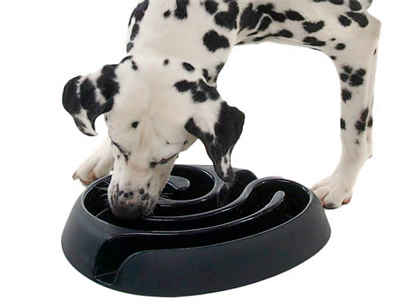
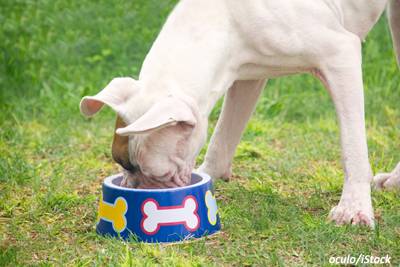
One way to help prevent bloat issues to is train your dog to eat more slowly. Several products can help with the process, such as slow-feed bowls or slow-feed adaptors. DogIt, JW Pet, Petrageous Designs and Brake-Fast are just a few of the brands that offer slow-feeders. If you prefer not to buy new feeding dishes, you can opt for a slow-feed adaptor, which is placed inside your dog’s bowl. The Gobble Stopper is a bone-shaped adaptor that a dog has to eat around, which slows him down. Another adaptor is Omega Paw’s Stainless Portion Pacer, a metal ball that is placed inside a bowl to limit the amount of food your dog can access at one time.
The Buster DogMaze was created to challenge and slow down dogs when they eat.
You could also put your dog’s meals in a food puzzle and make them work for it. Food puzzles come in different designs and sizes to suit your breed. Buster, Outward Hound and The Company of Animals offer food puzzles. I have tested a food puzzle and it can stop a dog from wolfing down a meal in three minutes and extend dining time to a “leisurely” 10 minutes, which can definitely help with the digestion.
If you feed your dog only once a day, consider increasing his mealtimes to two or more a day. Doing so could help lessen your dog’s tendency to gulp his food in just a few swallows by reducing his hunger level. Adding wet food to his kibble, and feeding a calcium-rich meat meal could also decrease the risk of bloat, VCA Hospitals website state.
No matter which methods you try, by slowing down your dog’s eating time, he might even get to use his taste buds and enjoy his meals even more.
About the Author: Sandy Robins is the 2013 winner of the “Excellence in Journalism and Outstanding Contribution to the Pet Industry Award.” Her work appears on many of the country’s leading pet platforms, such as MSNBC.com, MSN.com and TODAYShow.com. She is a regular contributor and columnist in multiple national and international publications, including Catster, as well as the author of the award-winning books “Fabulous Felines: Health and Beauty Secrets for the Pampered Cat” and “For The Love of Cats.” Learn more about Sandy on her websiteor Facebook page. #welovecats
Rating A+ The BBB only accredits the business management of a school, not the quality of the curriculum, or training programs.
STATE LICENSURE AND APPROVAL
Animal Behavior College is a private vocational school approved by the Bureau for Private Postsecondary Education (www.bppe.ca.gov) under the California Private Postsecondary Education Act of 2009 and Title 5. California Code of Regulations Division 7.5. Private Postsecondary Education. The Bureau for Private Postsecondary Education approval means that this institution and its operation comply with the standards established under the law for occupational instruction by private postsecondary educational institutions. Institutional approval is subject to continual review and the institution must reapply for approval every five years.
DISCLAIMER
Please be advised that Animal Behavior College (“ABC”) is the exclusive entity authorized to provide certifications and/or degrees from Animal Behavior College. Moreover, such certifications and/or degrees are only conferred by ABC following a student’s completion of an ABC-administered program. No other entity or individual has authority to confer certifications and/or degrees on ABC’s behalf. Any other entity or individual who attempts to do so is acting without express or implied authority from ABC.
GI BILL® TRADEMARK ATTRIBUTION
GI Bill® is a registered trademark of the U.S. Department of Veterans Affairs (VA). More information about education benefits offered by VA is available at the official U.S. government Web site at https://www.benefits.va.gov/gibill
Animal Behavior College, 27509 Avenue Hopkins, Santa Clarita CA 91355-3910 Contact Us









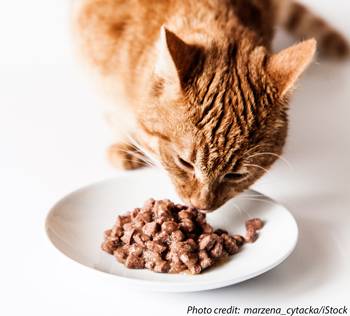 You can choose from a buffet of dry, wet, frozen and freeze-dried varieties for your cat.
 One of the most convenient types of cat food, dry foods come in a range of formulas and flavors. As a discerning pet owner, you might look for brands featuring unique protein sources, such as lamb, turkey, salmon—even kangaroo or venison. A current trend is “grain-free” formulas, which eliminate corn, wheat and other grain ingredients. Such formulas can help with cats experiencing allergy symptoms.
 Wet aka Canned or Pouched
 As with dry foods, wet foods are available in many varieties, from kitten- or senior-specific formulas to those designed for weight management. Many companies also source their ingredients exclusively from suppliers in the United States—simply look for the “Made in the USA” claim on the label.
 Because cats are obligate carnivores—meaning they are natural meat eaters—many companies now offer frozen raw foods that offer complete and balanced nutrition for cats. Like dry foods and canned foods, these also come in a range of protein sources, from beef to rabbit to salmon.
 Freeze-Dried

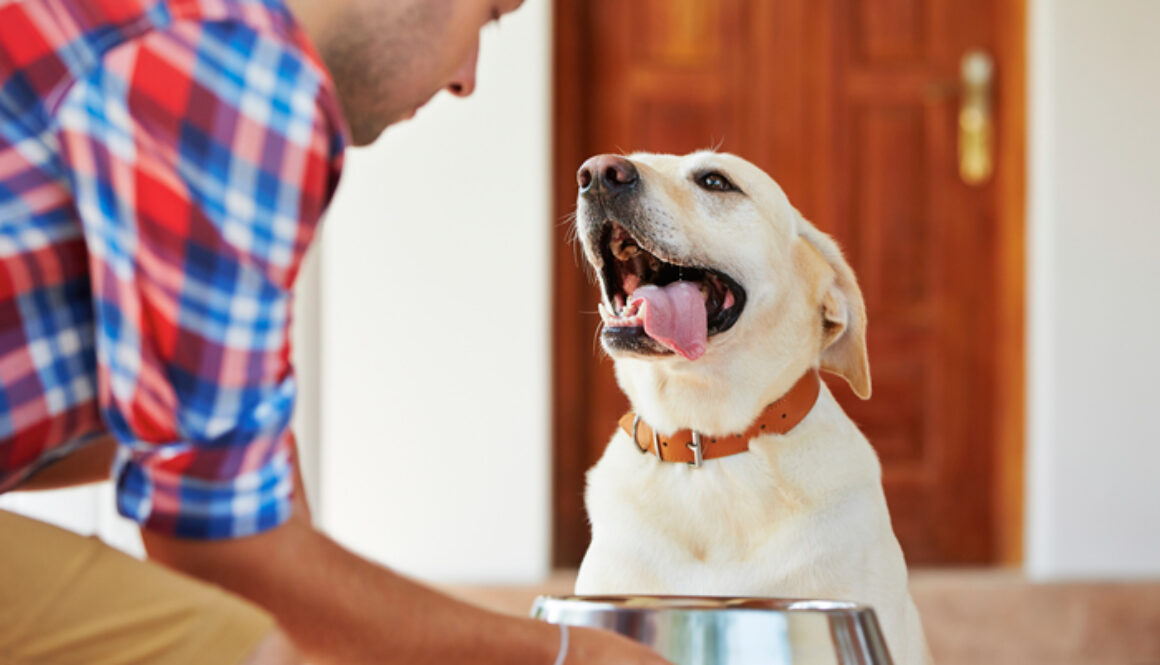
 Most dogs are very enthusiastic about their food. In fact, one often wonders if they ever taste anything particularly those that vacuum up a meal in literally seconds. It’s a problem, because dogs who eat with such gusto can be candidates for developing a condition called bloat, which can be life threatening.
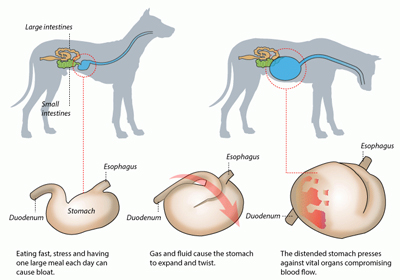 Bloat can occur in any dog at any age, but typically occurs in middle-aged and older dogs. Large-breed dogs with deep chests are anatomically predisposed, such as Great Danes, German shepherds, St. Bernards, Labrador Retrievers, Irish Wolfhounds, Boxers and Weimaraners, as well as medium-sized breeds, such as Shar-Peis and Basset Hounds. While this condition is not common in small breeds, it has been known to occasionally occur when they are elderly.
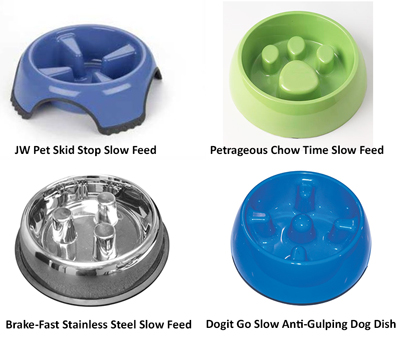 One way to help prevent bloat issues to is train your dog to eat more slowly. Several products can help with the process, such as slow-feed bowls or slow-feed adaptors.