There are many different types of dog grooming shears. When grooming both large and small dogs, you’ll realize you prefer long shears. Longer shears give you more coverage, making it easier for you to groom dogs.
Grooming shears should fit nicely in your hand and have some weight to them. They should open and close easily, but at the same time not be so loose that they wobble. They shouldn’t be too tight where the blades scrape together or stick.
Types of Finishing Shears
Your set of finishing shears should include Long Straight, Long Curved, Blending, Small shears, Ball Point shears and Thinning shears. Many professional dog groomers have several of each type. This way, when one set is becoming dull or being sharpened, they can still work.
Long Straight shears: These are useful for scissoring cylindrical legs on curly coated dog breeds as well as the skirts on breeds like the Cocker Spaniel, West Highland and Maltese.
Long Curved shears: These cover most all-over body work.
Blending shears: These help conceal mistakes made by the clipper or scissoring.
Long Thinning shears: These shears with slightly larger teeth will help remove bulk on Newfoundlands and other large breeds.
You should have at least one set of shears for precuts on unwashed dogs. Precut shears are the pairs you’ve dropped or no longer cut well even after sharpening the blades.
To maintain the life of your finishing shears, avoid cutting wet or dirty hair. That would be like cutting sandpaper. Also, you should never use your grooming shears to cut other types of materials other than dog hair. Make sure to clean your shears after each dog and keep them in their individual cases to prevent them from scraping each other.
Pet grooming is as artistic of an occupation as it is scientific. Precision is key when it comes to cutting, cleaning, trimming and brushing your furry clients, but grooming pets isn’t all about following a set of instructions. Being a professional groomer allows you to express your creativity in a variety of ways, one of them through the use of pet hair accessories.
Dog Bows and Cat Bows
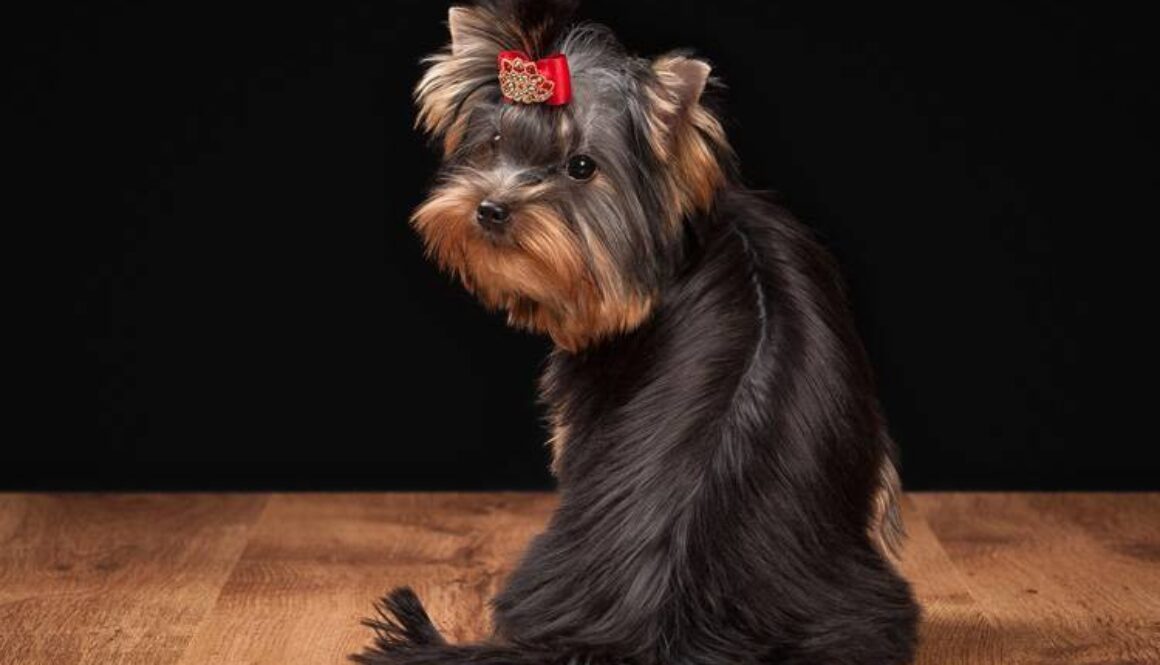
Among the many pet hair accessories you can attach to the fur of dogs and cats, bows are one of the most popular and frequently requested items. Not only are bows fun to see on dogs and cats, they’re also easy to apply and inexpensive to make. To make a bow, the only materials required are ribbon, small rubber bands, hemostats, glue, and rhinestones, beads or buttons for some extra flair. Based on whatever colors you or your clients prefer, you can make any color, print and fabric combinations you like.
If you have a sassy feline, why not dress her up with a leopard print bow? Or perhaps you have a manly pooch that would look great with a camouflage ribbon tied behind his ear. The opportunities to be creative are nearly endless when it comes to bows.
Bandannas are also a viable option to spice up a dog’s look. They’re not normally used for cats and small dogs because they’re often too big to be fastened comfortably around their neck. While this limits the use of a bandanna, you can still have fun putting them on medium-sized and large dogs. Also, bandannas are a bit safer, as they can be easily removed. If you have a pet that is particularly energetic or rowdy, it’s best to stay away from carefully applied accessories, as they may come loose.
Feathers for Dogs and Cats
Something new pet owners have been requesting is the addition of feathers to their pet’s fur. Feathers are applied similarly to the way bows are applied, using hemostats. You can purchase them in a variety of colors. Feathers are subtle additions, so pets barely notice they’re there, making them less likely removed by the wearer.
Remember, one of the most important aspects of applying accessories is ensuring you have the permission of the pet owner. As cute as bows, bandannas and feathers are to you, sometimes pet owners prefer to have their dogs and cats simply groomed without any additions.
If your cat is new to grooming you should begin slowly, brushing him for only a few minutes–or until he expresses his displeasure. Photo credit: the4js/iStock
If you are a cat owner, you should look for a certified cat groomer near you. Although cats are naturally fastidious and spend a good percentage of their time cleaning themselves, they can use a little help from their humans in the grooming department. There are many benefits of grooming your cat.
If you have not groomed your cat before, start slowly, with just a few minutes of brushing. Gradually work up to longer sessions. Choose a time when your cat is calm and reasonably cooperative. Start by combing through the fur with a wire comb, gently untangling any mats. If there are large mats you can’t untangle, shave them off with electric pet clippers. Never try to cut them out with scissors.
Next, brush through the coat to remove dead hair. You can also use a Furminator or other deshedding tool to remove the undercoat. Now go over the coat with a fine-toothed flea comb to check for pests. These procedures do not have to be done in one session; if your cat gets restive, stop and continue later.
Shorthaired cats need brushing only once or twice a week. Longhaired cats, on the other hand, should be combed or brushed every day or two. Most cats enjoy being brushed, but some dislike it. I have a Himalayan Persian who hates being brushed and constantly struggles to escape. She ends up covered with uncomfortable mats. My solution is to have a groomer shave off her coat periodically, very short in summer and left slightly longer in winter. When her coat is short, she doesn’t mind being brushed.
Cats who get extremely dirty or oily will probably need a bath now and then. If you’re unsure what your cat’s reaction will be, consider hiring a mobile groomer to do the deed. Photo credit: fotoedu/iStock
Cats rarely need baths, since they bathe themselves constantly. However, if your cat’s coat is oily or she gets into something nasty, a bath is in order. Put a rubber mat or towel in a large sink to prevent slippage and fill the sink with a few inches of warm water. Place your cat in the sink and wet her all over using a sprayer or a small plastic pitcher. Avoid getting her head wet. Work in a mild shampoo formulated for cats, then rinse thoroughly and towel dry.
Some cats will tolerate baths with only minor grumbling. Others will fight to the death to avoid getting wet. If your cat needs a bath but is a fighter, get a mobile groomer to do the job. Using a mobile groomer rather than going to a grooming salon will significantly reduce your cat’s stress level.
Clipping your cat’s nails can also be done at home. If you haven’t cut her nails before, get her used to the idea by handling her feet regularly. Most cats dislike having their feet touched, so this will help accustom her to your touch. When it’s time to do the deed, use a good-quality nail clipper designed for cats. Hold your cat on your lap and pull out one foot at a time. Squeeze the paw gently to extend the claws and clip off the white tip of each claw. Don’t neglect the dew claws. Do not cut into the pink quick; that will cause bleeding. It helps to have someone else hold the cat while you clip. Four hands are better than two if the cat is resisting.
Consider yourself lucky if your cat is as calm as this during a nail-clipping session. Most cats do not like having the feet touched at all. Photo credit: dadoodas/iStock
Some cats become very upset by any attempts at clipping their claws and will bite, scratch, yowl and try hard to escape. As mentioned here before, my cat Gracie requires a towel, a hood, two people to hold her down and one to clip. The only reason we clip her nails ourselves is that her vet has refused to attempt it again unless we allow him to sedate her. We finally found a mobile groomer who is able to do the job quickly with minimal help from us.
After any grooming session, give your cat plenty of praise and a few treats. This will help reinforce that grooming isn’t all bad and good things will happen when it’s over.
About the Author: Lisa King is a freelance writer living in Southern California. She is the former managing editor of Pet Product News International, Dogs USA, and Natural Dog magazines. Lisa is also the author of the well-received murder mystery novels “Death in a Wine Dark Sea” and “Vulture au Vin.”
In the world of dog grooming, grooming apparel isn’t designed for fashion as much as functionality, but that doesn’t mean professional dog groomers don’t have a wide array of grooming attire to choose from! On a daily basis, a groomer may wear any number of professional groomer’s accouterments that may include gloves, scrubs and, of course, smocks. The smock is the most common uniform for a groomer that comes in many styles.
Smock Style
A dog grooming smock will keep you clean and dry while tending to your client. When deciding what type of smock to choose, it’s important to first do some research to decide which style and material would be the most comfortable and functional. Smocks can either be pulled over, buttoned, snapped or zipped.
Button, snap or zipper smocks are essentially grooming jackets. They are easy to put on and fasten in the front. This offers a certain amount of freedom, as you can wear it over your personal clothes. However, some dog groomers prefer pullover smocks. Pullover smocks are similar to a large oversized T-shirt. The benefit of a pullover smock is it doesn’t come undone unlike a snap or button smock. This can be especially helpful when bathing a dog.
Smock Fabric or Material
Once you know what style of smock you want, decide the kind of fabric or material you’d like the smock to be made of. Smocks are available in every type of material from cotton to Teflon-coated nylon to mesh. The most important thing is to know your options, so you can find the right frock for you. A happy dog groomer leads to happy pet clients!
Does the mere thought of trimming your dog’s nails make you nervous? Have no fear. Here are some easy-to-follow steps that make the procedure quick and painless for both you and your dog.
Nail trimming is an important part of your dog grooming routine that should be done on a regular basis. Untrimmed nails can crack or, worse, grow circular into your dog’s pad, which is very painful and can lead to infection. When trimming your dog’s nails, it’s important to make it a pleasurable experience for her.
Types of Nail Trimmers
There are two types of nail trimmers: guillotine- and scissor-style. Guillotine-style nail trimmers have a small hole where the tip of the nail goes into and a blade that moves upward to trim the nail.
The scissor-type is exactly like scissors. You place your dog’s nail between the blades and trim it. You can find a pair that will work best for you at your local pet supply store.
When using scissor-style trimmers, place the cutting blades around the portion of the nail you’re going to cut. If using guillotine-style nail trimmers, hold the clipper below the nail and push the portion of the nail through the opening. When cutting, try to do so quickly. Otherwise, your dog will feel the pressure and try to pull her paws away. Don’t forget to trim the dewclaws as well. Most dogs (and cats) have dewclaws on their front legs, but some dogs might have them on the back legs as well, so it’s always a good idea to check.
You should also purchase an anticoagulant, such as Kwik-Stop, in case you cut the nail’s quick (the nail’s pink, which is the innermost sensitive part that contains blood vessels and nerves). If this happens, apply a pinch of the anticoagulant directly to the nail and add pressure until the bleeding stops.
Teach your dog to associate nail trimming with something she loves.
Touch and play with her feet and pads to get her used to handling. This will help when it comes time to trim nails. Your dog will be less likely to pull away.
The most important thing to remember is to take it nice and slow. Start with just holding your dog’s paw and touching a toe, then reward with a treat. Continue this for a couple of days until your dog is relaxed and sees this as a rewarding experience.
Most dogs don’t like having their nails trimmed and who can blame them? Trimming can cause discomfort when the clippers squeeze or slightly twist nails. However, you can avoid this with proper equipment handling.
Trimming Clear Nails
Clipping nails with no consideration will most likely lead to cutting the quick. How do you avoid doing this? For dogs with clear nails, the quick is visible and you should only trim the white or the tip of the nail. When you start getting close to the pink, you should stop.
Trimming Black Nails
Black nails can be intimidating, but it’s actually much easier to see the quick head on these nails. If your dog’s nails are dark-colored and you can’t see the quick through them, you will need to determine how short you can cut the nail by making your first cut at the very tip of the nail. Then, look directly at the nail, inspecting it head-on. The nail’s black shell is made of keratin, which is a tough, insoluble protein.
As you make small, careful cuts, you will see a white chalky substance. As you continue, you should see a dark or black dot in the very center of the nail–this is the blood vessel where you stop cutting.
Lastly, it’s a good idea to have a second person around to help calm your dog while you work on her nails. If your dog exhibits signs of distress or aggression, it’s best to seek professional guidance from a groomer or veterinarian.
A visit to the dog groomer can be a stressful event for a senior dog. It’s common for most geriatric dogs to have some health issues that can make grooming more of a challenge. Back and hip problems can make it difficult for the dog to stand for the groom or to stay crated for hours. Special care is necessary when grooming a senior dog to avoid unnecessary stress.
To avoid any complications, it’s important you tell your groomer about your dog’s special needs, so she can plan accordingly. Some groomers may have you sign a release form acknowledging your dog’s condition and the risk associated. Elderly dogs should be in and out of the salon as quickly as possible for their comfort and safety.
There are things you and your groomer can do to ease the stress of grooms.
Look for an Experienced Groomer
Older dogs who have skin growths, trouble standing, inconsistency issues or crankiness about the grooming process should be handled by experienced staff with patience and a gentle touch. It takes a lot of skill to handle an older dog and make it a pleasurable experience.
Ensure Your Dog’s Comfort
Make your dog groomer aware of your dog’s medical needs and any medication he is currently taking. If your dog has any sort of tracheal issues, be sure to ask the groomer to use a harness instead of a grooming loop. If your dog is skittish or unnerved by loud noises, let your groomer know not to use a force dryer. Elderly dogs like this should be first towel dried and then fluff dried.
Appropriate scheduling is of the utmost importance. Elderly dogs should be in and out of the grooming salon as quickly as possible. As the owner, you should be ready to pick up your dog as soon as the groomer calls. Mobile groomers are a great option for dogs who stress easily when leaving home.
Most importantly, please don’t expect your dog groomer to be a miracle worker. Above all else, your dog being clean and comfortable should be good enough. Keep in mind if you’re unable to brush your senior friend, the most humane thing is to keep him in a short cut for easy maintenance.
All dogs deserve to feel clean and beautiful. As a dog owner, ensure your dog is happy and comfortable in every way.
With summer in full swing, dog groomers are bombarded with Huskies, Saint Bernards, Chow Chows and other double- or heavy-coated dogs coming in for a summer cut. Before you rush your Golden Retriever into the salon for a haircut, you should stop and think about what clipping a coat really does. To many dog owners’ surprise, cutting a double-coated dog actually causes more damage than good. In order to understand the damage, you must first know the fundamentals of a dog’s coat and its purposes.
Not All Dogs Need Clipping
Dog breeds, such as the Yorkshire Terrier and Maltese, have hair rather than fur and can be clipped as their owners prefer. However, breeds like German Shepherds and Labradors have fur and should not be clipped at all.
Removing Fur Leads to Exposure
Dogs with fur have two different parts to their coat: the guard coat and undercoat. The guard coat is the rough, thicker outer layer of fur that protects the dog’s skin from extreme weather conditions. The undercoat is the soft, fluffy fur that sits under the guard coat and helps keep their bodies insulated during the summer and winter.
When fur is clipped, its natural protection is removed, leaving the skin exposed to harsh elements. Exposed skin can lead to skin irritations, chewing, sunburns and even skin cancer. In addition, removing the insulation could lead to overheating, which can be life-threatening if not treated right away.
Dog Coats Don’t Always Grow Back the Same
Most dog owners also figure their dog’s coat will grow back as it always had. However, this is not always the case. The more fur that is clipped—especially with older dogs—the less likely the guard coat will grow back in as it once did. While the undercoat will typically grow back as expected, the guard coat will grow back patchy and uneven, which will leave your dog with a scruffy, frizzy or undesirable appearance.
It Doesn’t Help With Heat or Shedding
Clipping fur doesn’t help with the heat or shedding. Instead, it can destroy your dog’s coat permanently and cause more discomfort. Your dog’s natural guard coat and undercoat have a purpose in helping to regulate his body temperature and protect him from severe weather conditions. In order to keep your dog’s coat healthy and strong, proper grooming tasks are necessary.
A well-educated and experienced groomer will know the difference between fur and hair, and can help you make the right decision. It is the dog groomer’s responsibility to educate clients on proper grooming procedures for specific breeds.
Every summer, dog owners contemplate giving their pets a short haircut so they don’t suffer in the heat. Surprisingly, dogs with long coats can still be comfortable in the heat if they’re groomed well. Before you take your dog to your nearest dog grooming salon, learn the purpose of a dog’s coat and your grooming options.
Dog Coats Serve as Insulation
In most cases, a dog’s coat is used to regulate his body temperature by serving as insulation against the cold and heat. During hot temperatures, dogs begin shedding their undercoats. You can help with the shedding process by brushing your dog’s undercoat. The outer coat protects your dog’s skin from harsh sun rays.
Shaving Your Dog Isn’t Necessary
Shaving is often the solution most dog owners turn to when their dog’s coat is matted. Matted coats trap heat and moisture, causing redness, irritation and odors. Rather than going straight for a shave, ask your dog groomer if she can brush the mats out of your dog’s coat. If the coat is severely matted, then it may be beneficial to shave your dog.
Remember, if your dog is shaved without his coat, he will need extra protection from the sun, flies and parasites. Exposed skin is sensitive to the sun, and sunburn is a possibility if you’re not careful. Severe sunburn can lead to several skin disorders. For protection, make sure to apply sunscreen to your dog’s skin.
Trim Your Dog’s Coat Instead
Keeping your dog’s coat trimmed year-round is always the best option. Most dogs need a haircut every two to three months. Fluffy dogs like Poodles and Bichons will need to be groomed every month.
No matter what length you decide is best for your dog, always provide your dog cool water in the heat of the summer.
Do you have your dog’s coat shaved or trimmed? Sound off in the comments below!
If you are like most dog owners, you love to cuddle with your canine companion. To keep that cuddle factor alive and well in your relationship with your pet, it’s a good idea to have your dog groomed on a regular basis.
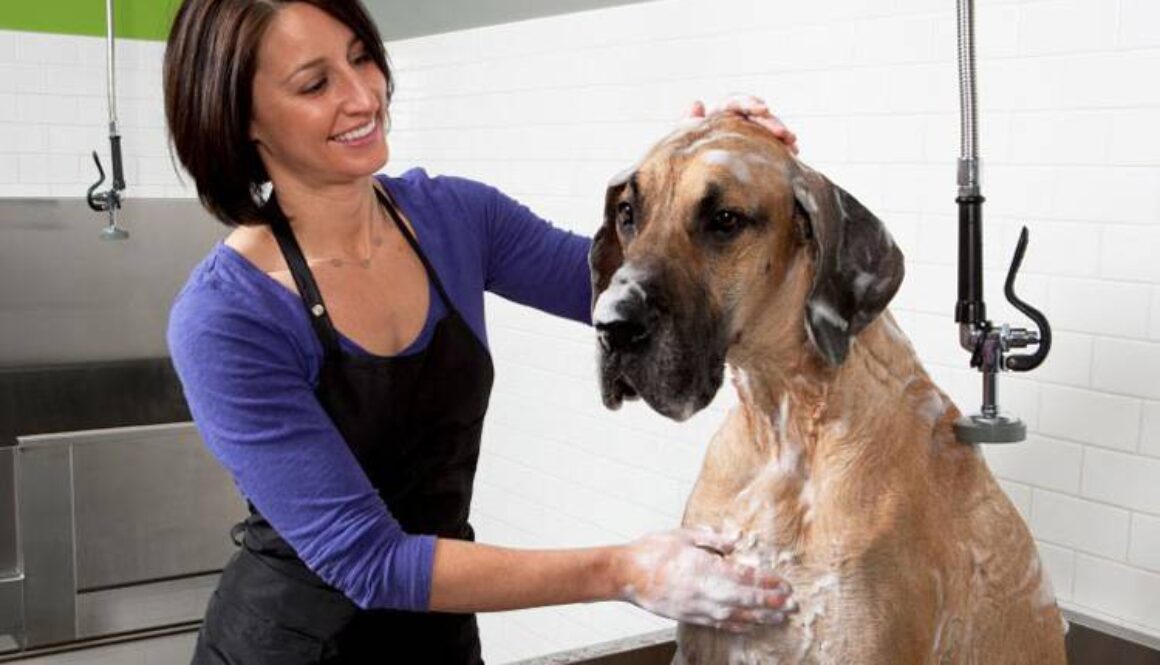
A well-groomed dog smells good. Bathing with a quality shampoo and conditioner removes dirt, oil and that “doggy smell.” Photo credit: sestovic/iStock
Bathing, brushing, nail trimming and clipping are all part of regular grooming. You can do your dog’s grooming yourself at home or take him to a professional groomer. If you go for the do-it-yourself option, invest in a quality shampoo and conditioner, a good brush and a pair of grooming scissors. If you need to trim more hair than scissors can handle, spend money on a quality clipper.
If you have a dog who needs extensive clipping (a poodle or a schnauzer, for example), or if you don’t have the time or physical ability to wash, dry and brush out your dog yourself, take him a professional groomer. A good grooming shop uses quality products and equipment, and the expertise of a professional groomer—especially if you have a dog who needs more precise clipping—is worth the money.
Whether you do the work yourself or hire a professional to get it done, remember that consistent grooming offers many benefits for both you and your dog.
Good Smells
If your dog sheds profusely, regular brushing and/or combing can help keep all that loose hair to a minimum. Photo credit: pakornkrit/iStock
A well-groomed dog smells good. Bathing with a quality shampoo and conditioner removes dirt, oil and that “doggy smell.” A dog who smells good is easier to get close to.
Less Shedding
If you have a dog who sheds, regular grooming can help keep loose hair to a minimum. Bathing brings loose hair to the surface and brushing captures that hair before it ends up on your floor.
Better Health
A clean dog is a healthier dog. Grooming your dog gives you (or your professional groomer) a chance to go over your dog’s body, where you are most likely to notice any issues your dog may be experiencing. Fleas, ticks, wounds, lumps: All of these can be easily discovered during a grooming session. Professional groomers are also good at expressing a dog’s anal glands, which can help keep this area clean and free from problems.
Great Socialization
Although your dog may not like baths or trips to the groomer, these events are an important part of his life. We sometimes have to do things we don’t enjoy, and that applies to dogs, too. Doing your own grooming at home gives you a chance to spend some interactive time with your dog. Most dogs enjoy being brushed, so a once over with a brush every few days or at least once a week is a good way to keep your dog clean while deepening the bond between you.
About the Author: Audrey Pavia is an award-winning freelance writer and author of “The Labrador Retriever Handbook.” She is a former staff editor of Dog Fancy, Dog World and The AKC Gazette magazines. To learn more about her work, visitwww.audreypavia.com and hollywoodhoofbeats.net/
If you love dogs and think working with them each day would be fun, dog grooming is an excellent profession. Dog groomers do more than cut a dog’s hair. They check for mats, complete sanitary check-ups, and groom dogs so they turn out smelling and looking good.
Experienced dog groomers can work virtually anywhere and they can also display their skill and creativity in competition at regional trade shows. In addition, passionate groomers gain lifelong friendships with their clients and pets, which can provide a steady income. With at least 70 million dogs in the United States, dedicated groomers are always in need. Fortunately, becoming a dog groomer is easy given the number of dog grooming schools located across the country as well as the availability of grooming classes online. Read on to find out how you can become a dog groomer.
Infographic by Jesse Hernandez
Dog Groomer Job Description
Professional dog groomers work with all dogs, meaning they must have the knowledge and insight to groom all breeds, mixtures, coat types, and personalities. They also have many responsibilities, including interpreting the client’s wishes, maintaining the salon, sanitizing tools in between clients, and, of course, grooming dogs.
The actual grooming process involves properly bathing and drying dogs, removing mats, and completing a haircut specific to the dog’s breed and owner’s lifestyle. Although grooming dogs is no easy feat, once a groomer learns the tricks of the trade, he will groom for life.
Dog groomers are responsible for:
Cleaning ears
Trimming nails
Completing breed-specific haircuts
Interpreting client requests
Completing sanitary clips
Bathing and drying according to coat type
Cleaning workplace and sanitizing grooming tools
Instructing clients regarding their dogs
Dog groomers can work in many places, including grooming salons, animal shelters, veterinary clinics, and pet supply stores. They can even take their services on the road and start a mobile grooming business.
Dog Groomer Requirements
Education
Currently, there are no educational requirements to become a professional dog groomer. However, taking online dog grooming courses or obtaining a dog groomer certification can greatly increase your chances of being hired. When you enroll in a dog grooming school, such as Animal Behavior College, you gain an educational foundation, which you can apply in a real work environment. As with any formal training for a profession, it’s important to learn the terms, history, and intricate details of the job before diving into it.
On-the-Job Training
As important it is to learn the basics of dog grooming, there is nothing like getting experience. Employers want to know you have worked in a professional environment. Enrolling in a school that offers hands-on training in a pet grooming salon combined with practicing on family pets can provide you the experience you need to get hired.
Qualifications
Aside from education and experience, dog groomers must have patience and a love for animals. Working with dogs isn’t always a pleasant time. Dogs can be difficult, especially when they fear the sound of high-velocity dryers or are unable to stay still on the grooming table. Therefore, it’s important you experience grooming all dog types as much as possible before entering the salon. Doing so not only ensures you have the skills to make it as a dog groomer, but also the passion to make it your career.
Mobile Grooming and Grooming Salons
The main difference between mobile grooming services and grooming salons is convenience. Mobile groomers can take their business anywhere they choose, giving them flexibility and freedom. Since each groom is completed outside of the dog’s home, mobile grooming saves dog owners the time and stress of having to transport their pets to a brick-and-mortar salon. Grooming one dog at a time also allows the dog to relax without being distracted by other pets. As a result, a mobile groomer can charge more than a salon groomer.
Keep in mind mobile groomers must strategically plan their appointments and pay for travel expenses. They have to consider the time spent driving from one house to another house, rush hour traffic, and the amount of time performing a complete groom of each dog.
In contrast, dog grooming salons can take in more dogs at a time since there is usually a team of groomers working there. Dogs can enjoy more space and breaks in between baths and haircuts. For the client, going to a grooming salon is a less expensive choice as compared to using a mobile groomer.
Job Outlook for Dog Groomers
Dog grooming is a booming industry and it’s only going to continue to grow, as pet ownership increases. Six out of 10 pet owners consider their pets family members, according to the American Veterinary Medical Association (AVMA). In addition, the dog grooming industry is expected to grow by 15 percent, adding 35,400 jobs to the market from 2012 to 2022, according to the U.S. Bureau of Labor Statistics.
If you’re serious about a career as a dog groomer, please fill out the form on the right or call (800) 795-3294.
Rating A+ The BBB only accredits the business management of a school, not the quality of the curriculum, or training programs.
STATE LICENSURE AND APPROVAL
Animal Behavior College is a private vocational school approved by the Bureau for Private Postsecondary Education (www.bppe.ca.gov) under the California Private Postsecondary Education Act of 2009 and Title 5. California Code of Regulations Division 7.5. Private Postsecondary Education. The Bureau for Private Postsecondary Education approval means that this institution and its operation comply with the standards established under the law for occupational instruction by private postsecondary educational institutions. Institutional approval is subject to continual review and the institution must reapply for approval every five years.
DISCLAIMER
Please be advised that Animal Behavior College (“ABC”) is the exclusive entity authorized to provide certifications and/or degrees from Animal Behavior College. Moreover, such certifications and/or degrees are only conferred by ABC following a student’s completion of an ABC-administered program. No other entity or individual has authority to confer certifications and/or degrees on ABC’s behalf. Any other entity or individual who attempts to do so is acting without express or implied authority from ABC.
GI BILL® TRADEMARK ATTRIBUTION
GI Bill® is a registered trademark of the U.S. Department of Veterans Affairs (VA). More information about education benefits offered by VA is available at the official U.S. government Web site at https://www.benefits.va.gov/gibill
Animal Behavior College, 27509 Avenue Hopkins, Santa Clarita CA 91355-3910 Contact Us