Imagine a world without dog groomers. Our furry friends would roam around, tangled in mats, struggling to see through overgrown hair covering their eyes. Dog groomers deserve kudos for their role in keeping our furry family members healthy and feeling their best.
Becoming a dog groomer isn’t just a compassionate choice—it’s a smart career move. The steady increase in dog ownership has resulted in high demand for dog groomers. It’s a profession that offers flexibility and portability. Wherever you go, there will always be plenty of furry clients eagerly awaiting your services.
So many great trades, like dog grooming, let you earn a good living without investing years of your life and going deep into debt to get a college degree. While college was once thought to be THE path to a solid future, higher education is fast becoming financially unaffordable for the vast majority of students.
More and more people are discovering that a college diploma is not the be-all and end-all when it comes to selecting and preparing for a career. Instead, they are increasingly turning to trade schools to learn in-demand careers like pet grooming, massage therapy, HVAC, or plumbing.
Whether online or brick-and-mortar, trade schools can be far more affordable than your two or four-year college careers; plus they get you career-ready and employed faster. Often referred to as vocational schools, many allow you to become certified in your chosen career in a year or less.
Unlike conventional college programs, trade schools streamline the learning process by focusing solely on essential skills. For example, a dog grooming course provides comprehensive training tailored specifically to the vocation. There’s no need to navigate through unrelated courses or general education requirements—trade schools get straight to the point, equipping students with the expertise they need to thrive in their chosen profession, like becoming a certified groomer.
Train to Become a Dog Groomer Online
Anyone who’s done a little digging into a dog grooming career will have learned that no licensing or educational credentials are required to work in the field, but would-be employers and savvy pet owners are going to look for groomers with experience or certification.
The more experience you can get, the better, and if you can luck out and find a professional groomer who’ll take you under their wing to teach you the basics and give you hands-on job training, you are very lucky. Most people don’t.
However, if you’re looking to become a certified dog groomer, an online trade school wins hands down when it comes to convenience. In addition to being more affordable:
Local brick-and-mortar schools may not offer the content for the career you’re interested in.
Because it is flexible, online learning is a perfect time management solution for working students looking for a career change
You don’t have to wait until a new semester begins; many vocational schools have an open enrollment that lets you enroll anytime.
The admissions process is far simpler than that for the traditional college admission.
The flexibility offered by online schooling can be particularly valuable to non-traditional students like working parents or caregivers, who often find it hard to adhere to rigid schedules.
You can study in your pajama pants!
Learn Dog Grooming Through Hands-On Experience
Even when learning dog grooming online, you can expect to get your hands sudsy! It should come as no surprise that you need to learn by doing. It takes a lot of experience to become a dog groomer.
Even with all the benefits an online education can bring, hands-on practice remains indispensable in the art of dog grooming. Some online grooming schools incorporate a local mentorship. Pairing up students with a professional who works nearby is the perfect solution!
Students get to see what grooming life is really like by fully immerse themselves in the intricacies of grooming, become proficient with fundamental skills such as bathing and brushing, learn how to use the tools of the trade such as clippers, scissors, nail trimmers, and dryers, and encounter diverse breeds and coat types while receiving guidance from their mentors.
So Much to Learn!
As you may have deduced, becoming a proficient, professional dog groomer requires a lot of knowledge and skill. When you look at the curriculum of a dog grooming program, you’ll quickly realize how much you have to learn, but you can do it if you’re motivated!
Earning your certification from a high-caliber online program can give you everything you need to know to launch your grooming career with confidence.
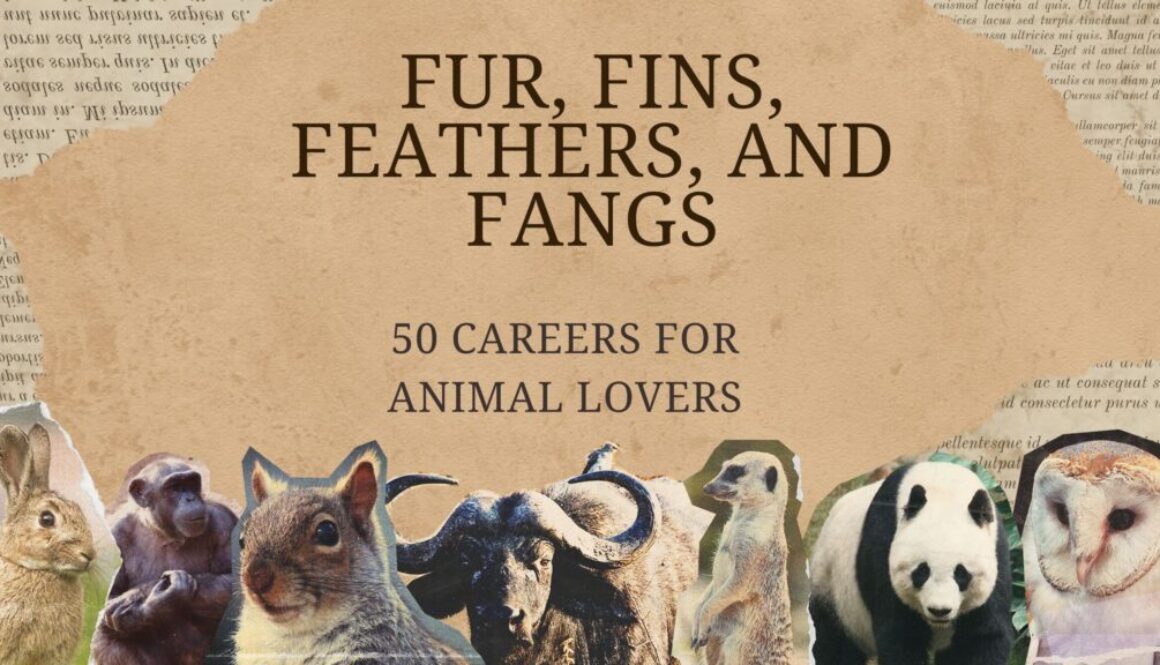
Fur, Fins, Feathers, and Fangs: 50 Careers for Animal Lovers
Many people who have a passion for animals would love a career working with them. Whether you are zeroed in on one species, like sea turtles or horses; or whether you have a heart for all creatures, your dream job would let you work closely with animals.
Great news! There has never been a better time to start an animal career, especially jobs that are related to pets. The U.S. Bureau of Labor Statistics projects jobs in animal care and services will grow at twice the rate of other occupations.
The growth in this sector of the economy is driven by the explosive increase in the number of pet owners. This number is projected to keep growing.
Dog walkers and trainers are in high demand right now, and just try getting a grooming appointment–pet salons are booked out for weeks! The demand for pet services shows no sign of slowing. If you want a part-time job and enjoy working with animals, those careers will make great side gigs, too! A solid second income can open many possibilities and make things like home ownership and paying off debt happen much faster! Pet grooming, dog training, and dog walking all offer flexible hours and good money. If you are interested in opening your own business, they are all ideal careers for self-employment.
Preparing for an Animal Career
Some of the following jobs require only a high school diploma; others require at least a bachelor’s degree, and salaries range widely. If you earn a college degree in an animal-related field, your opportunities will be much broader and your salary higher.
However, even if college is out of the question for you there are still plenty of rewarding and enjoyable jobs working with animals. Certification programs are available that provide online training and experience in several animal careers, and these look great on resumes! Animal Behavior College is an outstanding example and has been training people to launch careers since 1998.
50 Animal Careers by Category
The following is a breakdown of animal careers by category, along with education requirements and salary potential.
Agricultural Animal Careers
Rural life is beguiling to many folks, and there are many ways for animal lovers to find employment connected to agriculture.
● Livestock/agricultural journalists write articles for publication on topics related to farming, ranching, and other forms of agriculture. A bachelor’s degree in writing, journalism, communication, or agriculture is usually necessary to succeed. The median income is $82,000.
● Farm managers (or stable or ranch managers) oversee daily activities and manage all aspects of production. They hire and supervise workers and make all decisions related to crop planting and livestock husbandry. A Bachelor of Science in Agriculture or the equivalent is a plus. The median income for farm and ranch managers is $75,760.
● Riding instructors teach people to ride horses and feed, exercise, and groom the animals in their care. No degree is required to work as a riding instructor. The average base salary is $55,664.
● Extension agents have many jobs in a community, but helping farmers is high on the list. They also work closely with community youth in a variety of 4-H programs, many of which revolve around animals. A bachelor’s or master’s degree is required. The average salary for extension agents is $54,847.
● Range management specialists study natural resources and work to protect them by developing programs and standards governing the use of rangelands.
A degree in range management is required. The median salary is $51,206.
● Apiculturists, also known as beekeepers, maintain beehives and harvest honey. No formal degree is necessary to be a beekeeper, but should you want to get a bachelor’s degree in entomology or biology it would be helpful in your work. The average salary is $50,574.
● Animal/livestock breeders use knowledge of genetics to select and breed animals. They take animals’ genealogy and characteristics into careful consideration and keep detailed records. Most livestock breeders have a bachelor’s degree in animal science. The median salary for an animal breeder is $45,320.
● Shepherds tend and herd flocks of sheep. This oldest of professions requires no formal education but comes with a median salary of $43.221.
● Horse trainers train horses in the behaviors required by their intended discipline, such as racing, rodeo, show jumping, dressage, or pleasure riding. The median salary is $39,288.
● Grooms often work in the horse racing industry. They provide daily care for horses, saddle and unsaddle them, organize tack, clean stalls, and equipment, and sometimes help with training. There is no educational requirement to work as a groom. The average salary is $29,147.
Aquatic Animal Careers
Aquatic life is fascinating. There is no end to the unique creatures that dwell below the surface of oceans, lakes, and rivers. Scientists are still discovering new life forms in the depths of the seas. Anyone with an interest in marine life has a wide range of career paths to follow.
● Marine biologists study ocean life. They may do experiments, rescue marine life, and monitor the behavior of aquatic animals. Being a marine biologist requires an undergraduate degree in a scientific discipline such as ecology, aquatic biology, zoology, or animal science. The average salary is $86,203.
● Aquarium maintenance technicians set up, maintain, and service fresh or saltwater aquatic tanks in homes and offices. They may also work in fish hatcheries, aquarium parks, or any place that maintains aquatic life in tanks. There is no formal degree required, but certification is desirable. The median income is $40,199.
● Marine life rescuers help injured or sick animals; animals that have become entangled in nets or garbage; or stranded animals. They aid in their rehabilitation. Entry-level positions require no special degree or certification. Higher-level positions may require a degree in marine or wildlife biology. The wide pay range may reflect lots of room for advancement. The median salary is $55,632.
● Aqua culturists, or fish farmers, raise several types of fish and shellfish for profit or consumption. The minimum education required is a bachelor’s degree. The average salary is $44,489.
● Marine biotechnologists take advantage of the unique array of marine organisms to develop pharmaceuticals, enzymes, and chemicals. This career requires a Bachelor of Science degree, master’s, or, at the pinnacle of the field, a PhD in Marine Science and Technology. The average salary is $132,303.
● Marine mammal trainers work with dolphins, sea lions, manatees, and seals–usually in zoos or aquarium parks. They teach behaviors, feed the animals, and maintain clean, safe water environments. Most facilities want job candidates with life or animal science degrees. The average salary is $33,908.
● Deep sea marine biologists study the organisms that live far below the surface, sometimes in the deepest trenches of the ocean. Most of these jobs require at least a master’s degree. Salary maxes out at $60K.
● Fish biologists do such jobs as monitoring fish populations and fisheries, making environmental assessments for proposed projects, and identifying areas of needed research. A bachelor’s degree is typically required for entering the profession. The average salary is $64,945.
● Aquatic retailers vary in job descriptions; managers, aquarium technicians, and other staff command different salaries. The average salary is $38K.
● Hatchery assistants usually do not need a college degree, although if you aspire to a more advanced position you will need to earn one. Some people enter their career with an aquarium maintenance certification. The average salary for a fish hatchery worker is $49,095.
Pet-related Careers (Non-medical)
Aside from allowing you to spend your time with dogs, cats, and other animals, many pet careers are super flexible and make great side hustles. And if you have been looking for an opportunity for self-employment, one of these careers may be just the ticket!
● Dog walkers enjoy lots of fresh air and plenty of canine interaction. It is a fun career or side gig you can get into without needing a special degree. The average salary is $33,526.
● Pet groomers are in demand as the pet population continues to expand. Groomers help animals look good and feel good by bathing and trimming them, cleaning their ears, and clipping their nails. They do not need a formal education, but it helps to go through a training program to get certified. Like $37,501.
● Animal assisted- or pet therapists use therapy animals – usually dogs and cats – to help people with mental disorders or health issues. Pet therapy helps a wide range of people such as residents in long-term care facilities, cancer patients, and veterans with PTSD. Most hold bachelor’s degrees, and a master’s degree is necessary if you wish to counsel patients. The average salary is $38,056.
● Pet sitters care for animals when their humans are not at home. They may stay in the home or just drop in to monitor the animals, take care of litter boxes, and feed and water pets. They let dogs out to potty and walk them. Basic grooming may be involved. No special education is necessary. It is a nice side hustle if you can work it into your schedule. The average wage is $16 per hour. The median salary for a full-time pet sitter is $33,377.
● Dog obedience trainers are also in high demand these days. They train dogs to follow the basic commands for being good citizens, and they help owners understand how to properly continue training at home. Dog trainers do not have to be degreed or licensed, but certification is recommended. The average salary for a dog trainer is $40,348.
● Cat trainers are called to help curb feline problem behaviors, such as counter surfing, biting and scratching people, and litter box refusal. As with dog training, no degree is required, but certification is encouraged. The average salary is $46,748.
● Animal shelter attendants care for homeless animals waiting for their forever homes. They feed, water, groom, and exercise animals, and keep kennels and cages clean. No education beyond a high school diploma is needed, just a heart full of love for animals. The average salary is $30,522.
● Kennel attendants take care of dogs in a kennel. Duties are similar to animal shelter attendants. Again, no degree is required. The average salary is $28,914.
● Pet store retailers do a variety of jobs, most requiring nothing more than a high school degree. The average salary is $34,745
● Doggy daycare providers offer dog owners an approximation of childcare for canines. No degree is required to operate or work at a doggy daycare facility. The average salary is $29,511.
Careers Working with Wildlife
If wild or exotic animals are your passion, there are lots of careers that allow you to work with them.
● Animal control officers are called in to help rescue hurt, lost, or stray animals, trap animals that are endangering people, and provide first aid to wounded animals. A high school degree is usually required. Average salary is $47,913.
● Zoologists study non-domesticated animals, focusing on behavior, ecosystem, and impact of humans on habit. Zoology and wildlife biology are good degrees to pursue to become a zoologist. The average salary is $54,791.
● Park rangers do not necessarily work with animals, but they have regular opportunities to view wildlife during their job. A formal degree may not always be required, depending on the position. The average salary is $42,977.
● Wildlife photographers take amazing images of animals in their natural habitat, often selling them for publication. Self-employed wildlife photographers do not have to have degrees. Their average income is $42,345.
● Conservation officers, also known as fish and game wardens, help protect wild animals in their natural habitats by enforcing conservation and environmental laws and regulations. They work outside in all kinds of weather. Many states require only a high school diploma. The average salary is $50,144.
● Wildlife rehabilitators care for sick, injured, or orphaned animals. The goal is to release the animals back into the wild as soon as they can function normally in their habitat. Biology or ecology are the most commonly desired degrees. The average salary is $44,859.
● Venomous snake milkers extract venom from poisonous snakes for research and emergency lifesaving procedures. Snake milkers are not simply thrill-seekers; they enter a career with a degree in biology, chemistry, biochemistry, or herpetology. They earn an average salary of $33,609.
● Wildlife advocates seek protection for animals and their habitats. They advocate for such things as species conservation, ocean clean-up, or rainforest preservation. The average salary is $64,945.
● Wildlife biologists study animals both in the wild and in captivity. To be a wildlife biologist requires a Bachelor of Science degree in biology, zoology, or some other natural science. The average salary is $61,173.
Animal Health Careers
Those who want to help animals often lean toward veterinary medical careers, but there are other options.
● Animal massage therapists study animal physiology and anatomy. They use massage techniques to improve the well-being of their patients. You can enter the field with a two-year associate degree. The average salary is $71,679.
● Veterinarians are the animal equivalent of human physicians. They must have a four-year degree followed by another four years of veterinary school. The average salary is $103,260.
● Veterinary technicians work in veterinary clinics and can do certain medical procedures, such as give vaccinations, take, and expose x-rays, and assist with surgeries. They must have an associate’s degree. The average salary is $39,293.
● Veterinary dentists have extensive training in oral surgery, medicine, and dental care for animals. In addition to the regular education required of a veterinarian, they must also do a residency in veterinary dentistry. The average salary is $189,979.
● Animal nutritionists make recommendations for food and diets for farmers, zookeepers, pet owners, and others in charge of animals’ well-being. The job requires a four-year degree in agricultural science, animal science, or related field. The average salary is $54,137.
● Veterinary practice managers oversee clinics and animal hospitals, handling staff, payroll, schedules, and related duties. While a degree may not be required, a management or business degree is excellent preparation. The average salary is $82,725.
● Laboratory animal caretakers monitor and care for animals in a research setting. A high school degree is all that is required but, certification in vet assisting may help secure a job. The average salary is $33,907.
● Farriers care for horses’ hooves, trimming them, and shoeing them, when necessary. No degree is necessary, but an apprenticeship or horseshoeing school can prepare you for your career. The average salary is $36K.
● Kennel technicians maintain a clean facility and provide care for animals, such as grooming, feeding, and exercising. A high school diploma is usually the only requirement. The average salary is $28,701.
Launch Your Career with Animal Behavior College
People ask these questions all the time – Where can I find service dog training near me, where can I find dog training near me, or where can I find pet grooming near me? You need not look any further than Animal Behavior College to learn these traits, and how to teach others these skills.
There are lots of well-paying jobs working with animals, even for those who do not have an advanced degree. If you are passionate about finding a rewarding animal career, Animal Behavior College would love to start on the right track.
With online programs for vet assistants, dog obedience trainers, zookeeper assistants, aquarists, service dog trainers, cat trainers, and pet groomers, we can help you launch your career. To talk to an admissions counselor, call 800-795-3294.
Animal Behavior College has compiled some top goals for pet owners’ New Year’s resolutions.
Making resolutions to keep your pets happy and healthy for the new year is important and should be at the top of your list of priorities. There are always areas for improvement. It can also be fun to establish New Year’s resolution goals that your pets can maintain as well. These pet resolutions can offer a chance to become closer than ever.
Pet health – Keep an eye on your pet’s health. This would include, but is not limited to, diet, exercise, tooth brushing, yearly checkups, and shots, grooming, mental health, heartworm, and flea & tick meds.
Pet safety – Pet safety is a crucial factor when caring for a pet. These should include pet-proofing your home by having only non-poisonous plants, removing choking, suffocation, or food hazards, and keeping chemicals out of reach. Be sure to pet-proof your yard for dangers as well.
Pet insurance – Pet insurance is a health plan for our pets where the owner pays a recurring fee for veterinary expenses incurred. Most plans are for dogs and cats, although some do offer coverage for other pets as well. These plans cover accident-only, comprehensive, or routine care, depending on the plan that you acquire.
Other items to consider
*Spend more time with them.
*Keep pet tags on and updated.
*Investigate new and updated products that can make life easier for you and your pets.
*Purchase safe toys to keep them occupied, so they don’t get bored.
*Do not leave them alone too often or too long.
*Reduce stress for you and your pets.
*Keep them active.
*Socialize your pets with people and animals.
Dog & cat training -Training can be the most beneficial service you can do for your pet. Training can help with things like teaching your pet to stop jumping on people, learn new tricks, obedience, barking issues, destruction of furniture and clothes, getting along better with other pets and humans, and much more.
If you would like to learn how to train your dog or cat, and even turn it into a career, you will want to check out Animal Behavior College. We have programs in dog training, cat training, service dog training, grooming, aquarium maintenance, and zookeeper assistant.
If you want to learn pet grooming to save money on your grooming costs, and possibly make it a career for extra income, investigate our grooming program.
Give us a call at (800) 795-3294 to answer any questions that you might have on one of our programs, and to get enrolled today!
Considering a career change? Looking for a lucrative, rewarding, and emotionally fulfilling position? Do you have an interest in health, medicine, and want to be a member of a veterinary team? Then, the job of Veterinary Assistant is for you! Media outlets are hypothesizing that because of the increase in adoptions of Covid Pandemic Pets, there has become a shortage of veterinary personnel in Georgia, and across the United States. They are also noticing more veterinarian workers are retiring from the profession than those just entering the field. The American Veterinary Medical Association states that the statistics demonstrate that veterinary services have increased since the pandemic creating encouraging growth. Mars Veterinary Health says that pet ownership is steadily increasing. Researchers expect a 33% increase in pet healthcare spending in the next ten years. 41,000 new veterinary workers will be needed to meet demand. Even with the normal number of veterinary graduates, there will still be a shortage of around 15,000 people in the industry. They are saying that it will take thirty-plus years of veterinary graduates to meet the ten-year need for the industries veterinarians, veterinary tech, and assistants. Now that’s job security.
Do you have a passion for animals? Does the thrill of a fast-paced work environment please you? How about educating pet owners on the myriad of pet care subjects, such as nutrition, vaccines, exercise, illnesses, and more? Getting education and experience in a veterinary assistant program can lead to a rich and enjoyable career! You might also want to learn this field as a hobby or as a fun personal experience for keeping your pet happy and healthy.
Ever thought about learning dog grooming? If you are a person with artistic indication, then Pet Grooming might be for you. Grooming your pet is not just about keeping them clean. It is a bonding experience, as well. Having your dogs washed, brushed, and groomed is not only for beauty but helps to aid in the growth of healthy hair. Grooming can also prevent skin problems and help rid the pet of fleas and ticks. The grooming process can be beneficial in detecting health issues and fostering positive behavior.
It’s all about trust, connection, and love. Learning how to groom your pet is a great way to bond with your furry friend. Did I mention the fact that grooming your own pet is less stressful for them? The satisfaction you will get from seeing your pet happy and well-groomed is priceless. Learning how to groom your pets can be a rewarding experience for both of you. Embrace and enjoy the moments you can share with your pet. Your efforts will be appreciated by them.
Your local grooming companies may need you soon as well. The American Bureau of Labor Statistics of the BLS is predicting that the grooming industry will need to employ 64,000 pet groomers by 2026 to keep up with the need for people to get their pets groomed.
You may also want to further your pet care experience and learn dog obedience, service dog training, cat management and training, aquarium maintenance, and more!
If any of the above resonates with you, then it’s time for you to contact Animal Behavior College and get started on one of their many animal programs right away.
Animal Behavior College has a new and improved veterinary assistant school curriculum for its students in the United States. We are also continuing our Veterinary Assistant Certification Program for our Canadian students. Both veterinary assistant and pet grooming courses include pet CPR and first aid certifications as well. These programs are offered in both the United States and Canada.
Contact Animal Behavior College now for more information on our many animal career programs at: (800) 795-3294.
Tails are wagging, and pets are bragging about us. Paws down, we are the best around!
Looking for a rewarding career working with animals? Been tossing around the idea of becoming a pet groomer? Dog and cat groomers are generally animal lovers who enjoy what they do and take pride in making pets look and feel good. If you have a passion for animals, a creative flair, good attention to detail, strong communication skills, and the ability to be patient and calm under stressful conditions, grooming may be a great career fit for you.
Do Your Homework Before Committing to a Pet Grooming Career
Before jumping into any career, it’s important to learn as much as you can about it. How much do pet groomers make? Do I need to get a license or pass a test to work as a groomer? Is there a demand for pet groomers? Is there a pet grooming school near me? What skills do I need to master to be a groomer?
It’s a smart idea to do a little research into the career to find out what groomers need to know. Of course, every groomer needs to know the proper way to bathe a dog, trim nails, clean ears, and use the tools of the trade as well as how to card, strip, and thin various types of coats. A quick online search reveals dozens of breed styles and cuts that groomers should be able to execute. There’s a lot to know if you’re going to be a successful groomer!
You can learn a lot by watching grooming videos online. You might also seek out a professional groomer and ask to shadow him or her in order to see what their working days are like. Some might even take you under their wing and teach you some basic skills.
How to Become a Dog Groomer
While you do not have to be licensed, attend a pet grooming school, or earn your grooming certification in order to work as a groomer, it is recommended that you do so. For one thing, savvy pet owners are not going to turn their fur babies over to just anyone. Prospective employers look for qualified people with credentials. Proper training, education, and certification are important.
Groomers should also be well-trained because they fill an important role in a pet’s life. Clean, well-groomed animals feel better, look better, and smell better. Regular grooming helps keep an animal’s coat and skin healthy, nails at a proper length, and ears clean and infection-free. Learning how to perform these grooming tasks properly matters.
A dog grooming academy is a great way to master the skills you’ll need to succeed as a groomer, but not everyone has a grooming school nearby.
Among the best options for learning the necessary skills is to enroll in an online dog grooming program. As long as you have a reliable internet connection, you can take grooming classes no matter where you live, and you can do so without leaving the comfort of your own home.
Can I Really Learn How to Be a Pet Groomer Online?
As you might imagine, grooming is not something you can master just by sitting through online classes or reading books. You have to dig your hands into a dog’s fur, get up to your elbows in suds, and wield the clippers yourself in order to learn. There simply is no substitute for hands-on learning.
So how can you learn how to become a pet groomer through an online course? Find one that combines online learning with real-world experience.
The Animal Behavior College Grooming Instruction Program does just that through their externship, which pairs each student with a mentor groomer in their area. The externship provides a minimum of 150 hours of experience working with a professional groomer. In order to complete the certification process, students must demonstrate the ability to perform a full groom.
That sort of education and experience are invaluable in skill-building and instilling confidence.
If you think pet grooming is the right career path for you, visit Animal Behavior College to learn more. Founded in 1998, ABC has a long history of helping people start animal careers. Call 800-795-3294 to take the first step toward becoming a professional groomer!
So you’re thinking about starting a dog grooming business? Kudos! Pet grooming is an ideal career for anyone who loves animals and dreams of being self-employed.
Having your own business allows you to set your own hours and be your own boss, which are definitely cool things, but there are a lot of responsibilities and a lot to do before you can “hang out a shingle” offering your services as a dog and cat groomer.
It goes without saying that the first thing you should do is master the trade. Once you’ve studied grooming and earned your pet groomer certification, there are choices to make. Do you want to work for someone else for a while to see if this really is your dream career? Do you want to set up a shop in your home? Do you want to rent (or buy) a space for your business? Would a mobile groomer be a popular service where you live?
The biggest challenge for most groomers who want to be self-employed is financing the venture. High quality grooming tools and sturdy professional equipment like tables and bathtubs are necessary and expensive. Unless you’re going to groom pets out of your home, you will need to rent a storefront or purchase and equip a van or trailer for mobile grooming. You may want to consider doing some advertising. Insurance for your business is a definite must.
Do some research on what small business loans are available, but if going into debt to start a business scares you, then maybe you want to put the idea on the back burner for a bit and work for an established groomer for a while.
The Business End of Dog Grooming
So, you’ve decided that starting your own business is right for you, fantastic! While dog groomers do not have to be certified in any state in the U.S. at present, you will need a business license and there is still a lot to learn in order to run any small business.
You’ll need a business plan and a budget. Learning how to handle finances responsibly is a must. Open a separate bank account for your business and get used to keeping records. No more wadding receipts in your pocket and sending them through the washing machine! You’ll need proof of what you make and what you spend when it’s time to settle up with Uncle Sam.
It’s probably a good idea to start a limited liability company (LLC), which can protect your personal assets in case of a lawsuit. Also, setting up an LLC may save money on taxes, so it’s definitely worth it. This is an important decision so speak with experts on which business structure is best for you. Experts can include accountants (see below) and an attorney. While we’re on the subject, small business owners should have at least 3 experts they can go to. A good accountant, lawyer and insurance agent/broker.
Speaking of taxes, you may want to think about hiring an accountant to handle your payroll–even if the staff is just you–and tax liability. An accountant knows the tax codes and can help save you money as well as make sure all the complicated and intimidating IRS forms are filed correctly and on time, saving you a world of headache.
Marketing Your Grooming Business
There are lots of pet owners out there looking for groomers, but you have to work hard to let people know you’re open for business. You may not be able to afford advertising, but social media is free.
Approach businesses that cater to pet owners, such as kennels, doggy day cares, veterinarians, and pet boutiques to see if they will let you put up a flyer. Business cards can be created pretty cheaply, and some places will allow you to leave them on their counters for customers to pick up.
In addition to pet businesses, be aware of places that have community bulletin boards where you can pin flyers or business cards.
Some of you might wonder about our recommending the “old school” approach of physically reaching out and networking with fellow pet professionals. We suggest this approach because it can be highly effective and because in this digital internet driven world, fewer people use old school networking thus allowing those who do a greater chance to stand out.
In addition to having a social media presence, which could include a Facebook page, Pinterest and even TikTok, it’s vital to have a website. The easier you make it for people to find you online, the better. Plus, websites can be used to allow clients to book appointments, purchase products and much more. Finally, you can and should encourage your clients to post reviews!
A quick word on social media. Grooming can be a highly visual profession that lends itself to visual platforms like Pinterest. People might be very interested in seeing your finished grooms, which could help sell other potential clients on your service. While, social media has become a go to option for large and small businesses, be clear on what you wish to to accomplish. Are you going to use it to garner positive reviews, show off your service, or something else? The clearer you are regarding your goals, the easier it will be to see concise attainable goals.
If all goes well, once you build a clientele, word of mouth will help you grow your business to where you want it to be.
Weigh the Pros and Cons
Only you know whether it’s worth the risk and effort to start a dog grooming business. If it helps, write it all down on paper. Make a list of what you see as the pros of being your own boss. Then write a list of what you don’t like about the idea of being self-employed.
Talk to some other small business owners to learn more about the challenges they face and what they like or don’t like about it. Even if they aren’t in the grooming business, you’ll still share some of the same concerns.
Dog grooming, whether you decide to work for someone else or start your own business, can be a rewarding career. If you have a passion for dogs–and cats–it’s great to know you can make a living taking care of them and helping them, be healthy and looking their best.
If you don’t have an interest in dog grooming, here’s a pro tip: be careful what breed you bring into your home. If you wind up choosing an adorable pup with long fur or a thick, curly coat, plan on shelling out big bucks to have them professionally groomed every four or five weeks. Poodles, for instance, are great dogs, but their coats require near-constant attention to keep them in good shape.
If, however, you like grooming your own dog, that’s wonderful. Brushing your dog can be a good bonding activity for you and your furry friend. In addition to making their coat neat and shiny and getting rid of dead hair, brushing is like a massage for your pet and improves circulation. It’s also kind of zen; stroking the brush rhythmically through your dog’s coat can be very relaxing.
Tricks for Making Dog Grooming Easier
Regular brushing is great for keeping your dog’s coat healthy. Fortunately, most dogs don’t require frequently bathing . In fact professional groomers discourage bathing your dog too often because it’s not good for their skin, and it dries and dulls fur.
Don’t be tempted to just plop your dog in the tub or under the garden hose without brushing them first. Getting loose hair and dirt off keeps it out of your drain, but more importantly, getting any tangles or matts out before a bath makes it so much easier to brush them out once they’re dry. Tangles only get worse when wet.
Here’s a tip for helping with matts and tangles: if they are not too close to the skin, a pair of thinning shears can be helpful. Seek a professional groomer’s help, however, if matts are very thick, especially if they are close to the skin.
Make sure you have all of your bathing necessities gathered before adding your dog to the water! Shampoo, a container for rinsing, a rag for gently wiping the face and plenty of towels should be at hand. Make sure you have a bath mat or a large towel in the bottom of the tub to keep your buddy from slipping around–a scary experience for them for sure!
A hair trap over your tub or sink drain is important to remember, too!
Save money and stretch your shampoo by adding water. This also makes it more sudsy, which is another good thing. Finally, watered down shampoo takes less time to rinse out of your dog’s coat.
If you notice that your dog’s nose is dry or his paw pads are scaly, a little organic coconut oil can help. It won’t hurt them if they lick it off–it’s actually good for them.
For dirty faces or icky eyes, you can buy disposable doggy face cloths. They’re also good for messy rear ends, too.
To help keep a fluffy dog’s sanitary area cleaner, use your thinning shears or electric clippers to shave a “v” upside down in the fur under his tail. That way there’s less fur to trap waste.
If you have never used an electric clipper, blow drier, or any other loud, buzzy appliance on your pet, give him time to look at it and sniff it. Turn it on without touching your dog so that they can get accustomed to it. A word of caution regarding electric clippers. These are powerful tools with sharp blades used to trim and cut hair. While there are safety features built into most clippers, there is a reason why professional groomers typically don’t start learning to use one until they have studied for many months and then only under the expert eye of a grooming professional. Be careful. Clippers can injure your pet if used incorrectly.
Tips for Making Dog Nail Trimming Less Intimidating
Trimming your dog’s nails is an essential part of the grooming process, but it can be daunting and or scary for a lot of people. A lot of dogs aren’t particularly fond of the process either–thus all the weird YouTube videos of pet owners letting dogs lick peanut butter off their foreheads to distract them during nail trimming.
People are afraid of hurting their pets, and yes, it does hurt if you nick the quick of the nail; it’s a nerve.. If you do happen to cut it too close and the nail starts to bleed, staunch it with styptic powder. If you don’t have styptic powder, cornstarch or flour will do in a pinch. If it is just a nick, it may not constitute a visit to the vet’s office but your pup probably won’t be very trusting of you coming at them with the nail clippers again, so it pays to be extremely careful.
You’re lucky if your dog has clear nails because you can easily see the quick and avoid cutting it. If your dog has black nails, you’re going to be guessing and must be careful to trim only the very tip. The more often you trim, the better. Eventually, the quick will recede some, making it easier to maintain nice short nails.
One thing to consider is having a professional trim your pets nails while you watch, many veterinarians are happy to allow you to observe the procedure and might even narrate exactly what their doing as they go through the process.
Many prefer grinding nails instead of cutting them. You can buy a grinder for pet nails, or if you happen to have a Dremel tool, you can use a rough sandpaper drum to shape your pet’s nails painlessly. Just remember to let them explore the new tool and hear it before you start grinding away on his paws. It will also help if you start the tool on a lower RPM at first, which isn’t as startling for your dog as a high setting. Also, just like electric clippers, you need to be careful when using these tools.
Help for Stinky Dogs
Let’s face it, most dogs are not especially aromatic. Frequent bathing is not the answer; as noted earlier, it’s not good for your dog. When you bathe your pet, using a deodorizing shampoo can help.
Keeping bedding washed and fresh smelling can make a big difference. Using dog colognes or wipes are a safe way to combat odor as well. Make sure teeth and ears are regularly cleaned, as they can be a source of unpleasant odors. This is doubly important for dogs with long, floppy, or hairy ears.
Consistent brushing will also help keep your pet’s coat clean so that it smells less “doggy.” For added deodorizing, rub baking soda into your dog’s coat and let it sit for a few minutes before brushing it out. You can also buy commercial dry shampoos to help reduce your dog’s odor.
Dog Grooming Should Never Be Neglected
Whether you groom your dog at home or take them to a groomer, you’ll be helping them stay healthier, cleaner, and better looking. Bringing a pet into your home is a lifetime commitment, a promise that you will do your best to take care of them. Don’t let your dog down by neglecting the important tasks associated with proper grooming!
Many people thinking about starting a dog grooming career don’t realize the options for specialization within the profession. By choosing to specialize, you can set yourself apart and attract a clientele in search of your specific services.
Dog groomers can specialize in several areas:
Grooming show dogs
Grooming special needs or disabled pets
Grooming senior dogs
Offering creative grooming services
Providing spa treatments
What Does Each Specialization Require? Read on to get a better idea of the different services each type of groomer provides.
Show Dog Grooming
You might think that show dogs require a lot of fancy grooming techniques, but the truth is show grooming is comparatively minimal. Because show dogs are judged against written breed standards, conformation and movement figure more prominently than elaborate cuts.
Dogs should have an impeccably clean, well-brushed coat and clean ears and teeth; and they should have no “doggy” or unusual odor. Show groomers aim for a neat cut that shows off good conformation and downplays any of a dog’s less desirable features.
Grooming Special Needs Dogs
Dogs, like people, can have various special needs. Some might be missing a leg or an eye. Others might be blind or hard of hearing. Any of these challenges require special treatment from a groomer.
Dogs with a missing limb may need a special hammock or harness for support, or they may need to be groomed lying down. A dog missing an eye will have soft, sensitive skin in the empty socket.
Blind dogs may need you to keep a reassuring hand on them at all times. They need extra help understanding what you are doing, so allowing them to smell or listen to the sound of your grooming tools before you use them can ease anxiety. The same sort of advice applies to dogs with hearing loss. They will be less nervous if you go slow and let them understand what you’re doing. Groomers who work with special needs pets find a way to signal their actions.
Grooming Senior Dogs
Because aging dogs can have many issues, this is an ideal opportunity to provide mobile grooming. Senior dogs can be anxious, stiff-jointed, or achy, and their skin thins with age. It’s far better to groom them on their familiar home turf with their beloved human nearby to assist.
In the case of senior dogs, comfort or humanity should always trump vanity. Senior dogs often cannot stand long enough for a full groom. Fancy cuts should not be the focus; health and comfort should be.
Special equipment may be needed, such as belly bands or hammocks for support, a “Happy Hoodie” for ear protection, a mat to cushion feet and prevent slipping, or padded loops to protect necks and underarms.
With a senior dog, groomers often concentrate on the most important task first. That way, if a groom has to stop before it’s done, the main problem areas have been tackled.
It is important to take it slowly and gently. Seniors require a very light touch. Their thinner skin can be sensitive or painful to the touch. Legs should not be pulled out to the side to avoid hurting stiff joints.
Older dogs may need frequent potty breaks, and groomers should keep cleaning supplies within easy reach in case of accidents. Finally, it’s important to know any health concerns ahead of time, such as heart or respiratory problems. That way you can watch the dog more carefully for signs that he needs a rest break or that the groom needs to be stopped altogether.
Creative Grooming
Only recently has creative grooming exploded in popularity. Shows like Pooch Perfect and HBO’s documentary Well Groomed have exposed more of the population to this quirky niche segment of the grooming world in which dogs become art.
Groomers use non-toxic dyes, accessories like ribbons and googly eyes, and their wild imaginations to transform dogs into cartoon characters, flower gardens, or zoo animals like tigers, giraffes, or pandas. A poodle’s top knot might be trimmed and dyed to mimic a bowler hat.
Increasingly, competitive grooming contests offer divisions for creative groomers. Carving and clipping, away, groomers compete in a carnival-like atmosphere. The dogs are so used to it, they often doze through much of the process.
Because of its popularity, many pet groomers are now specializing in creative services. Some dog owners want their dogs turned into tigers or pandas, but many are happy adding a little pop of purple or green to their pups’ ears or tails.
Spa Treatments
More and more groomers are specializing in spa treatments, the more luxurious the better! Clients are willing to pay top dollar for services such as:
an ozone spa bath infused with green tea and aloe
mud treatments to detox and remove dead skin, dirt, and oils
blueberry facials to deep clean and prevent odor, especially in dog breeds with a lot of wrinkles
deep conditioning to nourish and moisturize the coat
coat whitening
“pawdicures” which can include paw soaks, nail trimming and filing, steam towel wrap, massage, and dog-safe nail polish
acupuncture to relieve joint pain or allergies and asthma symptoms
massage
sugar scrubs to exfoliate and unclog pores
salt soaks to relax stiff muscles and nourish the skin and coat
For pups who can’t take the heat, spa groomers may provide non-heat drying cabanas that dry a dog’s coat slowly via air jets in the floor.
Today’s pet owners are willing to spend lavishly on their pets, and spa grooming services are becoming more and more widespread.
Learn Grooming from the Pros
Whether you want to specialize or whether you want to offer more traditional services, dog grooming is a great career that offers lots of job satisfaction without requiring years of study.
Animal Behavior College has been training dog groomers online for many years. Their approved certification program features an externship, so you get hands-on experience working with a mentor groomer near you. Students give ABC (Animal Behavior College) high marks for its student support and quality curriculum. For more information or to enroll, call 800-795-3294 today.
Can you learn dog grooming by practicing on neighborhood dogs, shadowing a groomer or getting a job at a dog spa? Possibly, but chances are pretty slim that you would learn everything you need to know; there is so much more to dog grooming than just clipping fur.
And when you consider that dog owners are trusting you with their beloved pets, you owe it to them to provide the most conscientious, knowledgeable care possible.
October is National Pet Wellness Month, so it’s a great time to explore dog grooming schools and their impact on the lives of our fur babies. Too many dog parents think of groomers in the same way they view human hair stylists: that they exist mainly to keep up a pup’s looks. They don’t realize the health aspects of dog grooming and the role groomers play in maintaining canine fitness and mental health. Dog groomers are a valuable partner in the overall well-being of pets.
Advantages of Becoming a Certified Dog Groomer
Naturally, dog grooming schools teach students grooming and bathing techniques, how to trim nails, and how to safely handle dogs, but relationship-building is important, too. You want to create a positive bond with owners and dogs alike because, hopefully, it will be a long relationship. You want your clients to be able to trust you completely, and you want their dogs to feel familiar and comfortable as you work with them.
It is important to foster a good relationship with the dogs you groom. The more care taken to make sure a dog feels comfortable and relaxed during the grooming process, the better. A dog that is at ease is far less likely to get hurt–or hurt you.
One of the many advantages of attending dog grooming school and getting certified is learning to recognize skin problems and other medical disorders. While dog groomers are not medical professionals and should never claim to be, when you work so closely with individual animals, you recognize what is normal for them and what isn’t. As you work on a dog’s coat, for instance, you may find bumps, moles, or skin irritations or pests like ticks and fleas that the owner may not have noticed.
Keeping a dog clipped, clean, and frequently brushed has other advantages. Aside from removing dead hair, it increases airflow to the skin and can improve circulation. This is extremely beneficial for dogs with long, thick coats. Regular visits to the groomer keep a dog’s coat healthy and free from matting.
Groomers also clean dogs’ ears, reducing the chance of infection. Clipping their toenails prevents them from growing too long and causing pain.
Untrained Dog Groomers Can Cause Great Harm
Unskilled, uneducated groomers can do a lot of damage. People for the Ethical Treatment of Animals (PETA) report that groomers have caused a variety of injuries and deaths among dogs. Among other things, dogs have been badly cut, incurred heat exhaustion from dryers, strangled, and sustained fatal injuries from being beaten, kicked, or thrown.
So many of these horrific incidents could have been avoided had the groomers been properly taught to use grooming tools, monitor and observe the animals in their care, and deal with frightened, stressed-out dogs. Dog grooming schools cover these types of aspects of animal welfare.
Animal Behavior College Can Prepare You for a Successful Dog Grooming Career
Taking a course from a dog grooming school and getting certified allows you to attain the necessary skills and knowledge to become a well-rounded, top notch dog groomer. The Animal Behavior College Grooming Instruction Program provides excellent career training, phenomenal student support, and it can be completed in about 12 months.
If you are serious about becoming the best dog groomer you can be, check out the advantages of Animal Behavior College and the stories of students who went on to have great careers. For questions or to get started on the path to your own career as a dog groomer, call 800-795-3294.
Choosing a career path is one of those major life decisions that should be carefully weighed. If you find a career that plays to your particular strengths and passions and is in high demand, congratulations! You’re off to a spectacular start.
Anyone who is passionate about animals, is good with their hands, and has an artistic flair might want to look at a dog grooming career. It allows you to spend your days working with every kind of dog breed imaginable, employing your creative talents to make them look their best.
The Right Path to a Dog Grooming Career
Since dog groomers do not have to be licensed or have a diploma or degree, there are a variety of ways to get started. However, the best way to gain the knowledge needed, acquire skills quickly, and assure clients and prospective employers that you know what you’re doing is to enroll in a dog grooming school.
Dog grooming schools teach the career in a focused, comprehensive manner, as opposed to picking up the trade any way you can–often by a painful trial and error process.
You may think that you’d have to go to school in person to learn a hands-on career like dog grooming. Fortunately, there are online programs that have an apprenticeship component, allowing you to gain plenty of real-world grooming experience once the online learning portion has been completed.
If you are a self-motivated person and you want to be able to start your career as soon as possible, you can complete some online dog grooming programs in about 12 months. Another advantage of online programs is that they are flexible enough to allow you to continue to work full time or take care of other responsibilities while you learn.
Take Your Time Choosing the Right Dog Grooming School
Choosing the right dog grooming school makes a lot of difference in how well-prepared you are to start your career. Never get in a rush or allow an over-zealous program administrator to pressure you into enrolling before you understand what you’re getting into. Do your research.
Here are some questions you should get the answers to before committing to a dog grooming school:
Is the school approved by any national organizations?
Is there continuing support for alumni?
Does the school help graduates find a job?
Does the program include all the skills necessary to work as a groomer?
Do students get good support from staff or program managers?
What is the certification rate?
What percentage of students are employed in the field after certification?
Does the school have a good reputation?
Does the school have a long history?
Who authored the curriculum?
Is the curriculum up to date?
Is there opportunity for hands-on experience in a professional setting?
Do former students give the school high praise?
Remember, you are choosing the school that will train you for your life’s work. If you want the best chance to have a good student experience and get the training that you need to succeed, do your homework before you enroll in any dog grooming school.
What Should a Dog Grooming Curriculum Include?
You should expect a comprehensive dog grooming certification program to include all of the knowledge and training necessary to start a career. You may not be ready to specialize, and there may be more aspects of dog grooming you want to explore, but upon getting certified you should definitely be confident in your ability to perform a full groom well.
A good dog grooming curriculum should teach:
Basic anatomy
Breed identification and body conformation
How to use the tools of the trade safely and properly
Safe restraint and handling
Bathing and drying
Nail trimming
Ear cleaning
Skin inspection
Clipping technique
Hand scissoring
Hand stripping
Pet First Aid and CPR
If all of these basics are not included in the school’s curriculum, as well as a means for getting real world experience, do not give it serious consideration; as you may not be adequately trained in such a program.
Consider Animal Behavior College
As the largest pet career school in North America, Animal Behavior College has been certifying dog trainers and groomers for a long time. Since 1998, more than 35,000 students have earned their certification in a variety of animal careers.
Anyone considering a dog grooming school would do well to check out ABC’s grooming instruction program. To learn more, or to speak with an admissions counselor, call 800-795-3294 today.
Rating A+ The BBB only accredits the business management of a school, not the quality of the curriculum, or training programs.
STATE LICENSURE AND APPROVAL
Animal Behavior College is a private vocational school approved by the Bureau for Private Postsecondary Education (www.bppe.ca.gov) under the California Private Postsecondary Education Act of 2009 and Title 5. California Code of Regulations Division 7.5. Private Postsecondary Education. The Bureau for Private Postsecondary Education approval means that this institution and its operation comply with the standards established under the law for occupational instruction by private postsecondary educational institutions. Institutional approval is subject to continual review and the institution must reapply for approval every five years.
DISCLAIMER
Please be advised that Animal Behavior College (“ABC”) is the exclusive entity authorized to provide certifications and/or degrees from Animal Behavior College. Moreover, such certifications and/or degrees are only conferred by ABC following a student’s completion of an ABC-administered program. No other entity or individual has authority to confer certifications and/or degrees on ABC’s behalf. Any other entity or individual who attempts to do so is acting without express or implied authority from ABC.
GI BILL® TRADEMARK ATTRIBUTION
GI Bill® is a registered trademark of the U.S. Department of Veterans Affairs (VA). More information about education benefits offered by VA is available at the official U.S. government Web site at https://www.benefits.va.gov/gibill
Animal Behavior College, 27509 Avenue Hopkins, Santa Clarita CA 91355-3910 Contact Us