We’ve all done it. You come home from a long hard day at work to find that your dog or puppy has chewed up a brand new pair of shoes and in your mind the most satisfying way to handle the problem at the moment is by yelling at your dog.
Scolding is Not the Answer
It’s easy to lose your temper with your dog when he performs a bad behavior. At first, it seems as though that’s the best way to deal with the situation. However, shouting at your dog when he does something bad is not an effective way to correct him. Whether it’s destructive chewing, going potty on the carpet or jumping, the solution is not scolding.
So why is scolding so bad? Scolding is something that humans have become accustomed to by experiencing it with other people. Although it doesn’t make us feel good, we’re able to learn from the mistake if it’s pointed out to us. However, dogs don’t have the ability to reason, which is something that people have a tendency to forget so scolding will not have the same effect on them.
You Might Be Sending the Wrong Message
If your dog goes potty on the carpet and you shout at him, the only thing he will take from the experience is to fear eliminating in front of you. In this scenario, he will continue to go potty inside, but hide it from you so that you don’t catch him in the act of doing it.
Just Trying to Make You Happy
You need to keep in mind your dog doesn’t perform bad behaviors to spite you or show defiance. He simply needs to be taught to act in a way that pleases you because making you happy is what makes him happy. Even if you haven’t attended a school for dog trainers you can still correct his bad behavior in a way that will help him learn.
How to Correct Bad Behavior
Use Positive Reinforcement
If you want to learn the best way to teach your dog not to perform unwanted behaviors the right way, consider reading up on positive dog training techniques or hiring a dog trainer.
The best way to get results is to redirect your pet to an acceptable or wanted behavior. For example, if your precious pooch is obnoxiously jumping on you when you walk in the door, simply turn your back to him. Ask him for a “sit” and “stay,” and reward him for this calm behavior. After repeating this action for a few weeks, your dog should start offering you an acceptable “sit” and “stay” rather than the old unwanted behavior of jumping.
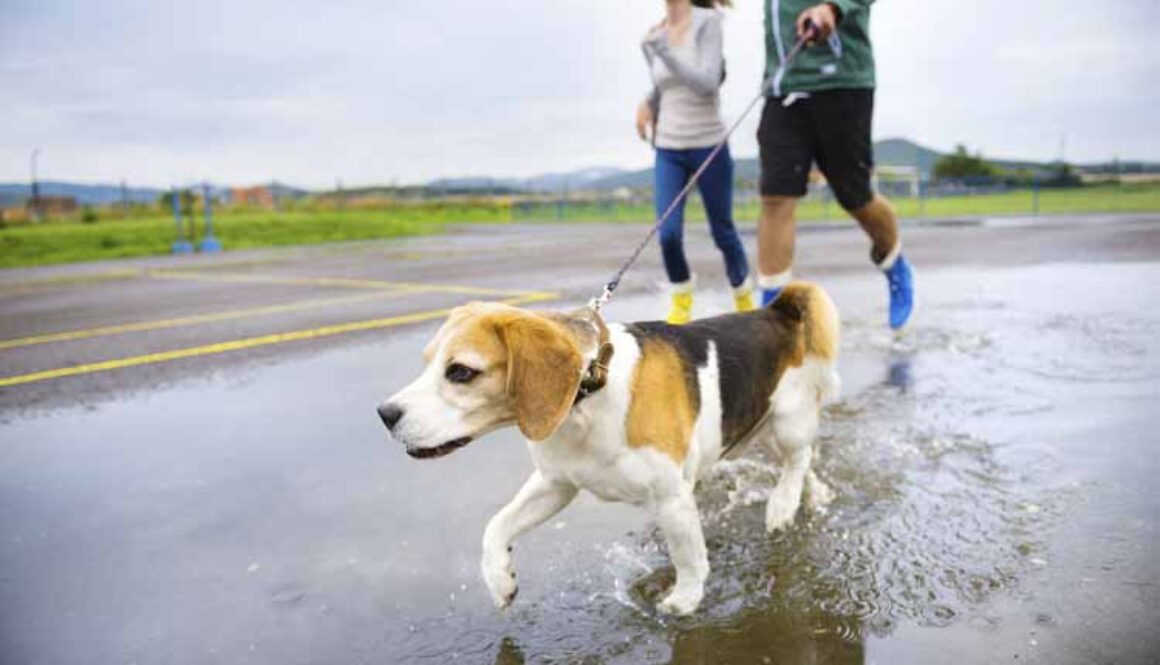
How to train your dog to behave properly when on a leash.
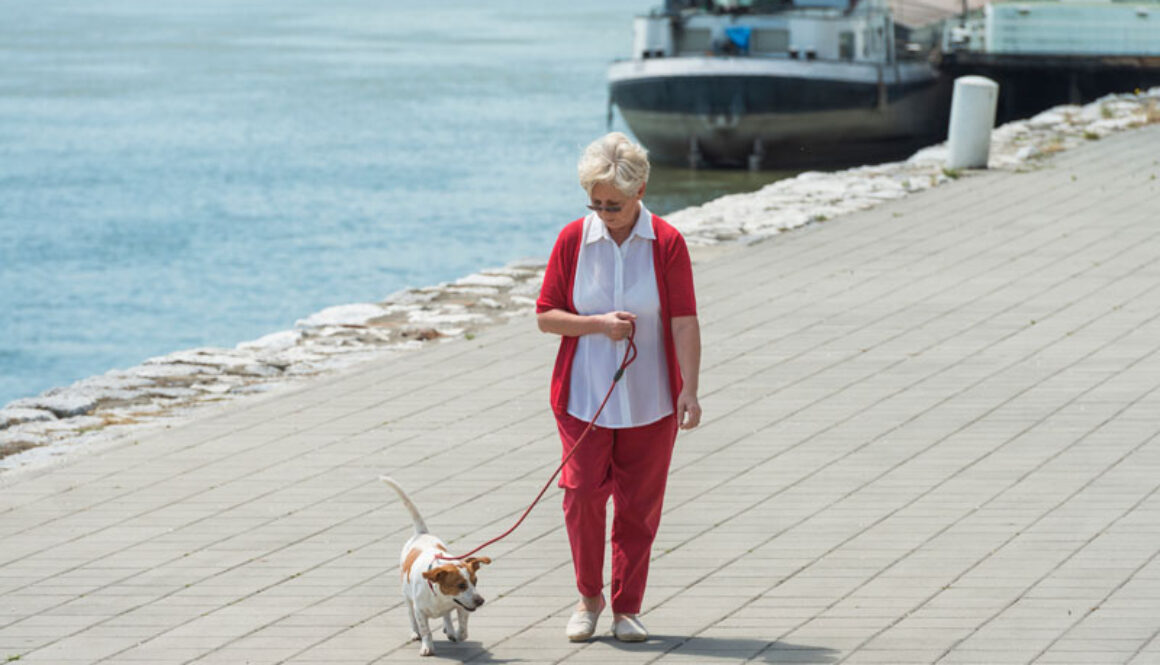
One of the most important skills you can teach a dog is training her to walk on a leash. (Photo: fotokostic/iStock)
I believe you can train any type of animal with positive reinforcement. For this reason, I recommend you avoid choke collars, prong or pinch collars and electronic or static correction collars. If you feel that you cannot train your dog without using one of the aforementioned collars, then it’s time to call in a professional trainer for assistance.
One of the most important skills you can teach a dog is training her to walk on a leash. Proper leash etiquette helps ensure that should anything happen to you; your pet will more easily be adopted and treated well in a new home. Beyond that “worst case” scenario, it’s important for your own sanity to have a well-behaved dog on leash.
Find the Proper Motivation
First, it’s important to find your dog’s most valued incentive for performing. You can try a variety of things from treats to toys. Every dog has an item she can’t do without. For some dogs, that’s a ball or favorite toy. For others, it’s a “high-value” treat. Once you find your dog’s greatest source of motivation, you can begin training.
Tire Your Dog Out
If you have a high-energy, easily-excitable dog, it’s important to get her good and tired prior to beginning training. You might want to play a game of fetch or just let her run in the yard for an hour. Once your dog is tired, she will be much more receptive to training.
The Process
There are many different schools of thought on training, but This is the way I prefer:
Begin each training session with your dog’s “motivation” in an easily accessible pocket. It’s traditional to keep your dog on your left, but you can choose the side that is most comfortable for you and your dog.
Start by attaching your dog to a leash that is 6- to 10-ft long (but not retractable) while hse is wearing a standard collar (avoid choke and prong collars).
Begin your practice in an enclosed area (such as a fenced yard). You’ll want to reward your dog as she walk, so keep your treats handy.
Walk forward at a brisk pace, keeping your dog at your side. Each time she is doing something exactly as you wish, reward her with a treat. If she tends to lie down or stop while eating, you might want to consider an alternate form of reward (such as a ball).
Walk at a quick pace. This will help minimize distractions and keep your dog focused on you.
As you build up confidence, you can increase the walking times. As you practice, your dog will become more focused and less distracted.
Start Slowly
Work in short bursts in order to keep your dog’s attention. For instance, you might put the leash and collar on your dog, condition her to wait quietly at door with you, then walk outside to end of driveway and return. Keep in mind that dogs have short attention spans and it’s better to do something right than practice something that is wrong.
Many people run into specific problem when training. Here are the solutions I use to solve a few of them.
Problem: Dog Pulls on Leash
If your dog pulls on her leash, consider holding treats in your hand to keep her close by. (Photo: sjallenphotography/iStock)
Use treats as an incentive to keep her head close to your hand. Enclose treats (or other high-value rewards) in your hand, then randomly distribute as you walk.
Consider an alternate form of control, such as an EZ-lead, Walk-In Sync Harness
Give your dog a “job.” This might include wearing a backpack (do not replace leash on collar or harness, merely add to the setup). This causes your dog to concentrate on walking and carrying something instead of the duck that just walked in front of her.
Hold leash, turn, then walk at a normal speed in the other direction. When doing this, be sure you’re not “yanking” on your dog’s head. When your dog is in position beside you again, be quick with a treat to reward her.
Problem: Dog Refuses to Move
Use high-value treats to coax her on.
If you have a small dog, consider using a harness that allows you to pick the dog up and move her gently along, doing so often stimulates movement
If your dog (or dogs) run scircles around you, shortening her leash can help eliminate this behavior. (Photo: Sligar/iStock)
Problem: Dog Tangles Leash
Lure her into the correct position beside you with a treat, while grasping the leash midway down to shorten its length (keep the leash handle looped over your hand when you do this).
Mark the position with a cue word and reward. As you take a few steps forward, slowly release the leash by moving your hand up it a little bit at a time.
Give the cue word to remind your dog to resume position.
Repeat until she stays beside you, slowly releasing the shorter leash and increasing the time between treats until she no longer needs to be lured and rewarded.
Problem: Dog is Aggressive on Walks
This type of training will likely require the intervention of a professional dog trainer. Consider using a Gentle Leader, which fits on muzzle of dog similar to a horse harness. Not only does the dog become distracted with the “thing” on her nose, it allows you to control her head. In addition, it can appear to many as a “muzzle” (although it does not serve any ability to be a muzzle). However, just the appearance will often remind owners that the dog might not be friendly and serve enough warning for them to move away.
Things to Avoid
I believe you can train any type of animal with positive reinforcement. For this reason, I recommend you avoid choke collars, prong or pinch collars and electronic or static correction collars. If you feel that you cannot train your dog without using one of the aforementioned collars, then it’s time to call in a professional trainer for assistance.
About the Author: Stacy Mantle is the founder of PetsWeekly.com and the bestselling author of “Shepherd’s Moon.” Learn more great tips for living with animals by visiting PetsWeekly.com or get to know a little more about the author at www.StacyMantle.com
The Maltese is a very petite dog typically weighing between four to six pounds. Although some Maltese may reach nine pounds, it’s uncommon for them to exceed seven pounds.
Once known as “The Ancient Dog of Malta,” it was believed this dog breed originated from an island directly south of Italy called Malta Island. They’ve been identified in writings as early as 300 B.C. and are thought to be one of the oldest of all dog breeds with a history that can be traced back almost 2,000 years.
Evidence suggests the Greeks erected tombs for their Maltese-like dogs and the ancient Egyptians may have worshiped them. Although originally bred for hunting, they became favored as a lap dog in Britain during the time of Queen Elizabeth I. First seen in the United States in the late 1800s, the American Kennel Club (AKC) recognized the Maltese as part of the toy group in 1888.
Owning a Maltese
Generally, the Maltese is not an outdoor dog. Their silky white coat may be difficult to keep clean and requires daily brushing to prevent matting. Favored as a lap dog for centuries across Europe, the Maltese is a very adaptable, gentle and affectionate family pet that does well in homes of any size.
Known to be fearless, bold and feisty, they may be inclined to challenge other dogs of any size if not socialized properly. Although they generally tend to be reserved around strangers, this breed also has a wild side, which loves to run, play and bark a lot. Maltese don’t like to be left alone and are known to suffer from separation anxiety when overly pampered by their owners.
Positive reinforcement training works best with the Maltese. They’re very quick learners when rewarded properly during training and are less likely to have behavioral problems if walked daily. They can be very active and love to play indoors, but indoor play should never replace a daily outdoor walk.
As with any breed, be sure to stay consistent with your training and maintain a strong leadership role. Proper socialization while your dog is still a puppy will help to avoid behavior issues in the presence of other dogs as they become adults. Contact an ABC Certified Dog Trainer in your area for help understanding and training your Maltese.
Socialization is an unending process and must start very early in a puppy’s life. Your puppy must have ongoing exposure to all of life’s experiences. The goal of socialization is to help your dog learn to act appropriately around people and other animals as well as in the many public and private social situations of human life. A properly socialized puppy is well adjusted and makes a good life-long companion.
3 Critical Periods of Puppy Development
There are three well defined critical periods in the development of a dog, from puppy to adult, that need special attention in the work of socialization.
Stage 1
The first stage begins between the age of seven to 12 weeks. This time frame is generally viewed as the most critical for puppy socialization. During this period, your dog’s unacceptable behaviors and attitudes resulting from his experiences are the most difficult to correct later on.
Stages 2 and 3
The second period ranges from eight to 10 months and the third starts at around 18 months of age. In recognizing that these periods are when experiences will have a significant impact on your dog, you must plan and set up activities to ensure positive results.
As with any type of dog training, the factors of distance, duration, degree of difficulty and distraction level must be integrated into the learning experience. You don’t want to expose your puppy to heavy traffic with loud noises the first time you take him outside. Instead, take him out in a quiet area for a limited amount of time and then work up to integrating more distractions.
Introduce Distractors Slowly
Expose your puppy to as many sounds, sights, smells, people, animals and locations as possible, beginning as soon as the puppy arrives in your home.
Take your dog out to the vet, pet store, school yard (when children are playing), car, elevator and busy street as well as near the garbage truck and buses, bicycles and skateboards, and around people of all ages, sex and ethnic backgrounds. The more new and positive things a puppy sees and experiences in these critical weeks, the better.
Ensure Positive Experiences
Make sure each of the following events is pleasant and non-threatening. If your puppy’s first experience with something is painful and frightening, you’re defeating your purpose. In fact, you may create a phobia that may last a lifetime. It’s better to go too slow and ensure your puppy is not frightened or injured than to rush and force your pup to meet new things and people too soon.
Consider Puppy Kindergarten
Puppy kindergarten is a great tool to include in your socialization process. This class will help your puppy with his puppy to puppy social skills. It also introduces him to a variety of people and sounds. You want to make sure these classes are well supervised by a qualified dog trainer in a safe environment.
Like any dog trainer will tell you, an obedient dog is a happy and confident dog. Dog obedience training is a vital aspect of raising a new puppy, as puppies develop most of their knowledge and perceptions of the world in the early months of life. However, many dog trainers will argue that proper socialization is even more important than taking your dog through basic training.
Social Skills Can Only Be Learned Through Socializing
So, why is socialization more important than dog training? The characteristics of a well-behaved puppy are more than skin deep. If your dog is impeccably trained in obedience, but has never met another dog in his life, there is a chance he could react with fear or aggression when he comes in contact with a fellow canine no matter how much training he has.
How to Socialize Your Puppy
Expose Your Puppy to New Things
The way to avoid a bad situation is by taking preventative measures. When you first welcome your puppy into your home, not only should you potty train him, but you should also get him accustomed to new situations.
Invite guests over to your home and have them interact with the puppy. If he reacts with shyness or fear, exercise patience. Encourage him to come to you with plenty of praise and treats, have your guests speak softly to him and don’t make any sudden movements that might frighten him. With plenty of positive reinforcement, your dog will soon regard having company at the house as an enjoyable experience.
Show Him the World
Once your puppy becomes accustomed to seeing new people within his home, start taking him out for daily strolls so he becomes aware of the outside world. It’s healthy for him to hear the sounds, smell the smells and see the sights of everything beyond your home.
Confining him to the house will only create issues in his social development so it’s important he gets used to taking walks. Not only will it allow him to have a new experience, but it’ll also exercise him in the process. Plus, he’ll enjoy being outdoors engaging in a fun physical activity with his favorite person: you!
Let Him Meet Other Dogs
Last, but not least, the dog park. The dog park is an excellent place where your dog can become acquainted with other dogs. However, it is strongly advised your dog receives his shots before going to public places and interacting with other pets.
Another important thing to remember about socializing in the dog park is to never assume a dog is friendly. Before you approach a dog, ask his owner if he gets along with other dogs first. There is always a chance that a bad situation could erupt due to a simple misjudgment on your part.
With all of these methods, you can easily teach your pup to become the social butterfly everyone will love and adore.
Does your dog instantly sit when asked from a foot away, but cocks her head or walks away when you’re across the room? This dog training tip will help you teach your dog to respond to cues when they’re needed most.
Use Hand Signals
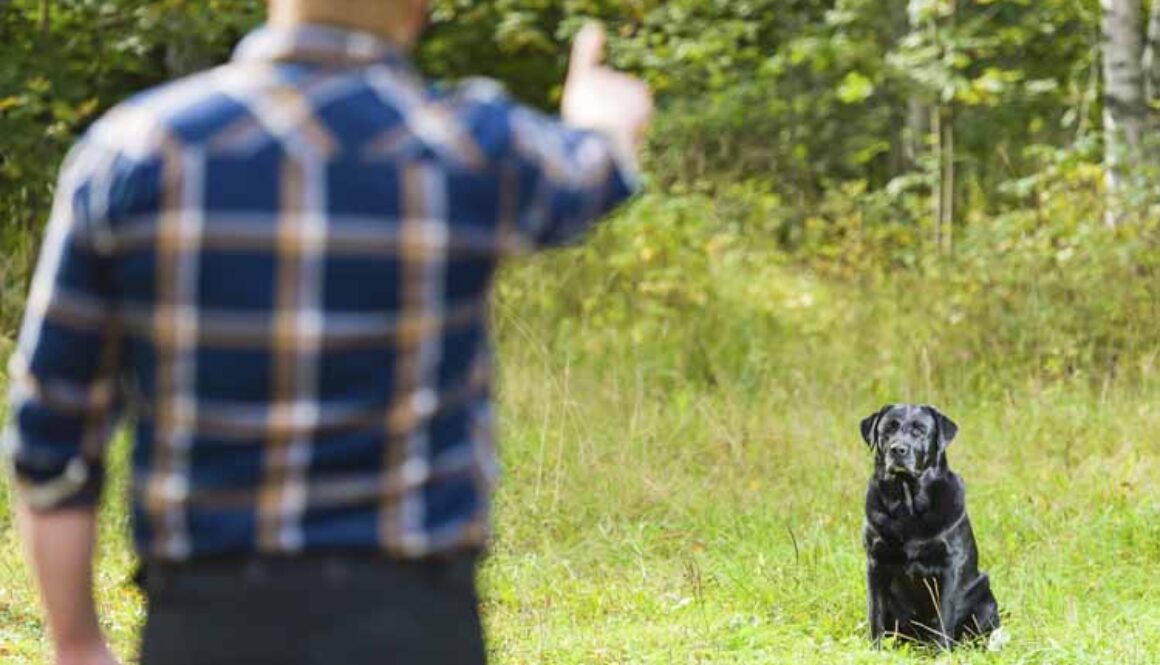
The first step is to incorporate hand signals with your verbal cues. Dogs respond better to visual cues, especially at a distance. Your hand signals should be clear and distinct. For “sit,” a closed fist moving upward works well. To communicate “down,” try an open hand moving downward. Use both arms with open hands moving toward your chest to instruct your dog to “come.”
If you’re unsure of which hand signals to use with other verbal cues, contact your local dog trainer. Make sure your dog successfully performs the requested cues nine out of 10 times when you’re standing directly in front of her.
Stand in Different Positions
Dogs always watch their owner’s body language whether you’re conscious of it or not. Usually, people give their dogs commands when standing directly in front of them. Once your dog has mastered cues this way, try standing next to your dog, facing the same direction as her and give her commands.
The best cue to master first in this position is “focus.” Progress to standing in front of your dog sideways and then eventually have your back to your dog while you give her commands. Make sure your verbal cues are clear since your visual cues won’t be useful with your back facing her. A note about verbal cues: avoid repeating a cue more than once. If your dog doesn’t respond, say “no” or “eh-eh” and make the exercise easier for your dog to succeed.
Increase Your Distance
Once your dog is responding to your cues without you directly facing her, it’s time to add some distance. Start at a short distance, eventually building on it while remembering to give clear verbal cues and hand signals. Have a friend help you by being the treat dispenser. If you’re standing 20 feet away and your dog is successful, you should treat her right away.
This is especially helpful when you practice “leave it.” Instruct your dog to “leave it” and then toss a treat or toy near her. Your friend will need to block your dog if she tries to go for it.
By practicing and being consistent with these training exercises, your dog will understand and respond to cues in more situations. This is beneficial for safety reasons and also helps to strengthen the bond with your dog. Remember to be patient and loving with your dog, especially when teaching her new things. If you make the training positive and fun, your dog is much more likely to succeed.
Teaching your dog to put his toys away is a fun training exercise that mentally stimulates your dog, strengthens your bond with him and helps you keep the house clean.
Before you can begin this exercise, your dog must know the “take it” and “drop it” training cues. Luckily, your dog can quickly master these cues.
How to Train Your Dog
“Take It” Command
For “take it,” hold your dog’s favorite toy in your hand and move it around to excite him. Just before your dog grabs the toy out of your hand say “take it.” When he does, mark that behavior with a “good,” “yes” or click. Make sure to lavishly praise and pet your dog.
“Drop It” Command
To teach your dog “drop it,” he must be holding onto a toy. Have a treat your dog really likes in your hand and present it to the dog. Say “drop it” and, when he does, mark it and give him the treat. Your dog may be hesitant to drop his favorite toy, but if your treat is more enticing, such as a piece of chicken, he will gladly let go of the toy in exchange for the tasty treat.
Once your dog successfully takes the toy and drops it nine out of 10 times during practice, you can begin the next exercise.
Get a basket that you’ll want your dog to put his toys in and select a few of your dog’s favorite toys. For consistency, keep the basket in the same spot of the house—this will make it easier for your dog. Place the toys right next to the basket and sit beside the basket. Touch a toy and say “take it.” Then, hold a treat in your hand and lure the dog over to the basket. When the toy is over the basket, give the “drop it” command. Remember to generously reward your dog when he drops the toy in the basket. Practice this consistently and then proceed to the next step by moving the toys away from the basket by a foot or two.
After your dog succeeds with this at least nine out of 10 times, you can begin to only reward him with a treat after he has put two or three toys in the basket. Start by saying “clean up” or “toys away” to sequence the behaviors. Eventually you will no longer have to give verbal commands.
Consistency is Key
This is an exercise that requires a lot of practice and patience, but is a lot of fun and an impressive trick to show off to your friends. If you’re having trouble with this exercise, please contact your local dog trainer for help.
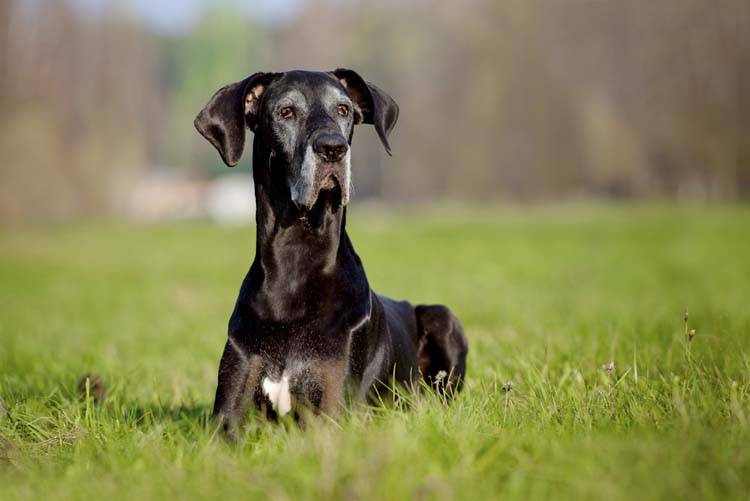
The Great Dane, easily identifiable by their large size and distinguished characteristics, is one of the most graceful of the giant dog breeds. The origin of the Great Dane, as they are known today, is said to be traced back to the Irish Wolfhound with a mixture of English Mastiff. The breed was originally used for hunting purposes, particularly to track boar. In addition to being used as estate guard dogs and human companions. While Great Danes can originally be traced back to the Germans, according to historians, they were reportedly seen in drawings on Egyptian monuments as early as 3000 B.C.
Appearance
This exceptionally large dog breed is known for being powerful, yet elegant with an energetic and gracious disposition. The coat is short and thick with colors, including brindle, fawn, blue, black, harlequin and mantle. Although this canine typically ranges from 28-34 inches in height and can weigh roughly between 100-200 pounds, these gentle giants maintain a rather affectionate and friendly reputation. The Great Dane would prefer to be around people, as they are a very loyal and loving breed. They are also very reliable and courageous, making them the perfect candidate for a watchdog.
The Great Dane as a Pet
The key to your dog’s happiness and success of your bond is teaching your Great Dane dog obedience. Most dog owners who know how to properly handle their Great Dane will agree these canines are indeed gentle giants who have loving and patient personalities, making them a great family pet. These dogs are not prone to barking and can adapt well in an indoor environment. Although these canines can adapt to indoor living, they need plenty of exercise consisting of at least a long daily walk.
Dog Training Tips
Understandably so, the Great Dane does not stay small for long and requires regular dog training from a young age. It’s important to teach your pup that jumping up or leaning on people is unacceptable. These behaviors can be avoided and corrected with positively reinforced training. You may need to contact your local dog trainer for more assistance.
Dog Grooming Tips
The Great Dane is an average shedder. Their smooth, short-haired coat requires minimal grooming and is easy to maintain so long as it’s attended to with a daily brushing and dry shampoo when necessary. If you’re looking for a loyal, loving and gentle companion, then the Great Dane would make a great addition to your family!
Studies have shown that dogs become severely depressed in shelters after just a few weeks of being there—and some dogs are there for much longer. Luckily, most adopted dogs will happily adjust quickly to their new family and home. However, there are some dogs who need a little extra help to feel comfortable and bond with the other animals and humans in their new household.
Establish Your Status as Leader
To start, help your dog understand you are the leader. Dogs who know who their leader is don’t have to take the leadership role themselves, making them feel more confident and relaxed. Leadership exercises include eating before you feed your dog, walking through doorways first and not allowing your dog on the couch or your bed.
Enroll in a Fun Class
Many people will enroll in a group basic obedience class with their newly adopted dogs. While this benefits most, sometimes it isn’t enough for dogs who haven’t bonded with their handlers yet. If you have a dog like this, consider enrolling in a trick class. Trick classes are generally lighter, more positive than obedience classes and a lot of fun for the dogs and handlers.
Agility is another type of class to consider. Agility classes really help shy or fearful dogs gain confidence and bond with their handlers. There are many other fun adventures or game-style classes for dogs that are worth looking into, such as nose work, Flyball, disc and dock-diving.
While basic obedience is important for every dog to know, it may be helpful to start with something that’s just for fun first. Then, enroll in a group class for obedience or consult with a dog trainer in a private lesson.
Communicate Clearly
Clear communication is essential, especially when working with a shy dog. For example, many people tell their dogs, “off,” when the dog is on the couch, but fail to tell her what they want her to do instead. This creates a confused and insecure dog who won’t rely on her owner’s direction.
It’s important to consult with a professional dog trainer to make sure your technique is correct. Only use positive techniques when working to bond with a dog. Reward your dog when she does something good by petting her with long and slow strokes and give her a great food treat or chew toy. You can also consider learning about pet massage for your dog.
Lastly, exercising your dog on a daily basis greatly helps her bond with you. You can go for a walk or hike, or play fetch in your backyard. Always have a positive attitude and give your dog clear and loving guidance. If, after a few weeks of practicing these techniques and you’re still not seeing the results you want, don’t hesitate to contact a local dog trainer for more tips on bonding with your newly adopted dog.
Any professional dog trainer will tell you it is severely stressful for many dogs to be without a leader or role model. So it is your job as a responsible dog owner to become a kind and benevolent leader for your dog. Most dogs will develop a more relaxed and confident demeanor with a strong desire to please their new role model once the leadership role has been assumed. Just think of the saying, “Follow the leader.”
Establish the Rules
Leadership can be established through patient and persistent dog training. This can be done by a professional, but it may be best you do it yourself since you’ll ultimately assume the leadership role. It is very important for the dog owner with the help of an animal trainer to establish house rules and enforce them firmly, but fairly. Here are some simple exercises that will allow you to show your dog his humans are good leaders and he has a responsibility to the family to serve and obey the leaders of the pack.
How to Establish Yourself as Pack Leader
In addition to guided dog training from a professional, there are simple things you can do throughout the course of the day to demonstrate who the leader is to your dog.
1. Keep him off the bed
Never allow your dog to sleep on beds and furniture.
2. Eat first
Prepare your dog’s meal and set it aside while you eat your meal. It’s not absolutely necessary to finish your meal before feeding your dog. For the sake of his instruction, take approximately five minutes to eat a few crackers and drink a glass of water before giving him his dinner. This will send him the message that the leader eats first. Make sure to ignore him while you are eating and only give him his meal if he is not whining or demanding to be fed. Also, do not feed him table scraps!
3. Lead the way
When walking through doorways, always walk out the door ahead of your dog. This lets your dog know you are the leader. A dog with proper animal training who knows his place in the family would never push you out of the way to get through the doorway first or come inside without being invited.
To ensure your dog learns to wait for you before going through doorways, have your dog trainer assist you. Every time you pass through a door together, ask the dog to “sit” and “stay” at the doorway. Go through the door first, and as long as the dog stays sitting in his place, say “okay” and release him to come through the door. Do this dog training exercise every time you go through a doorway with him and practice several repetitions a day. Something as seemingly insignificant as who goes through the door first can communicate who the leader in the house is to the dog.
Rating A+ The BBB only accredits the business management of a school, not the quality of the curriculum, or training programs.
STATE LICENSURE AND APPROVAL
Animal Behavior College is a private vocational school approved by the Bureau for Private Postsecondary Education (www.bppe.ca.gov) under the California Private Postsecondary Education Act of 2009 and Title 5. California Code of Regulations Division 7.5. Private Postsecondary Education. The Bureau for Private Postsecondary Education approval means that this institution and its operation comply with the standards established under the law for occupational instruction by private postsecondary educational institutions. Institutional approval is subject to continual review and the institution must reapply for approval every five years.
DISCLAIMER
Please be advised that Animal Behavior College (“ABC”) is the exclusive entity authorized to provide certifications and/or degrees from Animal Behavior College. Moreover, such certifications and/or degrees are only conferred by ABC following a student’s completion of an ABC-administered program. No other entity or individual has authority to confer certifications and/or degrees on ABC’s behalf. Any other entity or individual who attempts to do so is acting without express or implied authority from ABC.
GI BILL® TRADEMARK ATTRIBUTION
GI Bill® is a registered trademark of the U.S. Department of Veterans Affairs (VA). More information about education benefits offered by VA is available at the official U.S. government Web site at https://www.benefits.va.gov/gibill
Animal Behavior College, 27509 Avenue Hopkins, Santa Clarita CA 91355-3910 Contact Us