When it comes to effective dog training, nothing beats direct, hands-on experience. Online courses offer flexibility, but in-person training sessions give aspiring dog trainers a chance to learn essential skills firsthand. Working directly with professional trainers and real dogs provides valuable insight into dog behavior, helping students quickly grasp and apply various training methods in realistic scenarios.
In hands-on sessions, students witness common behavioral challenges dogs and their owners face. They receive immediate feedback, enabling them to adapt and refine their techniques in real-time. This experiential learning approach is especially beneficial in understanding subtle dog behaviors, something textbooks or videos alone cannot fully capture.
Why Los Angeles is Ideal for a Dog Training Program
ABC’s Hands-On Dog Training Program in Los Angeles
Animal Behavior College (ABC) offers a comprehensive dog training program uniquely structured to provide substantial hands-on experience. Our Los Angeles-based program pairs students with seasoned professional trainers, ensuring they gain critical insights into effective dog training practices.
Students participate actively in structured training sessions, learning foundational and advanced dog training methods, including positive reinforcement and behavioral modification techniques. ABC emphasizes practical experience, ensuring students spend ample time handling dogs directly, applying theory in real-world scenarios, and working closely with dogs and their owners to achieve lasting results.
This combination of hands-on practice, expert mentorship, and real-life exposure equips ABC graduates to confidently step into their careers as professional dog trainers.
Why Professional Dog Trainers Highly Recommend ABC
Professional dog trainers across Los Angeles highly recommend ABC’s hands-on dog training program for its structured, practical approach. ABC’s comprehensive curriculum ensures students understand dog behavior deeply, master proven training methods, and develop essential interpersonal skills for working effectively with both dogs and their owners.
ABC’s training programs are designed to provide realistic, practical experience. The opportunity to train dogs in various Los Angeles environments under professional guidance significantly enhances skill development, preparing graduates for immediate entry into the dog training industry.
ABC graduates leave the program not only highly skilled but also well-prepared to handle real-world dog training challenges. The strong reputation of ABC in the dog training community makes it an excellent choice for anyone serious about building a successful career as a professional dog trainer.
Frequently Asked Questions about Hands-On Dog Training in Los Angeles
Why is hands-on dog training important? Hands-on dog training allows students to directly apply training methods, accurately read dog behavior, and build practical skills by working closely with professional trainers, dogs, and their owners.
Does ABC’s Los Angeles program include real-life dog training scenarios? Yes, ABC’s Los Angeles dog training program offers extensive practical experience, providing exposure to diverse training environments, dog breeds, and behavior challenges.
How long does ABC’s hands-on dog training course in Los Angeles take?ABC’s dog training program, a fully immersive classroom experience, is a 5-month course.
What makes Los Angeles a good place for dog trainer education?
Are Animal Behavior College’s dog training certifications recognized nationally? Yes, ABC’s certifications are widely recognized, helping graduates secure employment nationwide or start their own successful dog training businesses.
Real-World Readiness for Every Kind of Dog and Owner
Whether you’re working with an energetic puppy, a reactive dog, or calm adult dogs, ABC’s dog training program prepares you to respond to every scenario with confidence. You’ll learn essential training techniques, such as proper leash handling, behavior modification, and how to address excessive barking and anxiety. These skills are critical whether you’re training in a client’s home, at a public park, or in a dog boarding facility.
The program also emphasizes obedience training and puppy socialization, helping you guide new dog owners through early training sessions and prevent common issues before they become problematic. From establishing boundaries to building trust, ABC equips you with the tools to support dogs and their owners every step of the way.
ABC’s certified professional dog trainer course is ideal for those seeking a rewarding career path through dog training classes that combine theory and real-world experience. Every dog training tip, hands-on session, and mentorship opportunity is designed to help you thrive in the growing pet care industry. As an ABC graduate, you won’t just be ready to train dogs, you’ll be ready to change lives, one paw at a time.
Have you served in the military and are ready for a new career path? U.S. veterans and dependents under the provisions of Title 38, United States Code, may be able to use their military benefits toward our GI Bill approved Dog Trainer Classroom Program
Animal Behavior College’s (ABC) in-person dog training program combines two of the best things in the world: dogs and sunshine; because even though we excel at helping people launch their training careers online, we know online learning is not for everyone. With that in mind, we also offer a 5-month in-person dog obedience training course at our classroom in Santa Clarita, California, just 35 miles north of Los Angeles.
Our immersive in-person dog obedience program is scheduled Monday through Friday, 8am to 5pm, leaving evenings and weekends free to enjoy all sunny Southern California is famous for!
ABC’s dog obedience certification course provides comprehensive instruction through a combination of classroom training and in the field learning opportunities. Guided by an instructor with over 20 years of dog training experience, ABC students benefit from one-on-one-instruction from someone who has seen it all during their career.
ABC’s Approach to Dog Obedience Training
Our students quickly learn that positive interactions and balanced training methods facilitate learning and strengthen the bond between canines and humans. Instructors teach Least Intrusive Minimally Aversive (LIMA) techniques that focus on positively modifying behavior.
The smaller class size encourages collaboration and support among students. In such an intimate setting, students feel more comfortable to ask questions, share individual input and bouncing ideas off one another. Of course, the canine students take part, too!
Students spend part of the time paired up working with rescue and/or shelter dogs as our students take part in ABC’s Students Saving Lives campaign. This is a program we created in 2004 to give our budding trainers valuable experience working with dogs in shelters, humane societies, and rescue organizations. Well-mannered dogs are adoptable dogs. By providing much-needed socialization and basic obedience training, our students give down-on-their-luck dogs a better chance at getting a soft landing in a furever home.
To date, between our classroom program and our online obedience program, our students have donated around 200,000 hours to the cause of saving shelter dogs. In fact, most find the experience so rewarding they continue to volunteer in their local area after completing their certification.
Dog Trainers Make a Difference
By becoming a dog obedience trainer, you not only learn to shape canine behavior but also give dogs the ability to enjoy all the wonderful experiences life has to offer, such as running free in dog parks, taking hikes, visiting outdoor cafes with their people, and, of course, shopping for treats and toys at pet supply stores! Dogs with good manners are welcome in more and more places these days. Having a well-socialized, polite dog can happen with solid obedience training.
Through personalized attention, positive reinforcement, and expert adaptability, obedience trainers help canines, and their humans, overcome everyday challenges, paving the way for enjoyable adventures for both owner and pet. As a dog trainer, you could provide countless tail-wagging happy endings!
Our program is approved by the International Association of Animal Behavior Consultants (IAABC), the International Association of Canine Professionals (IACP), and the National Association of Dog Obedience Instructors (NADOI).
To learn more about Animal Behavior College or to ask about the next in-person program at our Santa Clarita campus, call our admissions counselors at 800-795-3294 or find us online at Animal Behavior College’s Traditional Classroom Environment.
Fur, Fins, Feathers, and Fangs: 50 Careers for Animal Lovers
Many people who have a passion for animals would love a career working with them. Whether you are zeroed in on one species, like sea turtles or horses; or whether you have a heart for all creatures, your dream job would let you work closely with animals.
Great news! There has never been a better time to start an animal career, especially jobs that are related to pets. The U.S. Bureau of Labor Statistics projects jobs in animal care and services will grow at twice the rate of other occupations.
The growth in this sector of the economy is driven by the explosive increase in the number of pet owners. This number is projected to keep growing.
Dog walkers and trainers are in high demand right now, and just try getting a grooming appointment–pet salons are booked out for weeks! The demand for pet services shows no sign of slowing. If you want a part-time job and enjoy working with animals, those careers will make great side gigs, too! A solid second income can open many possibilities and make things like home ownership and paying off debt happen much faster! Pet grooming, dog training, and dog walking all offer flexible hours and good money. If you are interested in opening your own business, they are all ideal careers for self-employment.
Preparing for an Animal Career
Some of the following jobs require only a high school diploma; others require at least a bachelor’s degree, and salaries range widely. If you earn a college degree in an animal-related field, your opportunities will be much broader and your salary higher.
However, even if college is out of the question for you there are still plenty of rewarding and enjoyable jobs working with animals. Certification programs are available that provide online training and experience in several animal careers, and these look great on resumes! Animal Behavior College is an outstanding example and has been training people to launch careers since 1998.
50 Animal Careers by Category
The following is a breakdown of animal careers by category, along with education requirements and salary potential.
Agricultural Animal Careers
Rural life is beguiling to many folks, and there are many ways for animal lovers to find employment connected to agriculture.
● Livestock/agricultural journalists write articles for publication on topics related to farming, ranching, and other forms of agriculture. A bachelor’s degree in writing, journalism, communication, or agriculture is usually necessary to succeed. The median income is $82,000.
● Farm managers (or stable or ranch managers) oversee daily activities and manage all aspects of production. They hire and supervise workers and make all decisions related to crop planting and livestock husbandry. A Bachelor of Science in Agriculture or the equivalent is a plus. The median income for farm and ranch managers is $75,760.
● Riding instructors teach people to ride horses and feed, exercise, and groom the animals in their care. No degree is required to work as a riding instructor. The average base salary is $55,664.
● Extension agents have many jobs in a community, but helping farmers is high on the list. They also work closely with community youth in a variety of 4-H programs, many of which revolve around animals. A bachelor’s or master’s degree is required. The average salary for extension agents is $54,847.
● Range management specialists study natural resources and work to protect them by developing programs and standards governing the use of rangelands.
A degree in range management is required. The median salary is $51,206.
● Apiculturists, also known as beekeepers, maintain beehives and harvest honey. No formal degree is necessary to be a beekeeper, but should you want to get a bachelor’s degree in entomology or biology it would be helpful in your work. The average salary is $50,574.
● Animal/livestock breeders use knowledge of genetics to select and breed animals. They take animals’ genealogy and characteristics into careful consideration and keep detailed records. Most livestock breeders have a bachelor’s degree in animal science. The median salary for an animal breeder is $45,320.
● Shepherds tend and herd flocks of sheep. This oldest of professions requires no formal education but comes with a median salary of $43.221.
● Horse trainers train horses in the behaviors required by their intended discipline, such as racing, rodeo, show jumping, dressage, or pleasure riding. The median salary is $39,288.
● Grooms often work in the horse racing industry. They provide daily care for horses, saddle and unsaddle them, organize tack, clean stalls, and equipment, and sometimes help with training. There is no educational requirement to work as a groom. The average salary is $29,147.
Aquatic Animal Careers
Aquatic life is fascinating. There is no end to the unique creatures that dwell below the surface of oceans, lakes, and rivers. Scientists are still discovering new life forms in the depths of the seas. Anyone with an interest in marine life has a wide range of career paths to follow.
● Marine biologists study ocean life. They may do experiments, rescue marine life, and monitor the behavior of aquatic animals. Being a marine biologist requires an undergraduate degree in a scientific discipline such as ecology, aquatic biology, zoology, or animal science. The average salary is $86,203.
● Aquarium maintenance technicians set up, maintain, and service fresh or saltwater aquatic tanks in homes and offices. They may also work in fish hatcheries, aquarium parks, or any place that maintains aquatic life in tanks. There is no formal degree required, but certification is desirable. The median income is $40,199.
● Marine life rescuers help injured or sick animals; animals that have become entangled in nets or garbage; or stranded animals. They aid in their rehabilitation. Entry-level positions require no special degree or certification. Higher-level positions may require a degree in marine or wildlife biology. The wide pay range may reflect lots of room for advancement. The median salary is $55,632.
● Aqua culturists, or fish farmers, raise several types of fish and shellfish for profit or consumption. The minimum education required is a bachelor’s degree. The average salary is $44,489.
● Marine biotechnologists take advantage of the unique array of marine organisms to develop pharmaceuticals, enzymes, and chemicals. This career requires a Bachelor of Science degree, master’s, or, at the pinnacle of the field, a PhD in Marine Science and Technology. The average salary is $132,303.
● Marine mammal trainers work with dolphins, sea lions, manatees, and seals–usually in zoos or aquarium parks. They teach behaviors, feed the animals, and maintain clean, safe water environments. Most facilities want job candidates with life or animal science degrees. The average salary is $33,908.
● Deep sea marine biologists study the organisms that live far below the surface, sometimes in the deepest trenches of the ocean. Most of these jobs require at least a master’s degree. Salary maxes out at $60K.
● Fish biologists do such jobs as monitoring fish populations and fisheries, making environmental assessments for proposed projects, and identifying areas of needed research. A bachelor’s degree is typically required for entering the profession. The average salary is $64,945.
● Aquatic retailers vary in job descriptions; managers, aquarium technicians, and other staff command different salaries. The average salary is $38K.
● Hatchery assistants usually do not need a college degree, although if you aspire to a more advanced position you will need to earn one. Some people enter their career with an aquarium maintenance certification. The average salary for a fish hatchery worker is $49,095.
Pet-related Careers (Non-medical)
Aside from allowing you to spend your time with dogs, cats, and other animals, many pet careers are super flexible and make great side hustles. And if you have been looking for an opportunity for self-employment, one of these careers may be just the ticket!
● Dog walkers enjoy lots of fresh air and plenty of canine interaction. It is a fun career or side gig you can get into without needing a special degree. The average salary is $33,526.
● Pet groomers are in demand as the pet population continues to expand. Groomers help animals look good and feel good by bathing and trimming them, cleaning their ears, and clipping their nails. They do not need a formal education, but it helps to go through a training program to get certified. Like $37,501.
● Animal assisted- or pet therapists use therapy animals – usually dogs and cats – to help people with mental disorders or health issues. Pet therapy helps a wide range of people such as residents in long-term care facilities, cancer patients, and veterans with PTSD. Most hold bachelor’s degrees, and a master’s degree is necessary if you wish to counsel patients. The average salary is $38,056.
● Pet sitters care for animals when their humans are not at home. They may stay in the home or just drop in to monitor the animals, take care of litter boxes, and feed and water pets. They let dogs out to potty and walk them. Basic grooming may be involved. No special education is necessary. It is a nice side hustle if you can work it into your schedule. The average wage is $16 per hour. The median salary for a full-time pet sitter is $33,377.
● Dog obedience trainers are also in high demand these days. They train dogs to follow the basic commands for being good citizens, and they help owners understand how to properly continue training at home. Dog trainers do not have to be degreed or licensed, but certification is recommended. The average salary for a dog trainer is $40,348.
● Cat trainers are called to help curb feline problem behaviors, such as counter surfing, biting and scratching people, and litter box refusal. As with dog training, no degree is required, but certification is encouraged. The average salary is $46,748.
● Animal shelter attendants care for homeless animals waiting for their forever homes. They feed, water, groom, and exercise animals, and keep kennels and cages clean. No education beyond a high school diploma is needed, just a heart full of love for animals. The average salary is $30,522.
● Kennel attendants take care of dogs in a kennel. Duties are similar to animal shelter attendants. Again, no degree is required. The average salary is $28,914.
● Pet store retailers do a variety of jobs, most requiring nothing more than a high school degree. The average salary is $34,745
● Doggy daycare providers offer dog owners an approximation of childcare for canines. No degree is required to operate or work at a doggy daycare facility. The average salary is $29,511.
Careers Working with Wildlife
If wild or exotic animals are your passion, there are lots of careers that allow you to work with them.
● Animal control officers are called in to help rescue hurt, lost, or stray animals, trap animals that are endangering people, and provide first aid to wounded animals. A high school degree is usually required. Average salary is $47,913.
● Zoologists study non-domesticated animals, focusing on behavior, ecosystem, and impact of humans on habit. Zoology and wildlife biology are good degrees to pursue to become a zoologist. The average salary is $54,791.
● Park rangers do not necessarily work with animals, but they have regular opportunities to view wildlife during their job. A formal degree may not always be required, depending on the position. The average salary is $42,977.
● Wildlife photographers take amazing images of animals in their natural habitat, often selling them for publication. Self-employed wildlife photographers do not have to have degrees. Their average income is $42,345.
● Conservation officers, also known as fish and game wardens, help protect wild animals in their natural habitats by enforcing conservation and environmental laws and regulations. They work outside in all kinds of weather. Many states require only a high school diploma. The average salary is $50,144.
● Wildlife rehabilitators care for sick, injured, or orphaned animals. The goal is to release the animals back into the wild as soon as they can function normally in their habitat. Biology or ecology are the most commonly desired degrees. The average salary is $44,859.
● Venomous snake milkers extract venom from poisonous snakes for research and emergency lifesaving procedures. Snake milkers are not simply thrill-seekers; they enter a career with a degree in biology, chemistry, biochemistry, or herpetology. They earn an average salary of $33,609.
● Wildlife advocates seek protection for animals and their habitats. They advocate for such things as species conservation, ocean clean-up, or rainforest preservation. The average salary is $64,945.
● Wildlife biologists study animals both in the wild and in captivity. To be a wildlife biologist requires a Bachelor of Science degree in biology, zoology, or some other natural science. The average salary is $61,173.
Animal Health Careers
Those who want to help animals often lean toward veterinary medical careers, but there are other options.
● Animal massage therapists study animal physiology and anatomy. They use massage techniques to improve the well-being of their patients. You can enter the field with a two-year associate degree. The average salary is $71,679.
● Veterinarians are the animal equivalent of human physicians. They must have a four-year degree followed by another four years of veterinary school. The average salary is $103,260.
● Veterinary technicians work in veterinary clinics and can do certain medical procedures, such as give vaccinations, take, and expose x-rays, and assist with surgeries. They must have an associate’s degree. The average salary is $39,293.
● Veterinary dentists have extensive training in oral surgery, medicine, and dental care for animals. In addition to the regular education required of a veterinarian, they must also do a residency in veterinary dentistry. The average salary is $189,979.
● Animal nutritionists make recommendations for food and diets for farmers, zookeepers, pet owners, and others in charge of animals’ well-being. The job requires a four-year degree in agricultural science, animal science, or related field. The average salary is $54,137.
● Veterinary practice managers oversee clinics and animal hospitals, handling staff, payroll, schedules, and related duties. While a degree may not be required, a management or business degree is excellent preparation. The average salary is $82,725.
● Laboratory animal caretakers monitor and care for animals in a research setting. A high school degree is all that is required but, certification in vet assisting may help secure a job. The average salary is $33,907.
● Farriers care for horses’ hooves, trimming them, and shoeing them, when necessary. No degree is necessary, but an apprenticeship or horseshoeing school can prepare you for your career. The average salary is $36K.
● Kennel technicians maintain a clean facility and provide care for animals, such as grooming, feeding, and exercising. A high school diploma is usually the only requirement. The average salary is $28,701.
Launch Your Career with Animal Behavior College
People ask these questions all the time – Where can I find service dog training near me, where can I find dog training near me, or where can I find pet grooming near me? You need not look any further than Animal Behavior College to learn these traits, and how to teach others these skills.
There are lots of well-paying jobs working with animals, even for those who do not have an advanced degree. If you are passionate about finding a rewarding animal career, Animal Behavior College would love to start on the right track.
With online programs for vet assistants, dog obedience trainers, zookeeper assistants, aquarists, service dog trainers, cat trainers, and pet groomers, we can help you launch your career. To talk to an admissions counselor, call 800-795-3294.
Love dogs? Looking for a career where you can make a tangible difference?
Becoming a dog obedience trainer allows you to spend your days surrounded by dogs, helping them to bond with their humans and helping both fix behavioral concerns while learning good canine manners. The chance to improve lives for both animals and their people can be the highest motivation for all great dog trainers.
Animal Behavior College’s in-person dog trainer course is perfect for the serious student looking to fast track their education by attending a fully immersive, in person, hands-on approach, held in a traditional classroom setting (with field trips!)
In addition, a lot of military veterans also find dog training to be an attractive career. Many find their way to the Animal Behavior College’s on-campus program and appreciate working with other students who have had similar military experiences.
Also, veterans may be able to use the GI Bill to pay for ABC’s on-campus program which is approved by CSAAVE, the California State Approving Agency for Veterans Education.
Learn Dog Training from Working Professionals
Animal Behavior College was founded in 1998 by professional dog trainer and veteran, Steve Appelbaum. Staffed by working professional trainers who have a passion for dogs, the school’s mission is to help similarly passionate people launch animal careers.
In a nutshell, ABC is a society of people who love animals and want to make life better for them.
Animal Behavior College has long been known for its outstanding online dog obedience training program, but the school also offers an exceptional in-person program. Taught on their Santa Clarita, California campus in an intimate classroom setting, the five month course is collaborative, supportive, and immersive.
With more than two decades of experience training dogs in the military as well as additional years dedicated to helping dogs in rescue organizations as both an Executive Director and a Certified Animal Trainer/Behaviorist Specialist, the on-campus classroom instructor Seth Hutson leads a team of students as they learn the skills to be a trainer.
What Is the On-Campus Program Like?
For roughly 22 weeks, classes are every day, Monday through Friday from 8:00 a.m. to 5:00 p.m. The campus is in a beautiful Southern California setting, and the schedule leaves plenty of time to explore the region. You can go to class in the morning, the beach in late afternoon, and check out Hollywood at night!
The ABC dog training classroom is not like any classroom you’ve ever experienced. Yes, it is brick and mortar like other in person learning scenarios, but how many of those classrooms also include canine students?! Most students bring their own dogs, and the instructor brings in dogs he is currently training. Students learn skills and techniques and then immediately have the chance to try them hands-on.
Pairing up, students work as partners. One will act as a helper, advising on steps and keeping an eye on the process, while the other works directly with the dog. Then they switch roles. The instructor is always there to watch and provide advice or direction.
Students also get to work with actual clients in the classroom as part of their learning experience. The clients recognize the students’ status as trainers in training, and the instructor is always there for guidance.
The training methods taught by ABC follow the LIMA method (Least Intrusive, Minimally Aversive) in every possible training case. Dogs work to earn a reward; vs. receiving a punishment first, as part of the learning process.
Because each dog is different, students learn problem solving skills that will help them patiently figure out what will work for each individual pet.
Students Save Lives
Another part of the program involves working with shelter dogs at a local animal shelter. Two times a week, students go to a local shelter to practice their training techniques while helping dogs become more adoptable.
These days are spent walking dogs, training them to have a calm demeanor, socializing them, and helping them master basic obedience skills.
Working with shelter dogs is important for the dog because many of them have experienced so much human disappointment in their lives and beneficial for the student who can put to practice, what they have learned to help change behavior issues. No one knows what the pups might have experienced before finding their way to the shelter but ABC students can help them be less fearful, building trust and confidence in humans and learn simple obedience commands, all to help them become more adoptable!
All of this work usually results in about many dogs finding their forever homes during the course of each five month session. ABC is Student Savings Lives!
A Career the Doesn’t Feel Like Work
Success is never feeling like you’re working, and passionate dog trainers can relate. If you’d like to enroll in the ABC on-campus program and become a dog trainer, call 800-795-3294 to speak to an admissions counselor. The next session begins October 2, 2023.
Ever Think About Becoming a Dog Obedience Trainer?
Professional dog obedience trainers understand just how remarkable their canines can be. You may have discovered this simply by working with your own dog. Once you learn what motivates your dog, get the hang of breaking up commands into little steps and have a little success, training can become addictive. You spend time Googling training videos, searching for new things to teach your pup and you can’t wait to show off how smart your dog is (and how talented a trainer you are).
If you love working with your dog, you might want to consider taking your skills to the next level. What is just a fun hobby now could translate into a rewarding career with the help of a dog training course. Whether you want to pursue a fulltime dog training career or want a great side gig, it’s a flexible occupation that has a lot to offer.
How Are You on the Basics?
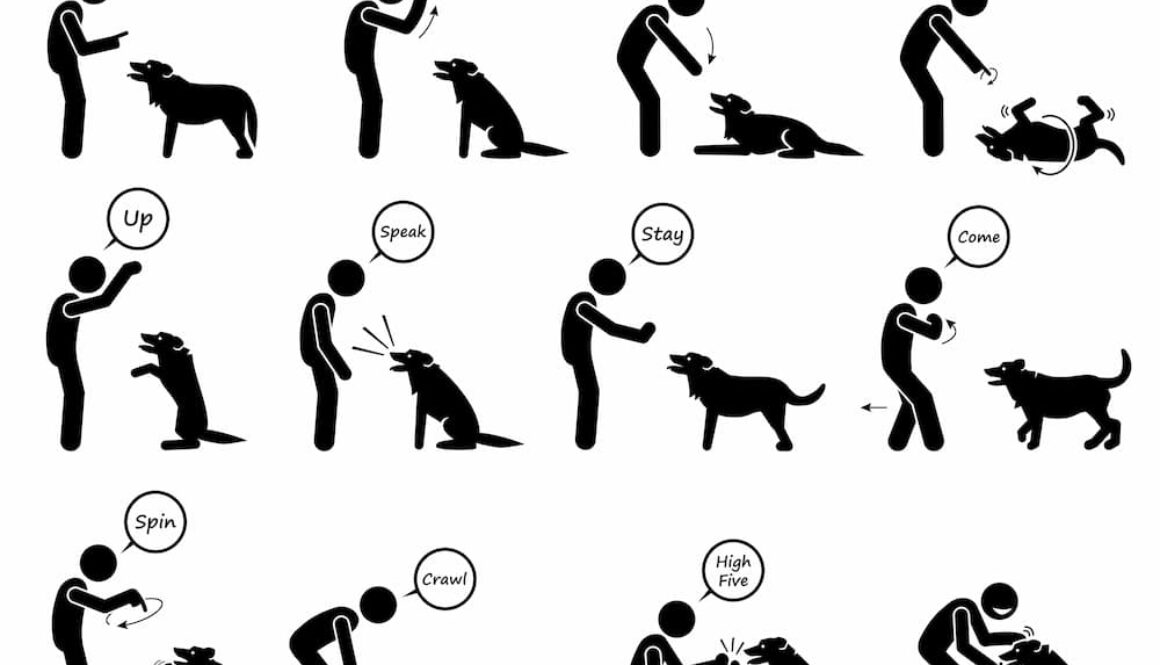
To effectively train dogs, prioritizing certain commands will create a foundation for teaching other skills and tricks. These 5 basic commands are solid building blocks for creating a good canine citizen, ensuring safety, and preparing him or her to learn more:
Sit: This is a more impressive skill than it looks. While adult humans might crave an opportunity to sit, dogs, like small children, don’t particularly want to stop moving. A dog that can hold a sit in a situation when he or she wants to be jumping, chasing, or worse—running out an open door–exhibits great self-control.
In quieter moments, a sitting dog can focus on you, ready to learn the next thing.
Down: Like sit, the down cue is vital for calming and settling a dog. It’s a wonderful achievement to have a dog that will lie down quietly by your feet as you visit with a friend. A dog that reliably holds a down position can accompany you to a coffee shop or summer concert in the park without creating chaos in its wake.
Down is also a starting position for learning cool tricks like “Bang” and “Roll Over.”
Stay: Mastering his command takes a lot of impulse control. Stay is incredibly difficult to teach because it requires a dog to maintain distance from you, wait until released, and ignore any distractions. Stay is useful in many situations. Sometimes you just want to be able to walk into the bathroom alone, but sometimes “stay” can be a lifesaver.
Teaching the stay command takes the patience to work with a dog until you are absolutely sure he or she will hold the position until given the release command.
Look (or Focus): This is much easier for a dog to learn than many commands. “Look” teaches a dog to focus attention on you so that you can communicate. This is particularly useful in times of confusion, danger, anxiety, or chaos, but it also helps when you are trying to teach new behaviors.
Come: A dog that cannot reliably come when called can get into a world of trouble. “Come” pulls a dog to your side and away from trouble—wild animals, traffic, poisons, or your sister’s curious toddler, for instance. And don’t even think of taking a dog that won’t come for a walk off-leash or for a romp in a dog park!
If you like the process of helping a dog master basic obedience commands, becoming a trainer may be a great career for you. If you want to earn a good salary while helping dogs have a happier, safer life, explore the benefits obedience training has to offer.
Lots of people love dogs, but not every person has what it takes to become a dog trainer.It’s sort of like how lots of people love Bruno Mars, but maybe shouldn’t pick up a microphone. Or they love the Great British Baking Show but couldn’t make a Baked Alaska if their lives depended on it.
Dog training demands a high level of dedication, people skills, dog skills, flexibility, stick-to-it-iveness, and a bucket load of other attributes. Here are 35 signs you might be destined for a successful dog obedience training career:
You express your wishes in short imperative sentences. “Sit, stay Jim.”
You carry candy in your pocket to treat your kids for making smart choices.
You mark the good behavior of others with immediate praise. “Who’s a good boy? Atta girl!”
You have more pictures of dogs than people.
You watch 101 Dalmatians and wonder, “Why stop at 101?”
You choose your clothes according to their ability to withstand dog paws.
You spend more time browsing in PetSmart than Macy’s.
Your fondest wish is to play in a ball pit full of puppies.
When watching movies, you worry more about the fate of dogs than of people.
You want to pet every dog you see.
In your eyes, a lush layer of dog hair on your clothing counts as accessorizing.
You have extraordinary patience with your fellow humans.
Double that for dogs.
You have a positive attitude. Other people see hopeless; you envision a dog in a graduation cap.
You can look at a problem from all angles to solve it creatively, even when it has you pinned to the ground licking your face.
You only speak English but know how to say “sit” in 4 different languages
You understand Rome wasn’t built in a day. Neither was Lassie.
You have the communication skills to explain #17 to someone who expects Ole Duke to be trained yesterday.
You don’t mind being jumped on, run over, and pushed around–as long as it’s by a dog and not the dog’s owner.
You are humble enough to seek the wisdom of others when your toolbox is exhausted.
You have deep wells of tact. Sometimes you need kid gloves.
You are so attuned to dogs’ body language it’s like you can read their minds.
You have empathy for overwhelmed dog owners. The feels.
You also have empathy for dogs. So many feels.
You wish all owners would go through obedience training with their dogs so you didn’t have to feel so much.
You want to help all the unruly doggos learn some manners…so you can pet them easier.
You understand the beautiful, unshakeable bond that can exist between dog and owner.
You know dogs can learn amazing things.
You watch endless YouTube videos looking for cool tricks to teach your dog.
Your dog can play the Shell Game and win every time. (Your significant other cannot.)
You have a healthy dose of self-confidence. You could teach every dog to play the Shell Game!
You dream of having a career that changes lives. Preferably dogs’ lives.
You recognize that every single dog has a unique personality. They’re like hairy snowflakes.
You have a sense of humor and can laugh in the face of total, repeated failure. It’s way better than crying.
You never met a dog you didn’t love.
For the right person, dog training is a career with a lot to offer. Will you pull down six figures? Maybe not. Will you spend your days engaged, surmounting challenges, and surrounded by dogs and people in need of a life-changing experience? Count on it. Becoming a dog trainer allows you to make a real difference.
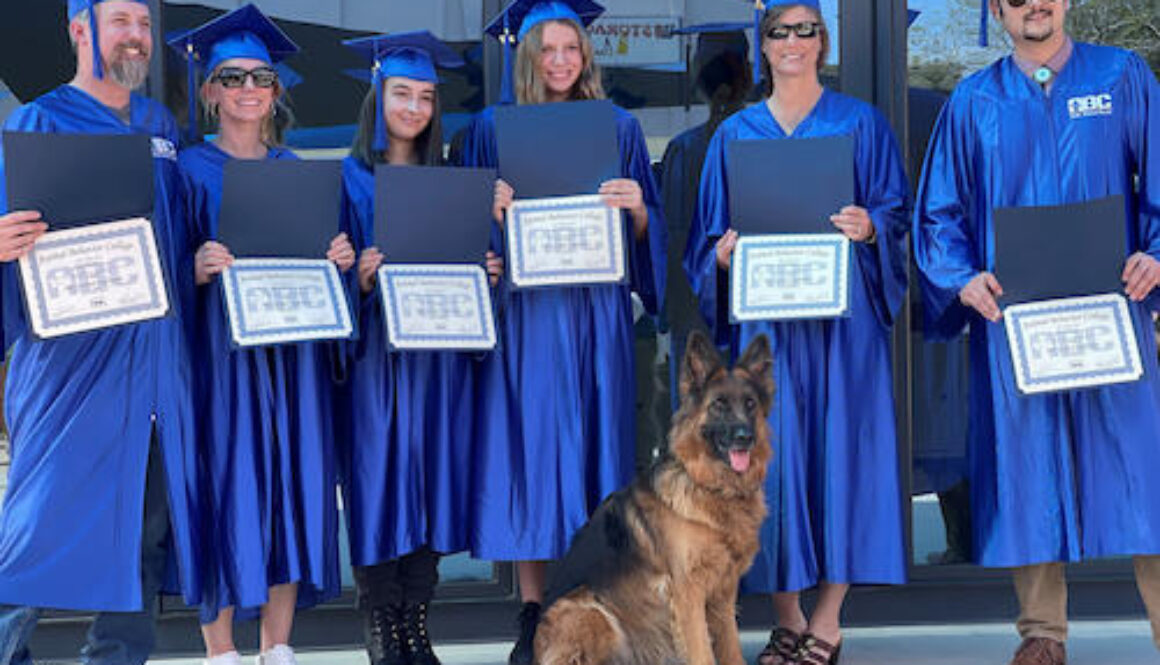
On March 14th, 2022, Animal Behavior College held the graduation for their Dog Obedience Instructor Training Program’s Spring Class of 2022 at the Best Friends Shelter in Los Angeles, California. Animal Behavior College (ABC), a vocational school with its headquarters in Santa Clarita, California, offers a variety of courses focused on becoming certified to work in the animal industry as a certified professional. ABC’s Dog Obedience Instructor Training Program is their most immersive class, held on campus with an in person instructor for students who wish to have an in depth, one on one learning experience. The on-campus instructor, ABC Certified Dog Trainer Seth Hutson, had nothing but positive things to say about this graduating class. “Overall, I could not be any happier or proud of a class! These guys put in the extra hours at night with dog training classes and it really showed.”
Class Achievements
The Spring 2022 class of seven students accomplished monumental achievements during their five-month dog training course. Together, these graduates helped over 23 dogs find their forever home by volunteering at our local Best Friends animal shelter. “This is the first class where the students began showing dogs to potential adopters at Best Friends.” boasted Seth. Training dogs in need of a home can significantly impact their chances of adoption. As a result, these students saved the lives of these dogs by helping them get a second chance in a forever home. This is also the first class to be offered positions immediately upon graduation. ABC could not be any prouder of these most recent Dog Obedience Instructor Training Program graduates.
Meet the Graduates
Animal Behavior College graduates of the Dog Obedience Instructor Training Program receive an ABC Dog Trainer Certification upon completion. This certification can take your dog training career virtually anywhere and will open the door to many opportunities. ABC is excited to see what the future holds for these stellar graduates.
ABC is proud to introduce you to our most recent graduating class:
Chad Hayes is from San Bernadino, CA. He is a Navy veteran who plans to open his own dog training business and help reactive dogs. Reactive dogs are dogs that overreact to certain situations or stimuli. This behavior is commonly confused with aggression, and it tends to result in owners surrendering the dog to a shelter. Training dogs that exhibit this behavior can save many pet lives.
Mary Zuleta currently resides in downtown Los Angeles. She is a Marine veteran who plans to open her own dog training business as well. Because of her great training skills, Mary has been asked to come back to ABC’s next class to help assist in teaching the business building stage of the program. ABC is thrilled to see what she brings to the program!
Nina Reiter is originally from San Diego but wants to relocate to the Los Angeles area. Here she plans on working with instructor Seth Hutson and his business partner Beth Harrison at their respective dog training businesses, “Pawsitively Great Dog Training” and “A Paw Above Dog Training”, to help shelter dogs find their forever homes.
Erica Millstid currently resides in the San Francisco Bay area with possible plans to relocate for her goals of working with shelters to help dogs find their forever homes as well. Most animals are surrendered to shelters due to their behavior. By working with the animals and assisting with their training, these graduates will help save lives and secure a family home for them.
Denise Fincham is a twenty-two-year Air Force Veteran. Originally from Arizona, she will be returning home to work for the Arizona Humane Society where over 11,000 animals were saved just this past year.
Sergio Galarza is originally from Missouri but moved to Colorado for a time shortly before moving to California in 2021. Sergio plans to stick around the Los Angeles area to work for Seth and Beth’s dog training businesses also.
Molly Avery is a Navy veteran. She left California just before the graduation ceremony to go interview for a job as a dog physical therapist. She previously was a physical therapist in the Navy and came to California to study and earn her certification as a dog obedience instructor. She also currently does house sitting for dogs in Colorado.
As you can see, many of our recent ABC classroom graduates of the Dog Obedience Instructor Training Program are military. ABC is a proud supporter of our military families and accepts the GI Bill. However, ABC’s acceptance of the GI Bill does not mean that the Dog Obedience Instructor Training Program is restricted to military personnel! Instead, the Dog Obedience Instructor Training Program is open to everyone, and ABC encourages all of those interested in the program to check out more information about our course, including available tuition payment plans at https://v2.animalbehaviorcollege.com/dog-training-los-angeles/.
Congratulations to ABC’s Dog Obedience Instructor Training Program Class of Spring 2022! Animal Behavior College looks forward to hearing all your successful stories and accomplishments as you move forward in your careers as ABC Certified Dog Trainers. ABC thanks you for all your hard work, passion, and dedication to saving the lives of so many dogs in need now, and in the future!
You love dogs, all animals really, but especially dogs. Not only do you love being around them, but you find their behavior interesting. The idea of working with dogs in a professional capacity and to earn a living helping pets has considerable appeal.
Maybe you considered veterinary medicine, but it wasn’t for you. Please don’t feel bad; there are lots of other ways in which you can help dogs live their best lives. One option is to become a dog trainer. Perhaps you have always had an easy time getting along with dogs and find that most dogs seem to be very comfortable around you. Maybe you have even done a little research by Googling “dog trainer academy near me” but are still unsure what you need to know before becoming a dog trainer.
So, let’s review the top 6 things you should consider before becoming a dog trainer.
1) Do you love dogs and want to help them? This might seem like an obvious question, but you might be surprised how many people don’t consider it when looking into this profession. I had people tell me that when they got into sales or accounting, they didn’t do so because they loved those subjects, so why is dog training any different? The short answer is that you will almost always do better and be happier doing something you genuinely love.
2) Are you a patient person? Dog training takes time, practice, and patience. So having a patient personality is a real plus when becoming a dog trainer.
3) Do you enjoy helping and working with people? This might seem like a strange question, but a great deal of training dogs is really about teaching the people who love them. The better you are at working with and communicating with people, the easier it will be for you when you work with pet parents. Some animal lovers don’t consider themselves “people persons,” and while working with people isn’t an absolute prerequisite for being a good dog trainer, it will help.
4) What kind of dog training do you wish to do? Do you want to teach dogs obedience? Perhaps you have worked with dogs in competitive obedience and want to learn and do more there. Maybe you are intrigued with helping people experiencing canine behavioral challenges or desire to train service dogs or search and rescue dogs. Once you know what type of training you wish to learn, you can start researching the best schools to attend. The southern California based Animal Behavior College is a good example of a school that teaches some of the aforementioned topics. Speaking of California, there are outstanding dog training colleges in California, which might seem like a random comment, but since dog training is a skill typically practiced outdoors, the weather in California, particularly southern California, means searching for dog obedience training in Los Angeles and/or a dog training college in California will result in you finding a dog training school that enjoys some of the best weather anywhere in the United States.
5) How do you learn best? Some people learn most effectively in an immersive classroom program, while others thrive taking online classes to start and then combining them with a hands-on portion down the road. Once you have asked and answered these questions, you can begin to look at certified dog trainer schools near you and make an educated decision as to whether you wish to attend an online dog training program or a dog trainer school in person. Again, schools like Animal Behavior College offer both types of programs. An online program or an immersive classroom course that involves students going to the school campus and learning about dogs and dog training 5 days a week, 8 hours per day for over 5 months.
Which program is right for you? Again, that depends on how you learn best.
Finally, before you apply to any school ask yourself the 6th question.
6) Are you prepared to dedicate both time and effort to mastering your new profession? Some folks think dog training is about playing with puppies and petting dogs all day. While there is undoubtedly puppy play and lots of doggie petting, a great deal of work is involved in becoming a professional dog trainer. First, dog trainers need to understand the principles of behavior, behavior modification, and how to apply those principles in real-world situations. Dog trainers need to know how to work with all different types of dogs and personalities, and there is some risk involved in this profession. Dog training takes time to master, and it can take trainers years to become experts. It requires academic and physical commitments along with patience and a great deal of practice. Is this worth the effort? That’s for you to answer. But if you want the ability to make a tangible difference in the lives of pets and the people who love them, if you’re going to take pride in becoming a certified dog trainer and take pride in the fact that pet parents searching for a “certified dog trainer school near me” will find your name, and you will be able to help them, then perhaps this is the profession for you.
Not a bad idea! Dog training is a great career, especially if you love animals. Becoming a dog trainer allows you the privilege of helping dogs become the best version of themselves while making life for their owners more manageable and happier. It’s a wonderful feeling.
The practical advantages of becoming a dog trainer aren’t too shabby, either! Dog training offers:
Flexible hours
A chance to open your own business if you want
The opportunity to spend time outdoors
The potential to earn a good salary.
An excuse to surround yourself with dogs!
How Do I Become a Dog Trainer?
When it comes to learning how to be a dog trainer, you have some different options. You can find tons of books and videos about dog obedience training skills. You can seek out professional trainers who might conduct webinars or in-person seminars. There are also some very good online schools that offer dog training certification programs. Each of these can be legitimately helpful in your quest to learn the basics of being a dog obedience trainer.
However, while it might be tempting to try and master dog training while sitting on your couch, there is no substitute for learning the career in a more traditional in-person classroom setting.
Here are 5 reasons why:
Getting hands-on experience with real dogs is essential and you can’t get hands-on dog training experience from a book or with a keyboard (books and keyboards aren’t as fun to pet, either). While books, online classes, and seminars can give you a great deal of knowledge, there is no substitute for working with living, breathing, wiggling, barking, pulling, jumping, nipping, drooling, wonderful dogs. You will get immediate feedback from a dog, and immediate help from an instructor who hears your tone of voice and watches your every move. An in-person instructor can help you correct mistakes the moment they happen before a mistake becomes a habit.
A classroom setting gives you direct access to experts in the field who are professional dog trainers that have spent their entire careers working with a variety of canine personalities. With firsthand experience handling challenging behaviors, your instructors can be invaluable problem-solving resources. If you don’t understand something, you have an instructor there to help you out in real time.
Instead of sitting alone with a book or laptop, you will be surrounded by classmates. Building camaraderie with other students gives you a great support system as you go through dog training classes together. You can share your frustrations and achievements, seek advice, and cheer one another on to success. By collaborating, you can solve problems together instead of struggling in isolation. In addition, your classmates will become fellow dog trainers, giving you an instant network of professional contacts.
An in-person class makes it hard to procrastinate since you have to physically show up and participate in order to earn your certification. This is especially good for those who aren’t self-motivated or adept at time management. With an in-person class, you can’t just decide to do it when you feel like it; there are hard and fast meeting times and instructors who won’t take kindly to students who skip class or refuse to put in the effort necessary to master dog training skills.
Learning to work with dogs in a classroom makes concentration easier. There aren’t the distractions you have at home with your phone out of sight, no children needing a ride to soccer practice, no Netflix beckoning, no friends calling you to hang out, and no chores demanding attention, you can focus better.
BONUS: If you enroll in an in-person class you will be more active and engaged in your learning! Instead of studying at home (near the bag of potato chips), you’ll be on your feet training dogs!
Where Do I Find an In-Person Dog Training Course?
Animal Behavior College has a long history of certifying dog trainers. Founder, Steven Appelbaum, has been training dogs for more than forty years and is passionate about changing lives—both canine and human. Under his guidance, ABC began offering a distance certification program for dog trainers that combines home study with a valuable hands-on externship.
Knowing the value of in-person training, ABC also offers a five-month on-campus dog trainer program. The course includes valuable one-on-one instruction as well as the opportunity to practice your newfound skills by training shelter dogs. The program is a wonderful way to both earn your dog training certification and save lives as teaching obedience skills to shelter dogs significantly improves their chances of finding a forever home.
If you have decided that dog training is for you, it makes sense to pursue the best career training possible. Completing an in-person course gives you invaluable experience and a high degree of confidence in your skills, allowing you to launch your dog training career primed for success.
To launch a life-changing career takes a bold action. If you are a dog lover, take a few moments to consider attending an in-person dog training school. For starters, by becoming a dog trainer, yours is not the only life that will be changed. Sure, you will have a great career and make a good living, but beyond that your expertise will make a world of difference to every owner you work with and every single dog you train.
Change Your Life Forever
If you have a passion for dogs, why not put it to good use? You need a career; millions and millions of dogs out there need training. Some need to learn obedience and others have behavioral challenges that pet parents need assistance solving. The bottom line that can’t be stressed strongly enough: dogs need training. Every dog. Every. Dog.
Animal lovers who dedicate their careers making a tangible difference in the lives of dogs, change their own lives as well. Why not make the world a better place by helping pets and the people who love them?
Save Dogs’ Lives!
You know those social media posts featuring sad-eyed shelter dogs waiting for their owners to come back?
Seeing them abandoned breaks your heart and makes you want to adopt them all and then makes you even sadder because you can’t. Dog trainers understand this which is why so many of them work with shelters to assist dogs there in finding their forever homes. Not only can dog trainers help increase adoption rates, but effective dog trainers can also assist in preventing some dogs from winding up in the shelter in the first place. That’s because nearly half of the dogs surrendered to shelters for re-homing are there because of behavior problems—problems that could have been corrected with proper dog training.
What happens to untrained dogs? That depends on what challenges manifest themselves. At best, untrained dogs are more difficult for their pet parents to handle, less safe and less likely to be fully integrated as a member of the family. At worst, untrained dogs can be abused and/or rehomed and find themselves in shelters. Thus, through no fault of their own, these beautiful creatures with an innate affinity for human companionship find themselves alone in a cage. Even worse, after languishing in a shelter unadoptable, over half a million dogs are euthanized annually.
Dog trainers have the power to save animals from that fate. Shelter dogs that undergo training through programs like Animal Behavior College’s “Students Saving Lives” become imminently more adoptable. By teaching them basic commands also known as cues, trainers help dogs curb their unruly behavior and understand what humans expect of them. With proper training, most dogs can become model canine citizens.
With pet ownership skyrocketing, the need for dog trainers continues to trend upwards. Enrolling in an on-campus training program makes great sense if you want to earn an excellent living in a career that’s always going to be in high demand. There are even dog obedience trainer programs that are GI Bill approved.
Why Take An In-Person Dog Training Program?
There are actually three types of dog trainer programs that schools can offer.
The first is an online course. The challenge with this type of program is that you can’t become a dog trainer just by reading about it or watching videos.
The second is an online course with some hands-on experience. We will call this a hybrid course. Hybrids are much better than just online programs as they offer some experience. The challenge is that not everyone is a self-starter or has the discipline to excel in a home study program. There is also the issue of time. Complete dog trainer programs, that is courses that teach students to be practicing professional dog trainers can typically take 12-16 months to complete.
The third is an in-person course. These programs include the greatest amount of hands-on training. For a physical vocation like dog training, learning to train under the eyes of an experienced trainer in an immersive training environment is a fabulous option. Because in person programs can be intensive, they can be completed more quickly than hybrid courses. Like all choices this isn’t for everyone. People who want to study from home and who can’t travel to the school should consider the hybrid option. Cost is also a factor. In person programs are more expensive than Hybrid programs.
We suggest either the hybrid or in person options be selected based on your specific needs and goals.
An in-person program gives students an immersive dog training experience. An in-person program ensures you a lot of one-on-one practice with dogs in an intimate classroom setting or at a local rescue. You’ll learn everything you need to know to succeed in your new career. In just 5 months, you can become a certified professional dog trainer.
Save Human Sanity and help strengthen the human/canine bond!
We touched on this earlier but it’s worth repeating. Untrained dogs can make their pet parents lives a pandemonium. Who hasn’t known a friend or a family member struggling with an unruly dog? Or seen someone out in public being dragged along in the wake of an enthusiastic pet? Or been jumped on in greeting by someone’s friendly dog? Or worse, been threatened by a territorial animal?
While the dogs in these scenarios might be having a grand time, their humans are not. Additionally, the frustrating fact is many of these scenarios are avoidable with the help of a dog obedience trainer.
Dog owners can save their sanity by committing to train their dogs. As a dog trainer, you work alongside owners and teach them as you teach their dogs. Training takes consistency, patience, and perseverance—traits that often are not natural to dogs or humans—but the results are so worth the effort!
Be a kind of Super Hero or at least develop dog training super powers.
You might not be able to scale a building or release energy blasts, but honestly, how often do you need to? No, as a dog trainer you will be a real superhero to both dogs and their owners. Not only can help both enjoy better relationships with each other, and help untold numbers of dogs find forever homes or assisting other dogs in avoiding shelters in the first place, but through your skills or should we say, super training powers, you can make a tangible difference in the lives of dogs in a surprisingly short period of time.
So all you animal loving potential super heroes, if you want to take your passion to the next level consider becoming a professional dog trainer.
For those who want most immersive 24/7 dog experience, an in-person dog training school can transform you into a life changer!
Rating A+ The BBB only accredits the business management of a school, not the quality of the curriculum, or training programs.
STATE LICENSURE AND APPROVAL
Animal Behavior College is a private vocational school approved by the Bureau for Private Postsecondary Education (www.bppe.ca.gov) under the California Private Postsecondary Education Act of 2009 and Title 5. California Code of Regulations Division 7.5. Private Postsecondary Education. The Bureau for Private Postsecondary Education approval means that this institution and its operation comply with the standards established under the law for occupational instruction by private postsecondary educational institutions. Institutional approval is subject to continual review and the institution must reapply for approval every five years.
DISCLAIMER
Please be advised that Animal Behavior College (“ABC”) is the exclusive entity authorized to provide certifications and/or degrees from Animal Behavior College. Moreover, such certifications and/or degrees are only conferred by ABC following a student’s completion of an ABC-administered program. No other entity or individual has authority to confer certifications and/or degrees on ABC’s behalf. Any other entity or individual who attempts to do so is acting without express or implied authority from ABC.
GI BILL® TRADEMARK ATTRIBUTION
GI Bill® is a registered trademark of the U.S. Department of Veterans Affairs (VA). More information about education benefits offered by VA is available at the official U.S. government Web site at https://www.benefits.va.gov/gibill
Animal Behavior College, 27509 Avenue Hopkins, Santa Clarita CA 91355-3910 Contact Us