The Australian Shepherd is a medium-sized dog recognized by the American Kennel Club (AKC) as part of the herding group. Weight varies from dog to dog, but Australian Shepherds are generally 40 to 60 pounds with height ranging from 20 to 23 inches. Coloring of the Australian Shepherd varies greatly. It is common to see merle marking of different shades or solid red. Australian Shepherds shed so it’s best to brush them at least once a week.
Bred to be active, adaptable and agile, the Aussie dog require lots of exercise and mental stimulation. Australian Shepherds are also known to be highly intelligent and willing to please their owners.
Dog Training Tips
Being part of the herding group, the Australian Shepherd needs more exercise than a short daily walk. If you’re working with or own an Aussie, enroll your dog in a stimulating dog training class that varies from basic dog obedience to herding trails to dog agility classes to flyball. If the Aussie doesn’t get enough quality exercise and mental stimulation, it could lead to behavior problems, such as destruction of home items or guarding of objects.
The Aussie is known to be willing to please his owners. This makes dog training more rewarding for the dog and owner. Strong leadership should be implemented by the owner so the dog doesn’t naturally assume the leader role.
Australian Shepherds are very alert and loyal family companions. Their strong loyalty to their family or pack can cause suspicion of strangers or unacquainted animals though. Make sure to socialize your Aussie as much as possible from an early age to adulthood.
They love to play so they do very well in family homes with children. Consultations with a dog trainer or dog training classes can help curb their natural tendency to herd children. Aussies make great watchdogs, as they are usually naturally protective of their pack. You can expect them to let you know when someone may be at the door.
Due to the Aussie’s high energy levels, they are not suggested for small apartment owners. Aussies are not the type of pet who will typically lie around on a daily basis. They can do very well on a farm or anywhere with land and plenty of space to run. This dog breed is perfect for the active dog owner.
Deciphering the myriad claims on a pet food packaging can be troublesome. Photo credit: icyyoke/iStock
Understanding the label of a pet food is very important, as it is a legally binding contract between you and the pet food manufacturer. Even nutritionists have problems decoding pet food labels. There are thousands of things to consider, from maximums and minimums of fiber content to ingredient sourcing to how the food was actually tested so you don’t inadvertently turn your pets into test animals. Here is a simple way to decode the pet food label and to make the most of the information you’re given.
Labels, and any claims made on them, are regulated both on a federal and a state level. The federal regulations are published in the Code of Federal Regulations (CFR), Title 21CFR. Every label is required by law to have eight pieces of information. Three things must be on the front of the package in plain view.
Brand and Product Name: The name of the food will actually indicate the percentage of protein in the food. See “What’s in a Name” below for more information.
Species: The species the food is formulated for.
Quantity: The weight of food in the bag, can, roll, container, etc.
Primal uses the descriptors “Beef,” “Chicken,” “Beef and Salmon, which means the products contain at least 95% of the stated protein.
The other five items may be included on the front label or elsewhere on the package, such as on a back or side label (called the “information panel”).
Guaranteed Analysis: Typically, the minimum percentages of crude protein and crude fat, and the maximum percentages of crude fiber and moisture (crude refers to testing not the food)
Ingredient Statement: All ingredients are listed in order of predominance by weight, including their inherent water content.
Nutritional Adequacy Statement: A substantiated claim of the food’s nutritional adequacy (e.g., complete and balanced) as well as which life stage(s) it is for (e.g., for growth, for maintenance, for all…).
Feeding Directions: Recommended quantity based on weight and/or age of pet
Contact Information: Name and address of manufacturer or distributor
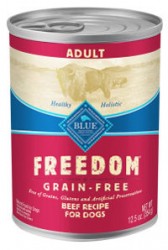
Because this food is called Beef Recipe for Dogs, we know it must contain at least 25% beef protein.
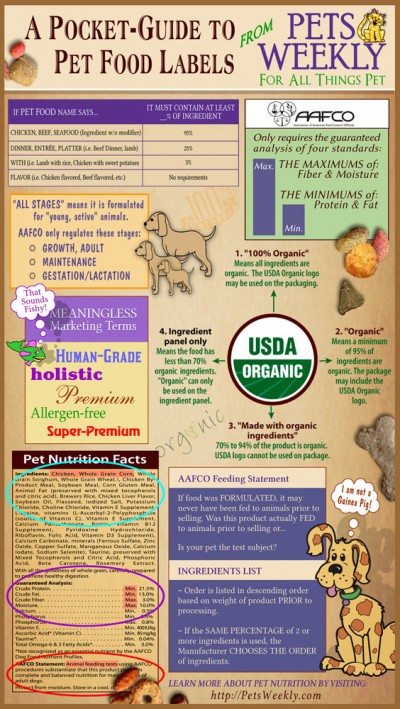
A lot, as it turns out. The name of a pet food indicates the percentage of protein it has in it. For example, if a pet food name includes:
The Name of the Protein: It must contain at least 95% of the said ingredient.
Dinner, Entree, Platter, etc.: It must contain at least 25% of the said protein. (see proplan-entree image)
A modifier such as “with” chicken: It must contain at least 3% of the said protein.
The word “flavor”: There are no requirements on the amount of protein it contains.
Commercial diets and treats are legally required to include proper listing of all the ingredients in the product in order from most to least, based on weight.
“Ingredients must be listed in order of predominance by weight, on an ‘as formulated’ basis,” according to the Association of American Feed Control (AAFCO), a voluntary membership association of local, state and federal agencies charged by law to regulate the sale and distribution of animal feeds (including pet foods) and animal drug remedies. The ingredient that makes up the highest percentage of the total weight as it goes into the product is listed first. Each ingredient must be listed by its appropriate name.
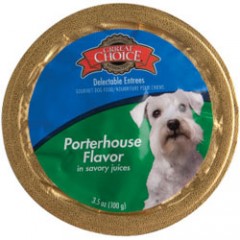
Porterhouse Flavor indicates there could be beef protein in the food. There are no protein requirements for food that uses “flavor” as a descriptor.
There are hundreds of meaningless marketing terms on dog food labels and we’ve listed a few here. These words are just words, they have no legal definition (which is why you’ll see a lot of them) and there are no legal requirements for including them on packaging. When you see them, take the info with a grain of salt.
Natural: Arsenic is also natural. So is water, chicken, and the highest grade of protein. The U.S. FDA states, “The term ‘natural’ is often used on pet food labels, although that term does not have an official definition.” While the FDA does not have an official meaning, AAFCO does. It states, “For the most part, ‘natural’ can be construed as equivalent to a lack of artificial flavors, artificial colors, or artificial preservatives in the product.”
Holistic: The actual meaning of holistic is “characterized by comprehension of the parts of something as intimately interconnected and explicable only by reference to the whole.” It means nothing.
Premium: FDA labeling guidelines1 state that, “Products labeled as premium or gourmet are not required to contain any different or higher quality ingredients, nor are they held up to any higher nutritional standards than are any other complete and balanced products.”
Made in the USA
The FTC governs this aspect of labeling. The rule states that “all or virtually all means” all significant parts and processing that go into the product must be of U.S. origin. That is, the product should contain no—or negligible—foreign content. You can view this fact sheet for more information.
Click on image to view a larger version of the infographic.
The organic seal is tricky to understand and it makes a difference where you find it on the label. “Organic” refers to the handling and processing of ingredients and products, not necessarily the quality of the product. For example:
If the official USDA Organic seal is on the actual label, then that means all ingredients are organic.
If the seal is on the food ingredient panel, that means the food has less than 70% organic ingredients.
If the statement says, “Made with Organic Ingredients” then 70 to 94% of the product is organic.
The seal is allowed to be used anywhere on packaging if less than 70% of the products are non-organic.
Pet foods and pet treats must comply with the USDA’s National Organic Program (NOP) regulations (7 CFR 205). These regulations cover ingredient sourcing, ingredient handling, manufacturing, labeling and certification of products wanting to use the word “organic” in their labeling. Note: Organic refers to the processing of a product, not the quality of the product.
For a product to be human grade, all ingredients in the product must be human edible and the product must be manufactured, packed and held in a plant approved for manufacturing human food. However, this regulation doesn’t apply to advertising and websites, so some pet food companies will advertise “human grade” ingredients in their products.
The Honest Kitchen is the only pet-food product (as of the time of this printing and to our knowledge) that can legitimately use this certification. (For more information on human-grade food, see federal regulations in 21 CFR 110, Current Good Manufacturing Practice in Manufacturing, Packing or Holding Human Food.)
As you can see, choosing a pet food involves more than buying a bag with the most compelling image. Once you’re aware of the legal guidelines behind pet food labels, and have researched various pet food manufacturers you’ll be better equipped to select the best products for your pets.
For even more information on pet food labels, visit the FDA’s website by clicking here.
About the Author: Stacy Mantle is the founder of PetsWeekly.com and the bestselling author of “Shepherd’s Moon.” Learn more great tips for living with animals by visiting PetsWeekly.com or get to know a little more about the author atwww.StacyMantle.com
There are myriad ways to help your local shelter or rescue.
There are, thankfully, about 12,000 animal welfare organizations in the U.S., all working hard to rescue animals and find them forever homes. These facilities usually have a small core of professionals and rely heavily on volunteers to fill out the staff and thus can always use extra help.
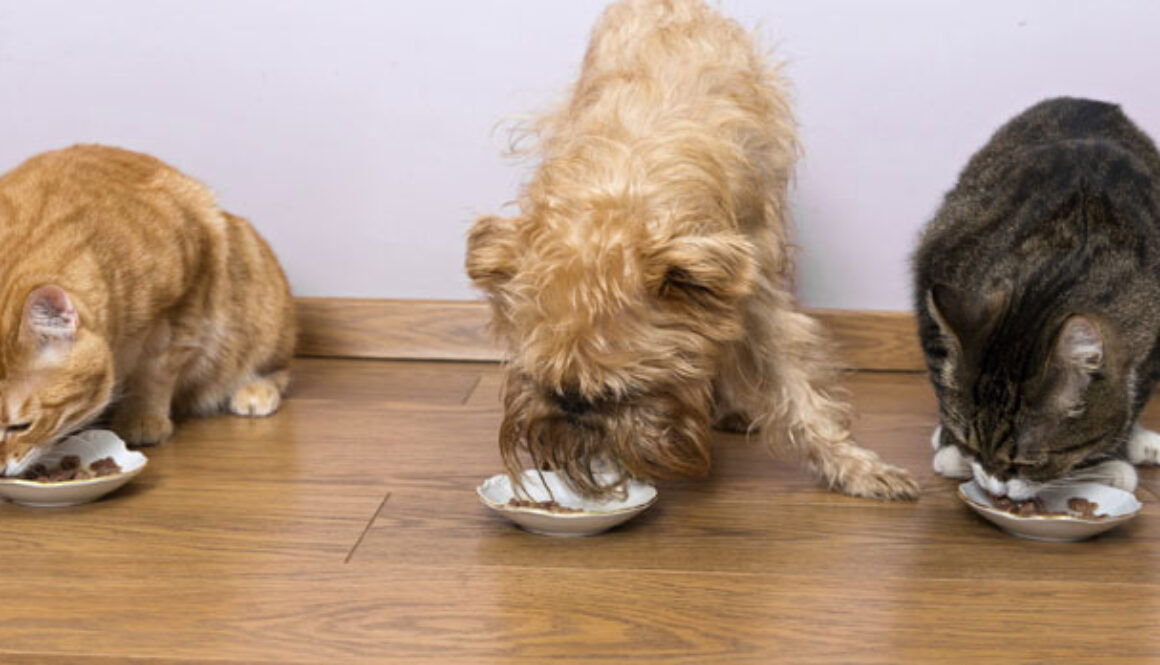
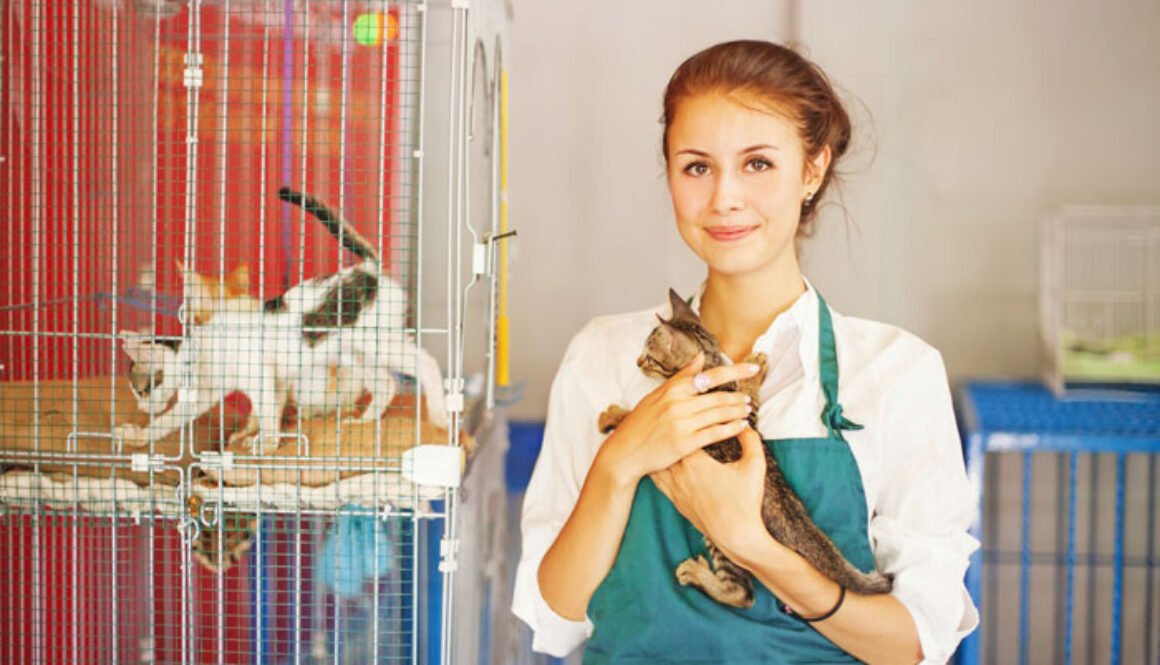
Feeding the shelter’s dogs and cats is just one of the many tasks you could do as a volunteer. Photo credit: diverroy/iStock
Of course, there are the everyday tasks of feeding and cleaning up after the pets in their care. Of course, fostering pets at home plays an important role in the animal’s general well-being and ultimately adoptability, too. But there are also so many others ways you can help. Such as by putting your own personal skills and professional knowledge in a particular field to work.
If you are computer savvy you can offer to run the group’s website. Having a strong online presence really helps to get pets adopted. If you have great photographic skills, you can volunteer to take pictures for the pet profiles. A really good photograph can make a huge difference.
If you are hands-on in the carpentry, painting and other typical handyman departments, such skills can certainly be put to good use on an ongoing basis. If you’re good with numbers—accountants and bookkeepers take note—you can volunteer to help keep financial records and there are always legal issues to be resolved.
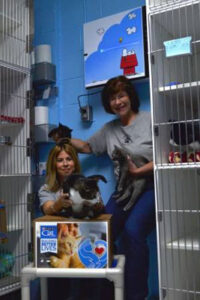
Liz Taranda (left) is a dedicated volunteer at the Clifton Animal Shelter in New Jersey.
Here is more good news: Volunteering at a particular shelter can literally pay off big time. Many prominent pet product companies recognize volunteer work by donating to the shelters where they help out.
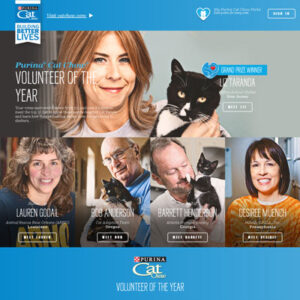
Case in point: For more than 10 years, Liz Taranda has volunteered thousands of hours helping cats at the Clifton Animal Shelter in N.J., feel comfortable and find forever homes. In honor of her dedication, Liz was chosen as the Shelter Volunteer of the Year in a contest organized by Purina Cat Chow.
Her prize? In recognition of her dedication to the shelter cats, the Clifton Animal Shelter will receive a $25,000 makeover to help improve its cat adoption areas.
Purina Cat Chow asked its 50 shelter partners—one in every state—to nominate their best volunteer, the one who spends countless hours providing additional support to lessen the stress on the cats and kittens in the shelter’s care while they await forever homes. Consumers nationwide voted for their favorite volunteer story daily. Consumer votes and a judging panel determined the top shelter volunteer and four runners-up. More than 272,000 votes were cast in support of the 50 shelter volunteers. The runner-up volunteers earned $5,000 each for their particular shelters, too.
In fact, The Purina Cat Chow Shelter Volunteer of the Year Contest donated nearly $100,000 in cash donations, cat food and cat care supplies among the 50 participating shelters in recognition of their volunteers. Every participating shelter received a $1,000 donation, Purina® Cat Chow® Gentle Formula brand food and cat care supplies.
If you volunteer, keep an eye out for such competitions too. It’s an all-round win-win.
About the Author: Sandy Robins is the 2013 winner of the “Excellence in Journalism and Outstanding Contribution to the Pet Industry Award.” Her work appears on many of the country’s leading pet platforms, such as MSNBC.com, MSN.com and TODAYShow.com. She is a regular contributor and columnist in multiple national and international publications, including Cat Fancy, as well as the author of the award-winning books “Fabulous Felines: Health and Beauty Secrets for the Pampered Cat” and “For The Love of Cats.” Learn more about Sandy on her websiteor Facebook page. #welovecats
If you are like most dog owners, you love to cuddle with your canine companion. To keep that cuddle factor alive and well in your relationship with your pet, it’s a good idea to have your dog groomed on a regular basis.
A well-groomed dog smells good. Bathing with a quality shampoo and conditioner removes dirt, oil and that “doggy smell.” Photo credit: sestovic/iStock
Bathing, brushing, nail trimming and clipping are all part of regular grooming. You can do your dog’s grooming yourself at home or take him to a professional groomer. If you go for the do-it-yourself option, invest in a quality shampoo and conditioner, a good brush and a pair of grooming scissors. If you need to trim more hair than scissors can handle, spend money on a quality clipper.
If you have a dog who needs extensive clipping (a poodle or a schnauzer, for example), or if you don’t have the time or physical ability to wash, dry and brush out your dog yourself, take him a professional groomer. A good grooming shop uses quality products and equipment, and the expertise of a professional groomer—especially if you have a dog who needs more precise clipping—is worth the money.
Whether you do the work yourself or hire a professional to get it done, remember that consistent grooming offers many benefits for both you and your dog.
Good Smells
If your dog sheds profusely, regular brushing and/or combing can help keep all that loose hair to a minimum. Photo credit: pakornkrit/iStock
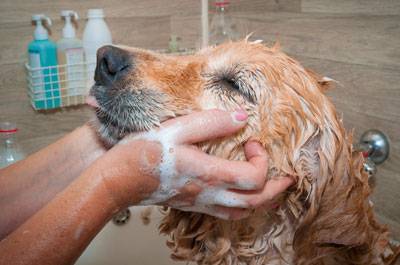
A well-groomed dog smells good. Bathing with a quality shampoo and conditioner removes dirt, oil and that “doggy smell.” A dog who smells good is easier to get close to.
Less Shedding
If you have a dog who sheds, regular grooming can help keep loose hair to a minimum. Bathing brings loose hair to the surface and brushing captures that hair before it ends up on your floor.
Better Health
A clean dog is a healthier dog. Grooming your dog gives you (or your professional groomer) a chance to go over your dog’s body, where you are most likely to notice any issues your dog may be experiencing. Fleas, ticks, wounds, lumps: All of these can be easily discovered during a grooming session. Professional groomers are also good at expressing a dog’s anal glands, which can help keep this area clean and free from problems.
Great Socialization
Although your dog may not like baths or trips to the groomer, these events are an important part of his life. We sometimes have to do things we don’t enjoy, and that applies to dogs, too. Doing your own grooming at home gives you a chance to spend some interactive time with your dog. Most dogs enjoy being brushed, so a once over with a brush every few days or at least once a week is a good way to keep your dog clean while deepening the bond between you.
About the Author: Audrey Pavia is an award-winning freelance writer and author of “The Labrador Retriever Handbook.” She is a former staff editor of Dog Fancy, Dog World and The AKC Gazette magazines. To learn more about her work, visitwww.audreypavia.com and hollywoodhoofbeats.net/
Ever wondered what your cat gets up to on the other side of the catflap? Or how much activity your dog really engages in every day? The G-Paws Track GPS tracker is a great way to better understand your pets and their habits. The tracker lets you accurately record where your pet goes; see your pet’s routes on aerial photography or street level mapping; upload, view and share the route on G-Paws.com; record for 8 hours (it only records when your pet is moving); and integrate your account with other social network platforms. The tracking system includes a GPS data recorder (weighing a mere 0.42 oz./12g), two collar housings to fit any size collar, a USB cable for charging and data transfer, and a downloadable app (OS and Android). shop.g-paws.com
Cat is Good’s set of eight “Inspired by Cat” magnets represent all aspects of the cat persona from cute to snarky. The set includes, It’s All Fun and Games; Feed Me, Pet Me, Leave Me Alone; Don’t Disturb Me; I Find You Very Exciting; Not Listening; I Get Better Looking; Giving is its Own Reward; and Celebrate Little Things. Each high-quality, decorative magnet measures 2.5 x 3.25 inches. The magnets are also available individually. www.dogisgood.com/Products/Cat-is-Good
Plato Pet Treats’ Small Bites® training treats are made from single-source proteins and healthful fruits and vegetables. They contain no added sugars, artificial preservatives, by-products, artificial colors, protein meals or soy-, wheat- or corn-fillers. The low-calories treats come in two varieties, Organic Chicken (3.36 calories per treat) and Organic Duck (3.6 calories per treat), in 4-oz. & 10.6-oz. bags. PlatoPetTreats.com or Facebook.com/PlatoPetTreats
Does your cat frequently forget to chew his/her food? Does he/she prefer to attack food before eating it? If you answered yes to either or both questions, check out the Tiger Diner by Pioneer Pet. The portion-control food dish is designed to engage cats’ hunting instinct while helping them eat at a healthier speed. The funnel-shaped bowl automatically distributes food as needed. Easy to open, set-up, and clean, the ceramic bowl is dishwasher-safe and comes in either black or white. www.pioneerpet.com
earthbath’s pH-balanced and soap-free Shed Control Shampoo contains organic, fair-trade shea butter, essential green tea leaf extract, ginseng, omega-6 fatty acids, awapuhi and other natural humectants and emollients. The all-natural ingredients are formulated to nourish skin and rejuvenate coats while controlling excessive shedding, dander and other associated allergens. The Shed Control Conditioner features a blend of select moisturizers and antioxidants for a great smelling product that detangles and provides relief from excessive shedding and dander while leaving pets’ coats with brilliant sheen. www.earthbath.com
Honest Pet Products’ Eco Cat Fisher features all the components of a perfect cat toy: catnip, a removable bell and a fish dangling from a pole. Made by disabled adults in Green Bay, Wisconsin, the cat toy’s 5-in. long hemp canvas fish is completely filled with organic catnip and attached to 12-in. bamboo pole with 6 feet of hemp twine. Naturally anti-bacterial, anti-microbial, the Eco Cat Fisher is 100% satisfaction guaranteed. www.honestpetproducts.com
Summer is coming—and the hot pavement that goes with it. Even though dogs’ paws are relatively tough, they are not armor-plated. To help keep paw sensitivity at bay, the Jorge Bendersky at M Boutique product line presents Paw Therapy Cream. Made from natural ingredients, including waxes and aroma-therapeutic essential oils, the cream is formulated to deeply nourish, safely heal and protect paw pads. The soothing cream is also rich in vitamin E and aloe. www.mboutiqueintl.com
Brandi Christian enrolled in Animal Behavior College’sDog Groomer Program in May 2014. Raised with the idea that every young person should attend college, Brandi first pursued a career as a high school teacher. However, she soon realized her passion is with dogs and made the switch to pet grooming in order to follow her dream.
Brandi has shown dedication to her success. Currently in her externship, she is diligent about gaining as much experience as possible. Brandi stays to observe when her mentor says she can leave and spends a lot of time practicing on her own dog and best friend Benny.
What animal or person most inspired you to pursue a career in the animal industry?
I was raised around animals. My mother loves them as much as I do, so I would not say there is one particular person or dog, but rather a lifetime of companionship. However, my Terrier mix, Benny, helped me to start considering grooming dogs. He requires regular upkeep, so I had to learn to take care of the basics myself.
Do you do something other than grooming career-wise?
Since my passion is with dogs, I have started carving a life and career path that reflects that. I am currently working at the local dog daycare. Before that, I worked for a Camp Bow Wow in Nevada.
At Camp Bow Wow, a full service doggy daycare and boarding facility, I did everything from completing front desk work to working in the back with the dogs. We also did some basic grooming there, such as nail trims and bathing. At the local dog daycare, I am a little newer, so I primarily take care of the dogs who are in their care.
What has your experience been like in the ABC Grooming Instruction Program?
It has been extremely enjoyable. Whenever I have needed assistance or have had questions, I’ve been able to get responses in a timely fashion. It is obvious that my success is important to both my program manager and externship coordinator. I am particularly enjoying the hands-on portion. My mentor is teaching me a lot. I feel like all of the basics are covered, which is extremely important to becoming a successful dog groomer.
What knowledge and experiences have you gained from becoming a certified dog groomer?
Outside of general dog grooming knowledge, ABC has taught me there are a wealth of information as well as a community for anyone wishing to further her knowledge in the grooming industry.
If you could style a dog or cat after any celebrity, who would it be and why?
It would be fun to style a dog after Katy Perry. She has a delicate mix of standard femininity with pop colors all topped with a little bit of sugar. I think that could translate really well on a dog–throwing in some creative elements while refraining from going over-the-top. I imagine a Poodle with a classic groom. Then, I would add different streaks of colors (or even making each palm a different color) with feathers and bows.
Chelsey Klinger lives in Schuylkill Haven, Pennsylvania, and works at a local flower shop as a shop hand. However, as of May 11, she will begin working as a veterinary assistant at Hamburg Animal Hospital where she completed her 90-hour externship as part of the Veterinary Assistant Program.
What was the biggest challenge you faced during your externship and how did you overcome it?
The hardest part was dealing with euthanasia. You know it is for the better when an animal is sick, but it still takes a toll on everyone in the practice. Just understanding the animal is no longer in any pain gives me a sense of peace.
What has been your most rewarding moment during your externship?
The most rewarding part was helping diagnose illnesses early so the animal can be treated sooner and have a better outcome.
Describe a humorous moment you witnessed or took part in while working at your externship location.
Some of the most humorous moments were with the office staff. They would make up funny stories about the cats who lived in the office, such as Twinkie and his wagon, or Sputie and his Bunsen burner.
How did you hear about the Veterinary Assistant Program and what convinced you to become certified?
I learned about Animal Behavior College on a television commercial and decided to check out its website. I loved the fact that I could study at home while continuing to work. Another attraction was the low-cost tuition for an accredited certification in the veterinary assistant field.
What are your future career plans?
I hope to continue working at Hamburg Animal Hospital for a few years, but I would love to move to Baltimore and work in a larger animal hospital in the city.
If you could work with any exotic animal, what would it be and why?
It would probably be a gray wolf. I would just love to see where domestic dogs began and how wolf behavior differs from that of domesticated dogs.
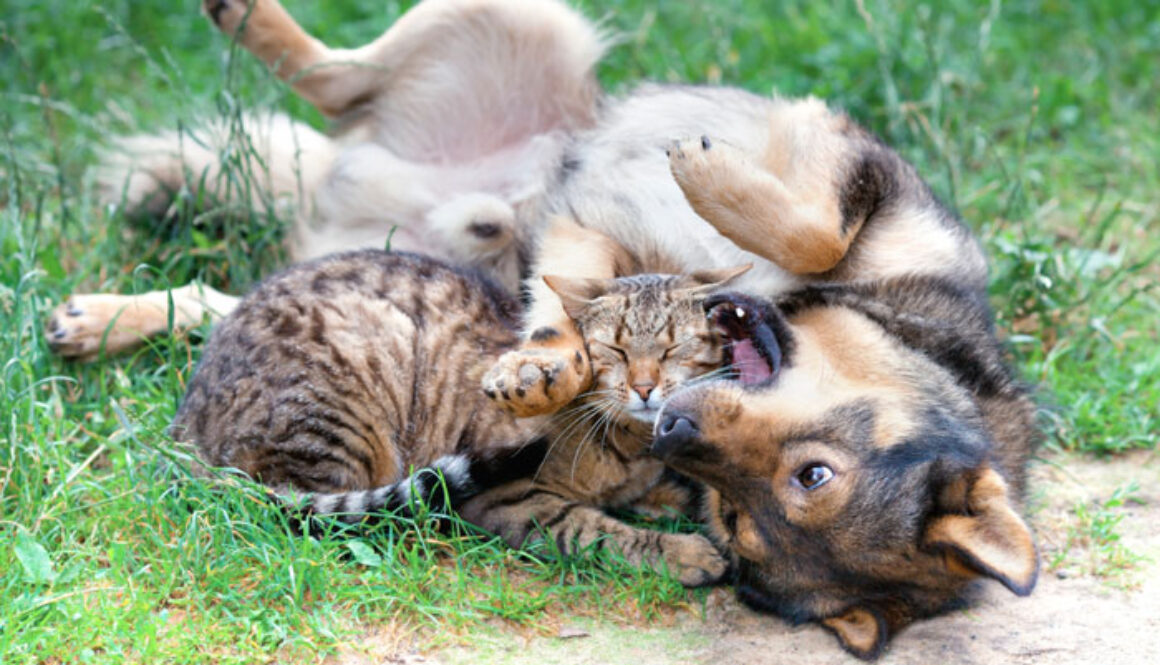
Many people tend to get more than one pet whether it’s a dog, cat or bird. The trend to have a multi-pet household is sometimes linked to pet owners who feel their pet needs a companion. In reality, a lot of pets do enjoy the company of other animals and owners love to see them play, scheme and sleep together.
When introducing multiple dogs into the same household, how can we focus on making an acceptable atmosphere for each individual pet? The main focus would be basic dog obedience training. With that mind, we provide you a few tips to help you introduce your new dog to your resident dog.
Dogs Have a Social Structure
Like most animals who live in groups, dogs tend to establish their own social structures, which is viewed as a dominance hierarchy that serves to maintain order, reduce conflict and promote cooperation among pack members. They also tend to establish territories, which they defend against intruders. This can greatly affect their behavior when you want to introduce a new dog into your household.
Choose a Neutral Location
You should choose a neutral location when first introducing your dogs. An area not familiar to either dog is ideal. Each dog should have been well exercised prior to the meeting. Make sure each dog is on leash and handled by a different person. Throughout the introduction, remain calm. Dogs can pick up on nervous energy coming from an owner. Avoid tensing up the leash and remember to positively reinforce all the calm and non-threatening behavior demonstrated by both dogs. Let the two dogs sniff each other, but not for too long, as it could lead to an aggressive response.
Keep an eye out for stress indicators, such as defensive or aggressive body language. We do not want to force the dog into a situation he is not comfortable with neither do we want to reinforce the unwanted behavior by coaxing them. If you observe an undesirable reaction by one or both of the dogs during the initial introduction, simply walk away with the dog and then slowly reintroduce them again, positively reinforcing all the correct behavior.
If you have more than one dog at home and plan on introducing a new dog into your resident pack, be sure to introduce them one by one to the new canine. If a group of dogs is already living together and have already established their pack hierarchy, they may have the tendency of ganging up on a newcomer.
Place Yourself as Alpha Leader
The important thing to keep in mind when having more than one dog in the household is there is a hierarchy. Whether you want to accept that fact or not, you must make sure that in any and all situations you place yourself as alpha leader by sticking to all your leadership exercises.
This behavior will transcend to your dogs as well, as each one will have a defined role in the family. If you coax the less dominant one of the group and punish the alpha, it will lead to dog versus dog aggression. Always make sure the alpha dog is allowed to get his way first.
Puppies are Still Learning
When introducing a new puppy to an adult dog, you must take into consideration that puppies younger than four months of age may not recognize subtle body postures from an adult. This can lead a puppy to pester an adult dog unmercifully until the adult has literally had enough.
Well socialized adult dogs who have great temperaments may warn by growling or snarling, which you shouldn’t punish. However, adults who are not well socialized or have a background of aggression might actually bite a puppy to set limits, which can severely hurt the puppy. Allow the adult dog some time for R&R away from the puppy and provide him your attention.
Get Help If You Need It
Always contact a professional dog trainer if the introductions don’t go smoothly. The longer the problem continues, the harder it is to resolve.
Have you tried introducing your new dog to your resident dog? How did that go?
If you love dogs and think working with them each day would be fun, dog grooming is an excellent profession. Dog groomers do more than cut a dog’s hair. They check for mats, complete sanitary check-ups, and groom dogs so they turn out smelling and looking good.
Experienced dog groomers can work virtually anywhere and they can also display their skill and creativity in competition at regional trade shows. In addition, passionate groomers gain lifelong friendships with their clients and pets, which can provide a steady income. With at least 70 million dogs in the United States, dedicated groomers are always in need. Fortunately, becoming a dog groomer is easy given the number of dog grooming schools located across the country as well as the availability of grooming classes online. Read on to find out how you can become a dog groomer.
Infographic by Jesse Hernandez
Dog Groomer Job Description
Professional dog groomers work with all dogs, meaning they must have the knowledge and insight to groom all breeds, mixtures, coat types, and personalities. They also have many responsibilities, including interpreting the client’s wishes, maintaining the salon, sanitizing tools in between clients, and, of course, grooming dogs.
The actual grooming process involves properly bathing and drying dogs, removing mats, and completing a haircut specific to the dog’s breed and owner’s lifestyle. Although grooming dogs is no easy feat, once a groomer learns the tricks of the trade, he will groom for life.
Dog groomers are responsible for:
Cleaning ears
Trimming nails
Completing breed-specific haircuts
Interpreting client requests
Completing sanitary clips
Bathing and drying according to coat type
Cleaning workplace and sanitizing grooming tools
Instructing clients regarding their dogs
Dog groomers can work in many places, including grooming salons, animal shelters, veterinary clinics, and pet supply stores. They can even take their services on the road and start a mobile grooming business.
Dog Groomer Requirements
Education
Currently, there are no educational requirements to become a professional dog groomer. However, taking online dog grooming courses or obtaining a dog groomer certification can greatly increase your chances of being hired. When you enroll in a dog grooming school, such as Animal Behavior College, you gain an educational foundation, which you can apply in a real work environment. As with any formal training for a profession, it’s important to learn the terms, history, and intricate details of the job before diving into it.
On-the-Job Training
As important it is to learn the basics of dog grooming, there is nothing like getting experience. Employers want to know you have worked in a professional environment. Enrolling in a school that offers hands-on training in a pet grooming salon combined with practicing on family pets can provide you the experience you need to get hired.
Qualifications
Aside from education and experience, dog groomers must have patience and a love for animals. Working with dogs isn’t always a pleasant time. Dogs can be difficult, especially when they fear the sound of high-velocity dryers or are unable to stay still on the grooming table. Therefore, it’s important you experience grooming all dog types as much as possible before entering the salon. Doing so not only ensures you have the skills to make it as a dog groomer, but also the passion to make it your career.
Mobile Grooming and Grooming Salons
The main difference between mobile grooming services and grooming salons is convenience. Mobile groomers can take their business anywhere they choose, giving them flexibility and freedom. Since each groom is completed outside of the dog’s home, mobile grooming saves dog owners the time and stress of having to transport their pets to a brick-and-mortar salon. Grooming one dog at a time also allows the dog to relax without being distracted by other pets. As a result, a mobile groomer can charge more than a salon groomer.
Keep in mind mobile groomers must strategically plan their appointments and pay for travel expenses. They have to consider the time spent driving from one house to another house, rush hour traffic, and the amount of time performing a complete groom of each dog.
In contrast, dog grooming salons can take in more dogs at a time since there is usually a team of groomers working there. Dogs can enjoy more space and breaks in between baths and haircuts. For the client, going to a grooming salon is a less expensive choice as compared to using a mobile groomer.
Job Outlook for Dog Groomers
Dog grooming is a booming industry and it’s only going to continue to grow, as pet ownership increases. Six out of 10 pet owners consider their pets family members, according to the American Veterinary Medical Association (AVMA). In addition, the dog grooming industry is expected to grow by 15 percent, adding 35,400 jobs to the market from 2012 to 2022, according to the U.S. Bureau of Labor Statistics.
If you’re serious about a career as a dog groomer, please fill out the form on the right or call (800) 795-3294.
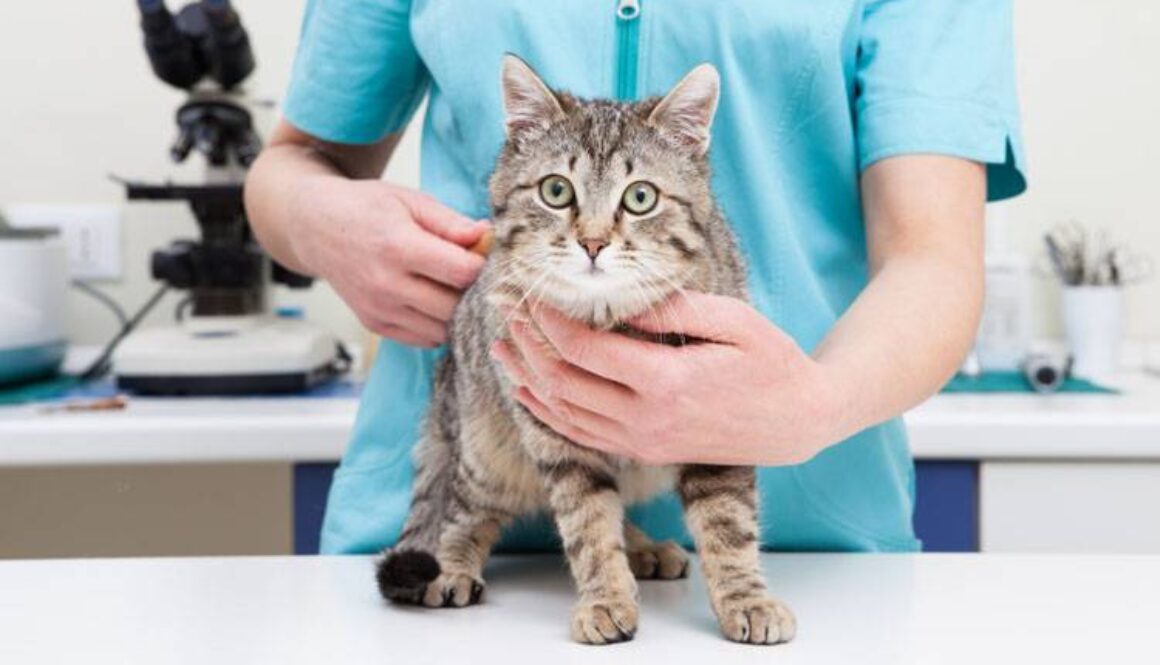
Pet owners will often come across the challenge of having to give oral medication to their dogs and cats whether it is antibiotics, post-surgery pain medication or otherwise. When you’re at the hospital, the veterinary assistant is responsible for pilling your pet. However, upon bringing your pet home, you will become accountable for this crucial task.
Advantages of Oral Medication
Professionals in animal jobs will tell you opening a dog’s or cat’s mouth is a sensitive task, as there is always the risk of getting bit. The biggest advantage of oral medication is that it allows you to continue your pet’s ongoing medications without having to give them painful injections. Oral medication can also shorten an animal’s hospital stay due to the fact that oral medication may be administered at home. Many injectable medications are also manufactured in pill or liquid form.
Before departing from the veterinary facility with your pet, make sure to ask your vet assistant to show you how to give your pet oral medication. You can also follow the helpful instructions provided here.
Hold your cat’s upper jaw over the top of his head with your thumb and index finger behind the top canine teeth. Your fourth and fifth finger should wrap around the back of your cat’s head, pointing it upward. Hold the pill or syringe full of liquid medication in the other hand and use one finger of that hand to pry the bottom jaw open.
Drop the Pill
If the medication is in pill form, drop the pill as far back in his mouth as possible without allowing it to fall to the sides of the mouth. Keep in mind the esophagus is to the left of the trachea so the pill should be placed in the left-rear portion of the throat. You can use your finger or a pill gun (available at pet supply stores) to guide it down the esophagus, but work quickly if using your finger to avoid being bitten.
Stimulate Swallowing
Close the mouth immediately and hold it shut. Stimulate swallowing by either blowing in your cat’s nose or massaging his throat. Make sure your cat swallows the pill. You should be able to visibly see him swallowing. Rinse his mouth with a syringe full of water. Bad-tasting pills will cause a cat to salivate excessively, which can be a problem if the medication comes back up. To limit salivation, act quickly to decrease the amount of time the pill is in his mouth. If your cat is resisting by pushing away with his limbs, wrap him in a towel to restrain his limbs.
How to Give a Dog a Pill
Open the Mouth
The difference between oral medication administration of canines and felines is that with a dog, you may stick your finger inside his mouth behind his upper canine teeth and apply pressure to the roof of his mouth. The sensation of your finger across the roof of the dog’s mouth will coerce him to open his mouth.
Drop the Pill
As with felines, use the other hand to hold the medication and open the bottom jaw. Drop the pill as far back in the mouth as possible, slightly to the left where the esophagus is located. Allow his head to return to a normal position so he may swallow and then repeat the process with a syringe full of water. If your dog is resistant to taking medication, try this trade secret: hide the pill or capsule in a piece of tasty food, such as cheese or a hot dog, to turn stressful medication time into a treat.
Rating A+ The BBB only accredits the business management of a school, not the quality of the curriculum, or training programs.
STATE LICENSURE AND APPROVAL
Animal Behavior College is a private vocational school approved by the Bureau for Private Postsecondary Education (www.bppe.ca.gov) under the California Private Postsecondary Education Act of 2009 and Title 5. California Code of Regulations Division 7.5. Private Postsecondary Education. The Bureau for Private Postsecondary Education approval means that this institution and its operation comply with the standards established under the law for occupational instruction by private postsecondary educational institutions. Institutional approval is subject to continual review and the institution must reapply for approval every five years.
DISCLAIMER
Please be advised that Animal Behavior College (“ABC”) is the exclusive entity authorized to provide certifications and/or degrees from Animal Behavior College. Moreover, such certifications and/or degrees are only conferred by ABC following a student’s completion of an ABC-administered program. No other entity or individual has authority to confer certifications and/or degrees on ABC’s behalf. Any other entity or individual who attempts to do so is acting without express or implied authority from ABC.
GI BILL® TRADEMARK ATTRIBUTION
GI Bill® is a registered trademark of the U.S. Department of Veterans Affairs (VA). More information about education benefits offered by VA is available at the official U.S. government Web site at https://www.benefits.va.gov/gibill
Animal Behavior College, 27509 Avenue Hopkins, Santa Clarita CA 91355-3910 Contact Us



 Purina Cat Chow asked its 50 shelter partners—one in every state—to nominate their best volunteer, the one who spends countless hours providing additional support to lessen the stress on the cats and kittens in the shelter’s care while they await forever homes. Consumers nationwide voted for their favorite volunteer story daily. Consumer votes and a judging panel determined the top shelter volunteer and four runners-up. More than 272,000 votes were cast in support of the 50 shelter volunteers. The runner-up volunteers earned $5,000 each for their particular shelters, too.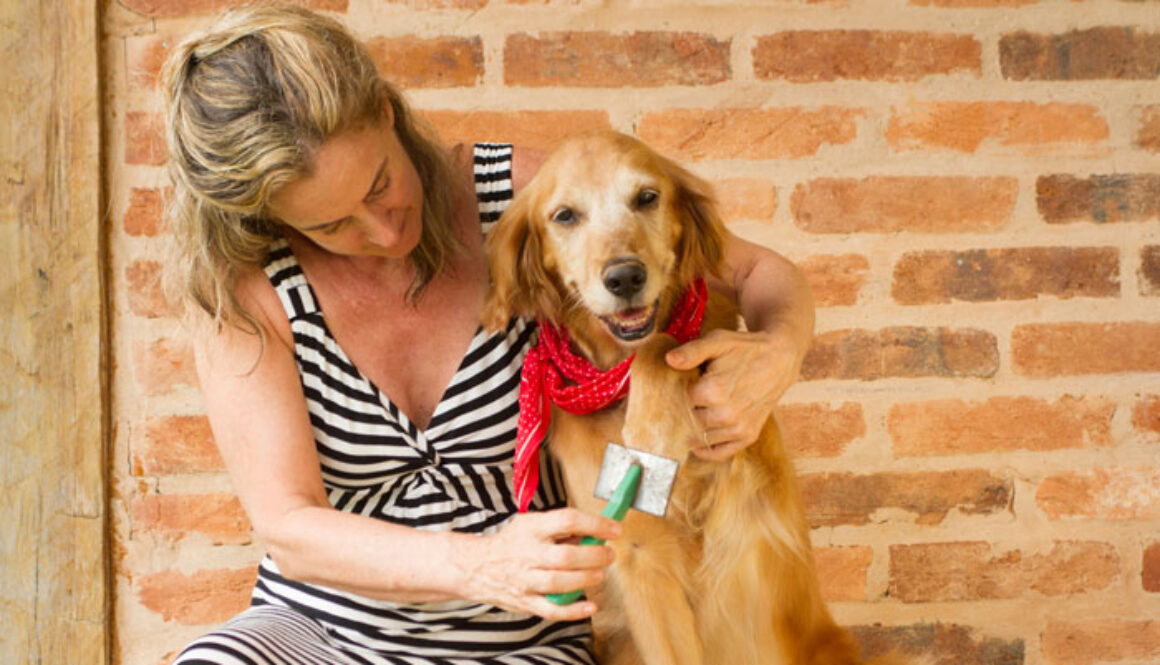

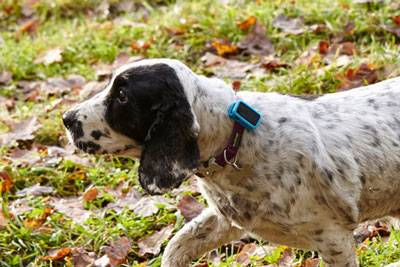
 Ever wondered what your cat gets up to on the other side of the catflap? Or how much activity your dog really engages in every day? The G-Paws Track GPS tracker is a great way to better understand your pets and their habits. The tracker lets you accurately record where your pet goes; see your pet’s routes on aerial photography or street level mapping; upload, view and share the route on
  Cat is Good’s set of eight “Inspired by Cat” magnets represent all aspects of the cat persona from cute to snarky. The set includes, It’s All Fun and Games; Feed Me, Pet Me, Leave Me Alone; Don’t Disturb Me; I Find You Very Exciting; Not Listening; I Get Better Looking; Giving is its Own Reward; and Celebrate Little Things. Each high-quality, decorative magnet measures 2.5 x 3.25 inches. The magnets are also available individually.
 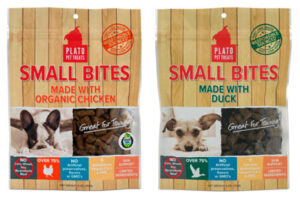 Plato Pet Treats’ Small Bites® training treats are made from single-source proteins and healthful fruits and vegetables. They contain no added sugars, artificial preservatives, by-products, artificial colors, protein meals or soy-, wheat- or corn-fillers. The low-calories treats come in two varieties, Organic Chicken (3.36 calories per treat) and Organic Duck (3.6 calories per treat), in 4-oz. & 10.6-oz. bags.


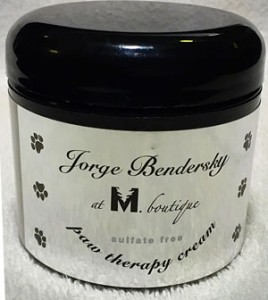 Summer is coming—and the hot pavement that goes with it. Even though dogs’ paws are relatively tough, they are not armor-plated. To help keep paw sensitivity at bay, the Jorge Bendersky at M Boutique product line presents Paw Therapy Cream. Made from natural ingredients, including waxes and aroma-therapeutic essential oils, the cream is formulated to deeply nourish, safely heal and protect paw pads. The soothing cream is also rich in vitamin E and aloe.