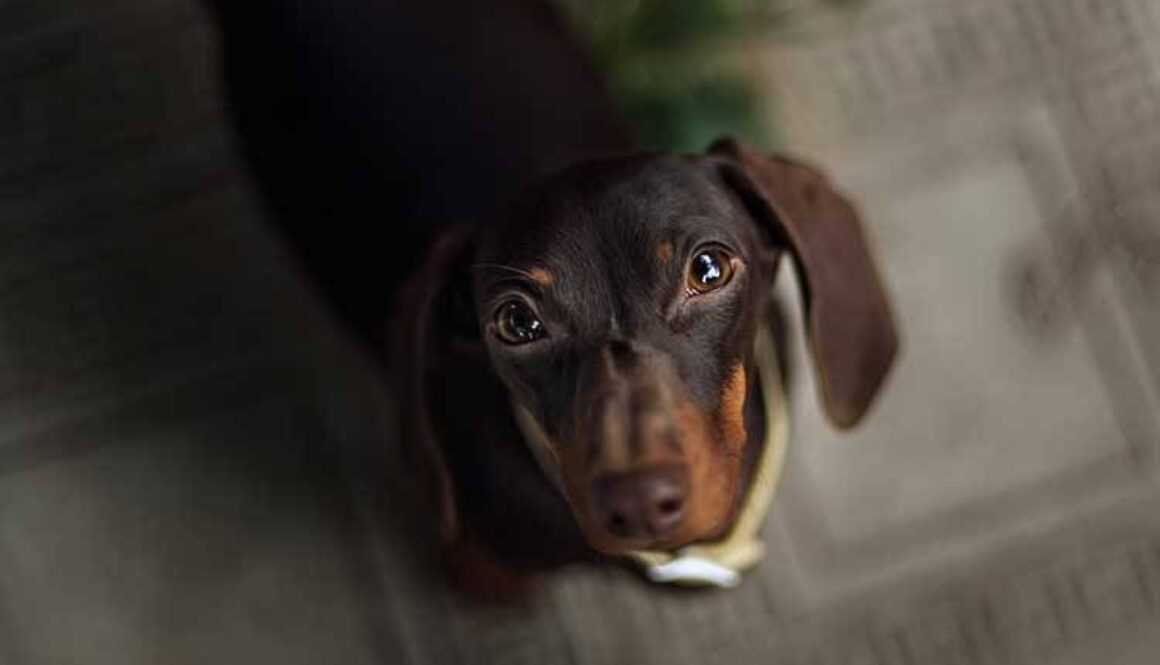
As pet owners, it’s our job to keep our beloved dogs safe. One situation that can cause stress in dogs is walking through doors, especially if something scary is on the other side. Opening doors to strangers walking by or to a vet clinic can be scary. Before walking through a door, follow these steps to keep your dog safe and stress-free.
You Should Walk Through the Door First
When something distracting or scary lurks on the other side of a door, it’s vital for you to walk through the door first. This provides plenty of time for you to assess the situation before bringing your dog along with you. When dogs walk through doorways first, especially in apartment complexes, they can easily become startled when encountering strangers, other dogs or children.
Open, Look & Listen
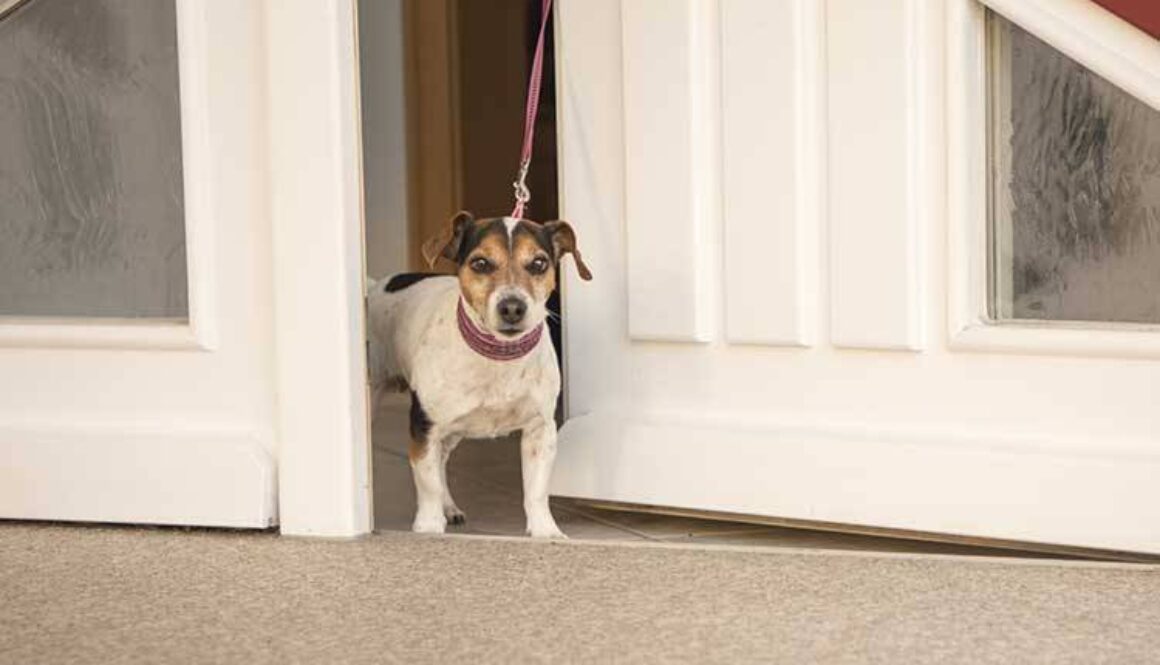
When bringing your dog out for a walk, grab yummy treats and leash your dog before opening the door. Then, crack open the door and peek outside for any close distractions that can scare your dog. If the coast is clear, open the door a bit wider and poke your head out for any distractions approaching or leaving the area. If it’s safe, open the door, so your dog can step out and toss a few treats on the ground. This gives your dog something fun to do while you scan the area for further distractions down the road.
If a distraction approaches that scares your dog, take a step back indoors. Close the door and give your dog several yummy treats. Pairing something good, such as treats, with a scary situation positively changes your dog’s behavior. Plus, it gets your dog back indoors quickly. Wait until the coast is clear again, then head out for a nice walk.
When walking into a veterinarian’s office, look through the glass door or poke your head through the doorway to ensure no dogs are standing nearby. If a dog or person is standing nearby, ask if they could move back, so your dog can enter. Once the doorway is clear, walk quickly to the exam room.
Dispelling Dominance
Walking through doors before your dog has nothing to do with dominance. This is a myth. Of course, dogs should learn polite manners around doorways to prevent them from running out of open doors, but again this has nothing to do with dominance. When someone mentions dominance between dogs and humans, understand they still believe in a myth that was dispelled more than a decade ago.
When pet owners walk through doors first, they’re making sure their dogs are safe.
News flash! Instead of squeezing every last drop of juice out of fruits and vegetables, trendy people are now slow-simmering bones for hours and sipping rich-flavored broths as a result. It’s the latest healthy diet craze, but here’s another news flash! Bone broth for dogs has been popular for years and here’s why.
Bone Broth Benefits for Dogs
Repairs Skin, Hair, Joints & Leaky Gut
Bones are packed with essential vitamins and minerals. When bones are cooked slowly, valuable nutrients are released into a tasty broth. What’s even more exciting is that bones are full of collagen, which is a protein found in connective tissues of animal bones that helps repair skin, hair, joints and leaky gut as well as make it easier to digest gelatin. Interestingly, some people swear collagen erases wrinkles too.
While dogs couldn’t care less about wrinkles—I think—bone broth for dogs can help soothe and repair a painful digestive system and repair joints for pets in need.
Supports and Repairs Joints
When my Rottweiler had surgery to repair his torn ACL, my veterinarian friend suggested feeding my dog bone broth every day to support and repair his joints. Now, both of my dogs thoroughly enjoy drinking bone broth daily, and surprisingly it really soothed my Rottie’s IBS tummy, meaning less gas and pain.
How to Make Bone Broth for Dogs
First, you need bones. You’ll need enough bones to cover the bottom of a slow cooker or pot. Fortunately, bones are pretty cheap at the grocery store. As for which types of bones to simmer, this is usually determined by availability.
If you’re struggling to find raw bones, check local Asian markets or raw dog food dealers who deliver in your area. For my bone broth recipes, I’ve used large beef marrow bones, chicken backs, chicken leg bones and even chicken feet.
Ingredients
Bones
Raw apple cider vinegar
Instructions
1. Layer the bottom of a slow cooker or pot with bones.
2. Fill pot with water. Water level should be a couple of inches above the bones.
3. Add ½ teaspoon of raw apple cider vinegar. Acid helps bones release valuable nutrients.
4. Simmer bones for at least 12 hours. I usually cook bones for 24 hours, and I use a slow cooker (crock pot).
5. After 12-24 hours, allow the bone broth to completely cool before straining out the bones.
Never feed your dog cooked bones. These bones can crack and splinter in your dog’s mouth, throat and intestinal track. I recommend throwing away all cooked bones.
6. Once you’ve strained the broth, pour it into canning jars and store in your refrigerator. Freeze excess bone broth in plastic containers. For more information, check out this bone broth recipe. It’s the one I use. 🙂
If You Don’t Have Time to Make Broth
In the beginning, I wasn’t convinced bone broth for dogs would make a difference in my dog’s health. Rather than making broth, I’d buy Honest Kitchen’s Bone Broth online. It’s a dehydrated bone broth that contains turmeric, pumpkin and parsley.
It’s super easy to make; just mix dehydrated powder into hot water and serve once it’s cooled down. Just a heads up, it can get expensive quickly for large dogs. A can of bone broth would cost us $14, and we used one can per week.
Don’t be fooled by grocery broths or stocks. These packaged broths contain onions or onion powder, which is deadly for your dog. Plus, packaged or cubed broth products contain chemicals, tons of salt and preservatives. Yuck!
Those who feed bone broth to their dogs regularly recommend ¼ cup per 25 pounds daily. You can pour it over your dog’s meals or serve it as an afternoon snack. One thing is for sure, your dog will love bone broth!
Making homemade dog treats is the new trend within the dog world. With a strong focus on natural ingredients, many pet owners are choosing to make their dog’s treats in their own kitchens. And in the process, pet owners are trying out new kitchen gadgets with much success. The most popular of these kitchen gadgets is the silicone baking mold.
Why Use Silicone Baking Molds for Frozen Dog Treats
Making healthy dogs treats are not only great for your dog, but amazing for your wallet too. The only challenge is makinga healthy dog treat with long shelf life. This is where silicone baking molds come in.
With silicone baking molds, pet owners can make tiny, healthy, easy-to-digest and delicious frozen treats that store well in the freezer for months. These molds are extremely versatile; they’re oven and freezer safe, and most are BPA-free. Some molds come in bone, heart and paw print shapes with a wide variety available online.
Dog treats rarely get stuck due to the mold’s flexibility and smooth surface, and the molds can be easily washed in warm soapy water. For frozen dog treats, select tiny treat molds, so your dog can easily chew and swallow treats without harming his teeth.
3 Frozen Dog Treat Recipes for Baking Molds
Creating dog treats for your dog is pretty easy. All you need is creativity. Stay away from grapes, raisins, onions, chocolate and foods with high fat content.
1. Bone Broth Hearts
Using a tiny heart-shaped silicone mold, pour homemade bone broth into each treat mold. Freeze overnight, and then pop them out for instant treats. To make these extra special, mix turmeric into the bone broth before pouring into the mold. Turmeric provides powerful anti-inflammatory benefits.
2. Goat’s Milk & Blueberry Bites
Pour goat’s milk into each tiny mold, and then top with a blueberry. Freeze overnight and, voila, your dog has a cool treat filled with probiotics and blueberry.
3. Yogurt & Coconut Dots
Fill each tiny dot mold halfway with yogurt, and then freeze overnight. The next day, top off each mold with coconut oil and freeze overnight again. Not only are these dog treat dots beautiful, but they’re also packed with probiotics and healthy oils.
Make your dog frozen treats using silicone baking molds, take a photo and share below!
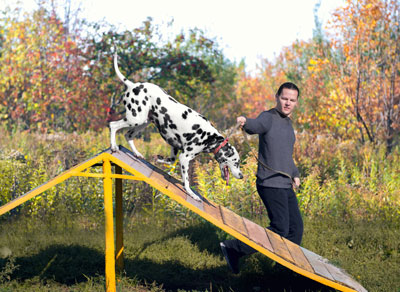
Agility dogs are good at running up A-frames and through tunnels, scaling tire jumps and racing through weave poles. And they do all this while focusing on their humans, who provide them with verbal and physical cues.
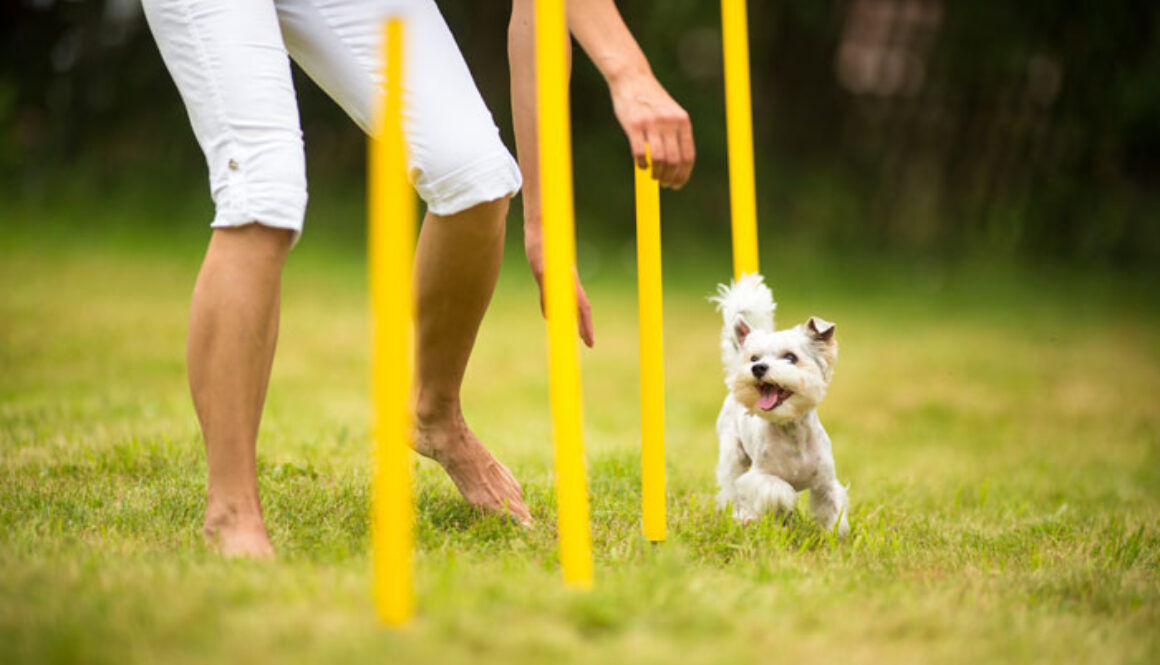
If you have ever wondered how agility dogs learn to negotiate a course at top speed while taking direction from a handler, the answer is simple: a little at a time. Teaching dogs to do agility starts with them learning basic behaviors that can be transformed into running a course.
Agility dogs work off leash and at their handler’s direction, so knowing basic obedience commands is a must. Obedience also establishes your relationship with your dog, and teaches him to follow your commands.
Whether you teach your dog yourself or enroll her in an obedience class, your dog should have these commands mastered before she heads off into an agility career:
Sit: The sit command is important in agility because your dog will have to sit when he comes to the pause table. The pause table requires your dog to go from full-speed ahead to a complete stop. He will have to sit for 5 seconds until you give him the cue to continue on the course.
Down: The down command is also used at the pause table. The judge at an agility trial has the discretion of requesting the sit or the down. If the judge calls for the down, your dog will need to stay in this position for 5 seconds.
Stay: Your dog not only needs to stay put at the pause table, he also has to stand still at the starting line until you release him to take the course.
Come: Your dog has to reliably come when called in order to be successful at agility. After he’s finished with the course, he needs to come to you when you call him so you can leash him up.
An obedience class is the best place for your dog to learn these commands so he can learn to focus on you while other dogs are around.
It’s also important to expose your dog to the types of obstacles he will be facing in agility class. Dogs in agility are expected to go over tire jumps and bar jumps, through tunnels, and across A-frames and dogwalks. Invest in some of this equipment so your dog can get used to being around and on it, or find a dog park that has agility equipment set up that he can play on.
It’s best to start exposing your dog to this kind of equipment as a puppy. Nylon tunnels made for cats can be great fun for a puppy, and can help him get used to being inside a tunnel well before he’s ready for agility class. Encouraging your puppy to walk on a variety of different surfaces will also help him when it comes time to start learning agility. He might be less worried about the A-frame and dogwalk if he’s had experience walking on planks of wood and low walls when he was young.
Always make your dog’s encounters with agility a positive experience. Use treats and praise to encourage him to approach or enter an agility obstacle. Never use force or correction—you want your dog to have a positive association with all things agility.
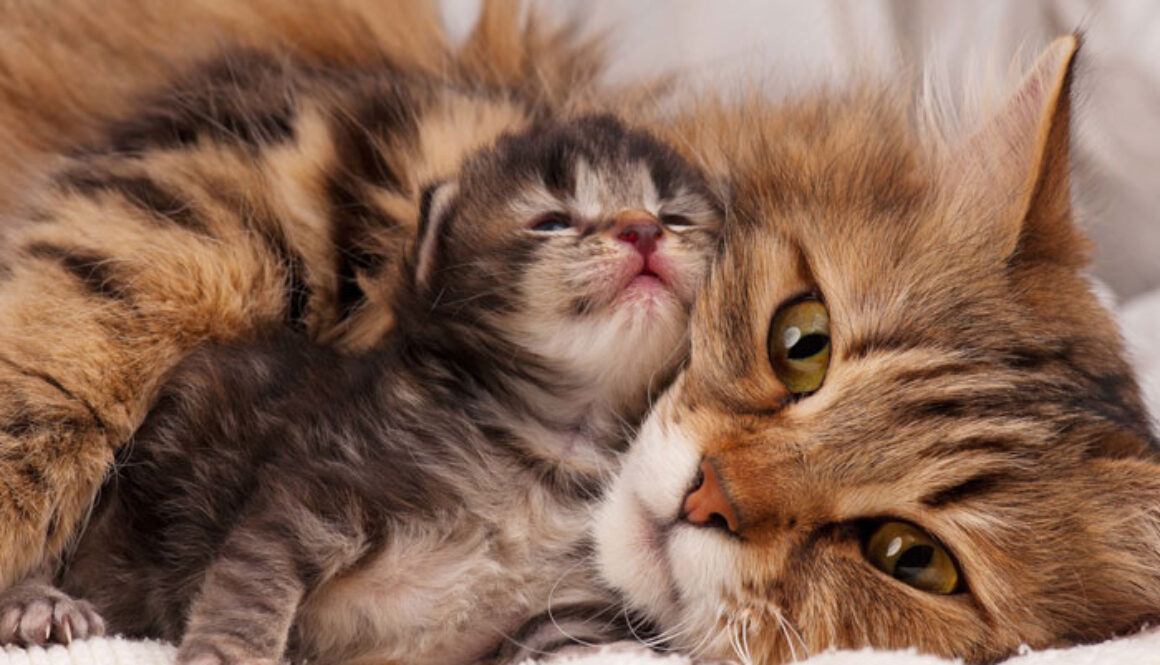
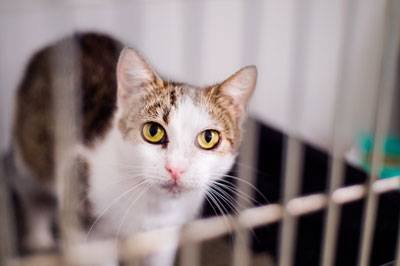
Wondering how you can help your local animal shelter or rescue group find permanent homes for the cats and kittens in their charge? Sometimes all it takes is offering the homeless pets a temporary place to stay. Becoming a foster parent to homeless cats and kittens helps the rescue groups and the animals—and it may reward you in subtle ways, too.
Animal rescue groups often work with willing foster homes to provide care for cats and kittens for several reasons, one of the most obvious being lack of space. By placing cats and kittens in temporary private homes, the groups can free up space for more animals, potentially leading to more pets in permanent homes. Foster parents also can provide valuable input on the temperament and personality of particular cats, as they spend much more time in their company.
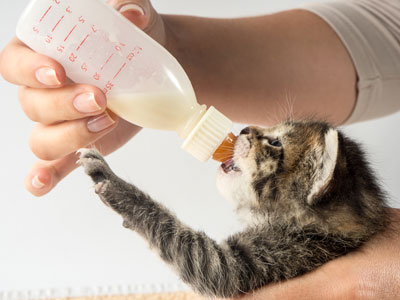
In other cases, a cat or kitten may need specialized care that is more easily provided by a foster parent. Perhaps the cat is recovering from medical care and needs a quiet home with one-on-one attention. Sometimes rescue groups need to place very young kittens with foster parents who can provide the additional feedings needed.
Or, a cat may simply not thrive well in a shelter situation and may become a better candidate for adoption if placed in a foster home. By opening your home to these pets, you can help socialize a cat who has not had as much exposure to a loving human family. You can also work with an older pet who is stressed in a shelter situation, perhaps having lived as the only pet in the household most of its life.
While providing a foster home is not much different from adopting a cat on a permanent basis, there are some ways you can set yourself up for fostering success.
Set up a quiet space separate from the rest of your household for your new guest, such as a spare bedroom or bathroom. Provide all the comforts: a bed, a litterbox, and food and water bowls. Having his own retreat will help him adjust to the situation.
Keep the foster cat away from your own pets at first. You want to ensure he is healthy before introducing him to your pets.
When your guest receives a clean bill of health, begin introducing him to the rest of your household. The goal often is to socialize the foster cat to other pets and humans to make him a good candidate for adoption.
That said, let the foster cat adjust to you on his terms. Spend time in his company and let him investigate you when he is comfortable.
Watch the cat for signs of stress or illness. For example, he may not eat much at first, but if he goes longer than a day without eating, inform the adoption group right away.
When you open your home to cats and kittens waiting to be adopted, you also open your heart to the personalities and charm of your temporary guests. Who knows—you may just find the pet you’ve been waiting for when that sweet foster cat comes through your doors.
It’s never been easier to bring your canine(s) along wherever you go thanks to a wide range of products.
With vacation season on the horizon, if you are like many owners, you will be making plans to take your dog(s) with you. And no matter where you will go or what you will do, there is a range of dog travel products that can help make your experiences easier and better. From in-car carriers and harnesses to airline-approved carriers to portable bowls and food containers, there is something for every well-traveled canine and their owners. The following are just a few of the myriad travel products available. (Note: All of the brands below offer a range of travel gear for dogs–and other pets, too.)
Carriers
The Sleepypod Mobile Pet Bed: Apart from being used as a standard carrier, the circular dome-shaped Sleepypod also functions as a safe car seat (it has been certified crash tested by Center for Pet Safety). And, by unzipping the mesh lookout dome, it converts into a plush bed catering to pets who like to sleep in a curled-up position. The bedding is removable and machine-washable. The exterior is made from high quality luggage-grade, ballistic nylon and is easy to clean. Available in six fashion colors, the carrier comes in two sizes: medium for dogs weighing 15 lb. or less, and mini for tiny dogs who weight 7 lb. or less.
Sherpa Original Deluxe: This top- and side-loader is available in three sizes (8,- 16- and 22-lb. carrying capacity) and offers excellent ventilation on three sides as well as privacy flaps for nervous dogs who easily get stressed and anxious. High quality locking zippers make it easy to open and close, and it has a machine washable lambskin liner placed on top of a waterproof bottom and has a large zippered pocket for paperwork. The small size has the Guaranteed On Board airline approval from 10 national airlines and full reimbursement for the cost of the air ticket if passenger is denied boarding access because of the carrier.
Gen7 Commuter™ Carrier + Car Seat: With a 5-Star Crash Test rating from the Center of Pet Safety, the carrier + car seat’s is designed to provide security and comfort while on the road. The top- and side-loading carrier features, a machine-washable comfort pad, heavy-duty hardware. a padded shoulder strap for carrying ease and a seatbelt latch and shoulder strap to keep it in place during travel. Approved for airline use, too, it is suitable for small dogs up to 20 lb.
In-Vehicle Harnesses
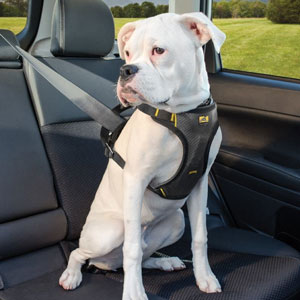
Sleepypod Clickit Terrain: Light and easy to use without sacrificing safety, this in-vehicle harness features shock-absorbing webbing sleeves that work in conjunction with a broad padded vest and Sleepypod’s unique infinity loop design for maximum protection. Its three-point secures a dog’s entire torso in rear passenger seat directly to the seatbelt system without a tether Crash tested to the company’s high-safety standards, the harness also features reflective rear patches and front logo for night visibility. Comfortable to wear as an everyday walking harness, it can also be used with an optional Terrain Pack. Designed for dogs approximately 18 lb. or more, it comes in four bright fashion colors and four sizes: small, medium, large and extra-large.
Kurgo Impact Dog Harness: Made from a single piece of high tensile (4,000 lb.) tubular webbing with all-steel nesting buckles and reinforced bar tacking, this crash-tested harness is purpose-built for car safety. It connects directly with the seatbelt system and has four adjustment points for a perfect fit on dogs of all shapes and sizes. The harness features a broad, padded chest plate for extra protection and comfort, is machine-washable, and comes in four sizes—small, medium, large and extra-large.
PetSafe Deluxe Car Safety Harness: Offering a smooth, safe, comfortable road trip for you and your dog, this totally new design has been crash-tested in a DOT-approved facility and stress-tested to 3,000+ lb. in accordance with leading industry standards. Featuring a fully-padded vest with breathable liner provides superior comfort and safety, the harness integrates with a vehicle’s seatbelt system. It comes in four sizes—small, medium, large and extra-large—and has a convenient connection point for leash walking. For maximum safety, an optional three-point attachment is available.
Travel Accessories
Sleepypod Yummy Travel Bowls: Designed for use on the go or at home, this bowl set is a must have for canine travelers. You can store and transport your dog’s food at the same time with this three-in-one prepack system. 1) spill-resistant water bowl that serves as a base; 2) food bowl slips into the water bowl, making it leak-free; and 3) lid doubles as an extra bowl that seals the entire system, making it entirely spill-proof. Made from baby-safe, FDA food-grade, BPA-free silicone that is microwave, freezer and dishwasher safe. It comes in two sizes, medium and small, and five springtime colors.
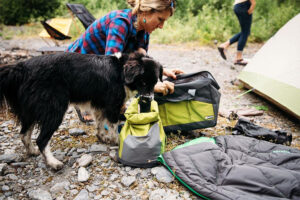
Kurgo Kibble Carrier™ and Collaps A Bowl™: The Kibble Carrier, constructed of durable 400d hex-weave material, is perfect for any road trip. Modeled after river dry bags, its top rolls down and clips securely to keep up to 5 lb. of dry food fresh and contained, whether packing for a week or a weekend. The zippered side pocket is perfect for treats or any small extras your dog loves. The bottom of the bag features a convenient opening that fits a Collaps a Bowl. The bowl, which is just under an inch thick when not in use, can hold up to 24 fluid oz., is made of BPA-free food-grade silicone and is dishwasher friendly.
The Ruffwear Haul Bag™: keeps dog gear organized and accessible wherever you go: car camping, road tripping or visiting friends. You can store and easily access food, bowls, leashes, toys and pick-up bags in the wide-opening gate-mouth. Its interior and exterior zippered and mesh pockets keep gear organized, while an I.D. sleeve displays important information. A shoulder strap and side handles provide two carrying options; the bag is hand washable in a mild detergent.
Clickit Terrain Pack: Equip your dog for the day’s adventures with this handy pack. The ergonomically designed backpack integrates seamlessly with the Clickit Terrain safety harness by attaching to its four D-rings. Its two pouches allow for storage of essentials such as food, water and toys. Two removable, reflective Velcro patches can be interchanged with your dog’s own service patches or expressive badges. The water-repellent pack also has adjustable straps to prevent shifting a padded handle for better control or a helping hand over tough terrain.
Every person and cat will have their own playtime preferences. If you don’t know what your cat enjoys, this article can help you figure that out. However, before I begin: If you and your cat are enjoying yourselves (and you’re not encouraging unwanted behaviors), there’s no wrong way to play. What matters is that you are doing it together; all cats need to play.
The first thing to remember is cats are predators. This means exploring methods of play that engage their hunting instincts. Cats all have different hunting styles and their individual style will elicit the best response if you cater to their specific preferences.
As predators, hunting precedes feeding. In a domestic setting, this translates to playtime before mealtime. But, a typical cycle in a cat’s day is to play (hunt), eat, and then sleep. Disruption to this cycle can result in behavior problems and physiological changes, such as problems with weight gain or behavior changes.
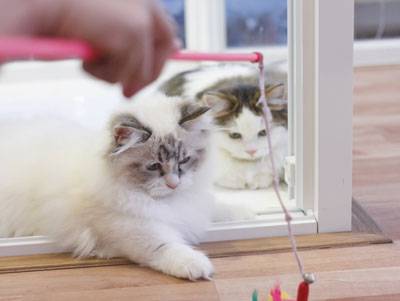
Some cats are excellent at hiding and bursting out to ambush a playmate or “prey.” For these types of personalities, you should choose cat furniture that lets them hide, such as a tunnel, cat condo, or even a cardboard box or blanket fort. Anything they can hide in and leap out at “prey,” such as dangling wand toys is an ideal addition to your cat’s home environment.
If you have a cat who loves to hide and ambush, there are many great ways to play with them. Make sure there are plentiful hidey-holes, and use a wand toy, a laser pointer or something as simple as a peacock feather to simulate prey moving outside their little cave. Don’t shove the toy into their hiding place, as this will ruin the feeling of ambushing their prey.
Some cats prefer climbing and love to be up high. If you allowed them outdoors, they would likely spend time observing activity from a tree top. It’s important to give these cats plenty of opportunities to climb during the day. Not only will it give them a new place to relax and nap, but it will give them more confidence around you, your family and your other pets.
Consider installing shelves that allow your cat to leap across platforms and use a teaser toy that they can chase from platform to platform. There are a number of great companies out there who create innovative wall units. Take a look at Hauspanther’s new line of cat shelves.
If you’re not able to construct shelving for your cat, consider picking up a couple of tall cat trees. (I love these lifelike trees from Pet Tree Houses.)
Personally, my favorite wand toy to use anywhere in the house is NekoFlies Ultimate Rod toy. The longer rod gives me lots of reach for climbing cats and allows me to coax them from one shelf to another. But, it also serves as the perfect lure system for encouraging play in any type of hunter.
Automated solo-play toys, like the Frolicat Fox Den Toy that extends a fox paw out in random patterns, are ideal for entertaining cats while their human is busy. My cats love to watch the movement, then pounce at the perfect moment. I can even leave this toy on while I’m working to make sure my cats are entertained (ideal for conference calls).
The Smart Cat Peek A Prize Toy Box is another fun way to encourage activity. This wooden box features extra holes that you can easily place roll toys inside and then let your cat entertain himself by grabbing at the toys within.
Keep in mind that solo-play is never a replacement for you playing with your cat. Solo-play should never be the only time a cat gets to “hunt,” since you know the moves your cat wants from their “prey” and can replicate them better than any machine or solo-play toy.
Feeding Time
Mealtime can also become a game for cats. Food puzzles, such as the Trixie 5-in-1 Activity Center from Trixie Pet Products, encourages felines to hunt for their food.
When feeding your cat, it’s good to remember that they should earn their meal. This means letting the cat play (and win) before feeding time and/or using feeding puzzles. Feeding puzzles are especially helpful in cats that tend to eat too quickly. Not only do feeding puzzles help slow your cats down during feeding times, but also helps them eat in a more natural way.
Consider a feeding game like the Doc & Phoebe’s Hunting Game. In this game, you place your cat’s food in individual “toy mice.” Then you hide the mice in different areas of the house. Your cat will quickly discover that he has to hunt for his food throughout the day as he gets hungry. This is a much more natural approach to feeding for cats and can help decrease tummy trouble, keep your cat active and encourage hunting behavior.
There are many other types of feeding puzzles and toys that you can incorporate into a feline hunter’s day. The Wooly Snuffle Mat from Paw5 encourages foraging for food. Simply place treats in the long shag and let your cats sniff them out. While it’s designed for dogs, I’ve learned my cats enjoy this simple foraging method as much as the dogs do.
After working with many different personalities in cats, I’ve come to discover there are a few games that—while extremely popular—are also games you’ll regret in the end. Now you can benefit from my experience: Here are some games your cat will adore, but you will come to regret.
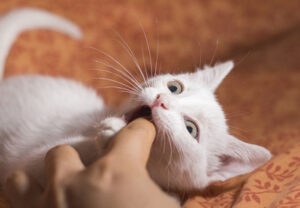
Bed Mouse: This is just about any cat’s most favorite game: a person places their hand under the bed covers and moves it a bit. Your cat will be hypnotized and eventually pounce. It’s fun at first, but you’ll soon discover that your cat is crepuscular, which means he is most active at dusk and dawn. That means you had better plan on getting up at dusk and dawn because any body part that moves under covers is now fair game. This makes for a late night problem when your feet become the “mice.”
Hands and Feet: There aren’t too many games I don’t recommend, but a good general guideline is to never use your hand or foot as “prey.” It’s a bad habit to get into and you leave yourself open for attack whenever your cat feels like playing.
Marketing is powerful, as it shapes a pet owner’s perception of consumables. Its sole purpose is to convince someone why he should purchase a product. Large companies spend billions of dollars studying human purchasing behavior, then use this data to shape pet owner purchasing habits.
From the packaging color to the placement of the item in the store to the music played—every detail is strategically reviewed to keep customers in stores longer, so they purchase more items.
With that said, dog food companies have certainly shaped pet owner purchasing habits over the last 20 years. One large dog food company successfully convinced pet owners that rice is a highly desirable grain because it’s digestible, which promotes smaller stools. Now, the pendulum has swung the other way. The new popular dog food is grain-free dog food. Have dogs’ digestive systems changed or is it marketing?
Dog Food Allergens
Food allergies are not very common in dogs regardless of what dog food companies or pet store associates are saying. It’s important to know that both flea allergies and environmental allergies are MUCH more common in pets than food allergies. However, flea, environmental and food allergies can all have similar symptoms (What every pet owner should know about food allergies, 2007). This is powerful information.
It’s extremely difficult to detect and diagnose food allergies in dogs too. To determine if your dog is allergic to a particular type of food, you’d have to put her on an elimination diet. But let’s face it: A true elimination diet is extremely difficult to follow for several months. Many factors can come into play during a several-month food elimination diet.
For example, a dog’s reaction to outdoor allergens may clear up due to a change in season or drop in pollen. While tiny, these changes may provide a false negative during a food trail. It’s confusing and frustrating, especially when a dog has chewed and scratched herself bloody.
What Should a Pet Owner Do?
Food matters, but it’s not a cure-all. To conquer chronic allergies, it’s best to use a combination or holistic (treating the whole dog) approach. Partner with your veterinarian to discuss a true elimination diet, but tackle environmental allergies too.
Bathe your dog weekly with a gentle or medicated dog shampoo to remove pollen. Remember, flea bites cause the same symptoms as dog food allergies, so tackle this aspect too. Given the warm winters over the last few years, fleas are rampant now and have become immune to certain pesticides. Spray your yard weekly, for at least three weeks, and discuss flea prevention with your vet. For a natural approach, cedar oil works great.
Choose a dog food that works best for your dog. Some dogs do extremely well on grain-free dog foods, which is a huge plus. Then, there are some dogs that don’t, so it’s important to find a food that your dog thrives on. By far, a balanced raw or cooked diet works best and many varieties contain whole grains, such as oatmeal.
Beware of marketing, and choose what works best for your dog!
Potty training is a difficult part of sharing your home with a dog. If only puppies and dogs were pre-programmed to potty outside. 🙂 But that’s not the case, and it’s the pet owner’s job to teach a dog to potty outdoors.
Crate training and following a schedule are the foundations of potty training, but sometimes puppies and dogs need to potty regardless of a schedule. In this case, teach your dog a cue that tells you he needs to potty. Here’s how to teach your dog to ask you to potty and a few easy cues to use.
Pick an easily visible behavior that your dog does often, and teach your dog that this specific behavior means “I’ll open the door, so you can potty.” Picking a cue is the hard part, so pick something easy. Here’s a list of easy cues that most dogs and puppies offer daily.
Sitting by the back door. This cue only works if you’re able to see your dog sitting next to the door.
Dog walks over and sits in front or side of you. (Dog trainer recommended!)
Puppy or dog looks at you, then the back door.
Walking toward the back door.
Sitting on a special mat placed in an easily visible area like in the living room or in front of the TV.
One or two barks at the door.
Choose only one cue and stick with it, and make sure you’re able to see your dog offer this behavior or it will become meaningless.
How to Reinforce “I Need to Potty” Cue
Once you and your entire family have chosen a “I need to potty” cue, it’s time to teach your dog what the cue means. Every time your dog offers this cue, immediately get up and let your dog outside to potty.
When cooking dinner, keep an eye on your puppy and immediately bring your puppy out to potty when he offers this behavior. If you’re unable to keep an eye on your dog or puppy, put him inside his crate with a food stuffed toy.
For example, when potty training my Rottweiler, I noticed a peculiar behavior. He walked over and pushed the mini-blinds with his nose, which I assumed meant, “I need to go outside now.” I jumped up and let him out to potty.
From then on, he pushes the blinds when he needs to potty. 🙂 He learned that lightly pushing a specific blind in the living room with his nose would make me get up and open the back door for him. While this can become a pestering issue later, it’s an easy fix. Right now, it’s important to teach your dog how to ask you for a potty break.
Continue to reinforce this dog behavior, and soon your dog or puppy will learn how to tell you, “Hey, I need to potty.”
Several weeks ago, a delightful new client reached out about a private dog training lesson for his puppy. Immediately, this client had specific questions during our phone conversation. He asked about my dog training methodology and prior experience, and questioned how I would handle a specific situation. After the first question, I realized this potential client was interviewing me! Guess what? I was flattered and extremely proud of this dog owner.
After our interview session, I thanked the client for the thorough interview and said, “I wish all clients would interview potential dog trainers.” Honestly, this gentleman was shocked by my comment. He previously phoned 12 other dog trainers, and all either hung up on him or growled, “I have plenty of experience, and I’m insulted by your questions.” I was shocked and saddened.
Always Interview Dog Trainers
When selecting a new dog trainer, always thoroughly interview him or her. Speaking as a professional dog trainer, we expect to be interviewed by potential clients.
Group Classes
If you would like to enroll in a basic group course, ask if you can attend a session and observe. When observing, ensure the dog trainer uses and recommends positive reinforcement dog training methods. Owners should reward dogs freely for desired behavior. Dogs and puppies should wear flat buckle collars, head collars or body harnesses. If a dog trainer refuses your request to observe one class session, find another dog trainer.
Private Lessons
Phone the potential dog trainer and ask open-ended questions. Ask what type of dog training methods the dog trainer uses and recommends. If your dog has a specific behavioral issue, such as dog aggression, ask if the dog trainer has experience with this type of aggression. When he or she replies, “Yes,” ask the person to elaborate.
Ask if this person has national dog certifications and, if so, from which organization. Make sure to search for this organization online and verify this dog trainer is indeed certified with this organization. Remember, this person will likely enter your home for a private lesson, so make sure you completely trust him or her.
If a Dog Trainer Refuses to Be Interviewed, Find Someone Else
It’s best to interview dog trainers by phone. If a dog trainer is busy, ask if you can schedule a 10-minute interview at his or her convenience. Of course, if a dog trainer refuses to answer your questions politely or hangs up on you, find another dog trainer.
And yes, I now have a lovely new client with a darling puppy who sends referrals my way!
Rating A+ The BBB only accredits the business management of a school, not the quality of the curriculum, or training programs.
STATE LICENSURE AND APPROVAL
Animal Behavior College is a private vocational school approved by the Bureau for Private Postsecondary Education (www.bppe.ca.gov) under the California Private Postsecondary Education Act of 2009 and Title 5. California Code of Regulations Division 7.5. Private Postsecondary Education. The Bureau for Private Postsecondary Education approval means that this institution and its operation comply with the standards established under the law for occupational instruction by private postsecondary educational institutions. Institutional approval is subject to continual review and the institution must reapply for approval every five years.
DISCLAIMER
Please be advised that Animal Behavior College (“ABC”) is the exclusive entity authorized to provide certifications and/or degrees from Animal Behavior College. Moreover, such certifications and/or degrees are only conferred by ABC following a student’s completion of an ABC-administered program. No other entity or individual has authority to confer certifications and/or degrees on ABC’s behalf. Any other entity or individual who attempts to do so is acting without express or implied authority from ABC.
GI BILL® TRADEMARK ATTRIBUTION
GI Bill® is a registered trademark of the U.S. Department of Veterans Affairs (VA). More information about education benefits offered by VA is available at the official U.S. government Web site at https://www.benefits.va.gov/gibill
Animal Behavior College, 27509 Avenue Hopkins, Santa Clarita CA 91355-3910 Contact Us







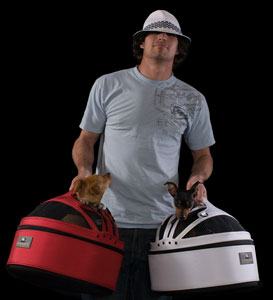 The Sleepypod Mobile Pet Bed
 Gen7 Commuter™ Carrier + Car Seat