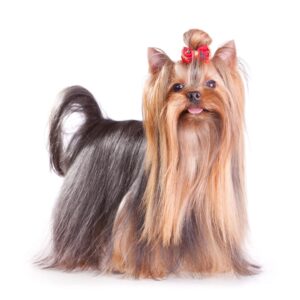
Choosing a fulfilling career path involves matching your particular interests and natural affinities with an occupation that values those qualities. If you are looking for a career that requires both a friendly, calming, dependable nature and a certain measure of physical endurance then becoming a veterinary assistant might be a good fit for you, especially if you have a passion for animals.
Despite what the job title might lead you to believe, becoming a veterinary assistant does not limit you to working solely in a veterinary clinic. Someone with a veterinary assistant certificate may find employment in animal shelters, zoos, universities, or any other facility that works with animals. All of these places value employees with an animal science background.
A Veterinary Assistant Wears Many Hats
A veterinary assistant learns multiple aspects of the field. From administrative tasks to medical duties, the job demands a varying skill set. Veterinary assistants must learn the clerical side of their facility, but they also support the veterinarians and veterinary technicians in their work with their animal patients.
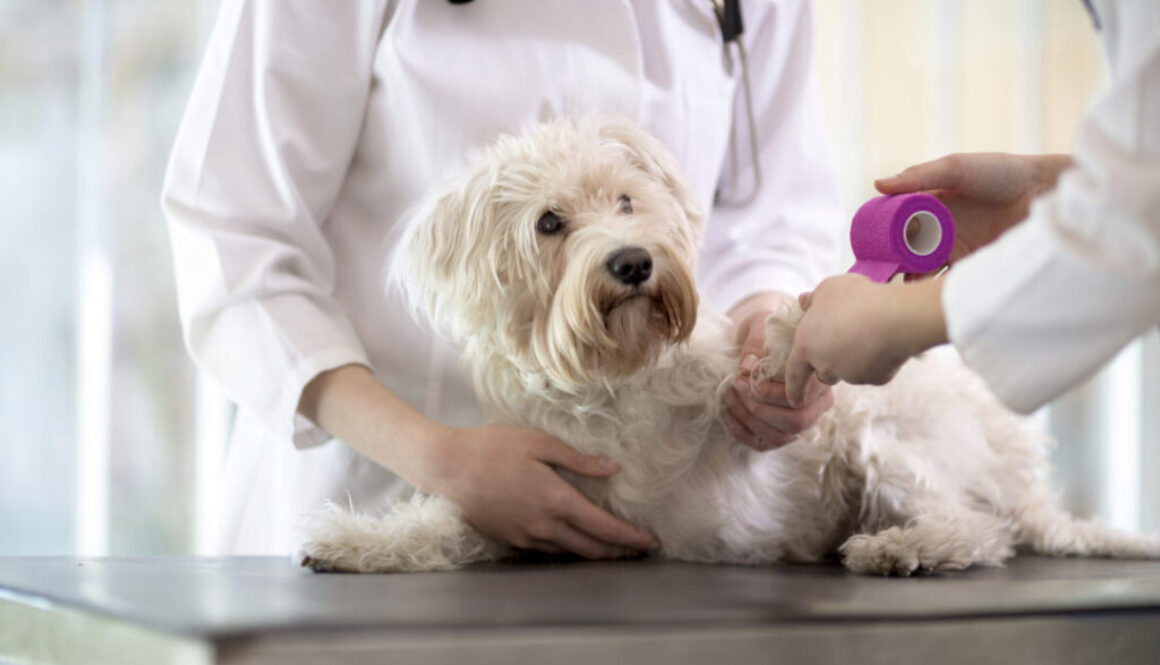
Veterinary assistants become adept at calming and restraining anxious animals in an unfamiliar setting. They clean and sanitize examination rooms and surgical areas. Among other tasks, veterinary assistants prepare prescriptions, monitor vital signs, and assist with pre-operative care and post-operative care.
For a Veterinary Assistant, No Two Days Are Alike!
For many facilities, a veterinary assistant is the person who answers the phone and who greets
patients and their humans at the door. Obviously a friendly manner is important, but a calm steady demeanor and compassion are vital. You never know what need you might be called to fulfill.
You will assist people running the gamut of emotions. On any given day you might gush over someone’s new kitten or comfort someone saying goodbye to a beloved old friend. You may have to assist an owner in restraining an animal over-stimulated by a strange environment full of unfamiliar smells. And yes, you might have to learn how to safely handle something unfamiliar yourself, like a pet skunk!
The Journey to Becoming a Veterinary Assistant
The decision to become a veterinary assistant means that you will enter a steady job market. Similar to the medical field for humans, there is always a need for veterinary care, and veterinary assistants are invaluable. The path to a veterinary assistant certificate, however, does not require years of study. The ability to take a course of study online means that you can receive certification and be employed in a matter of a 12 months or less.
A veterinary assistant can expect a reasonably good starting salary at around $27,000. Should you desire, there are further certifications in the veterinary field that can boost your pay scale and add to your skills.
If this career has peaked your interest, explore our NAVTA- (National Association of Veterinary Technicians in America) approved veterinary assistant program.
Probably now more than ever, people appreciate the power animals have to soothe our souls. Those of us who live with dogs and cats know how having a warm kitty in our lap or having a dog’s silky ears to stroke helps make us feel calmer and more able to cope with life.
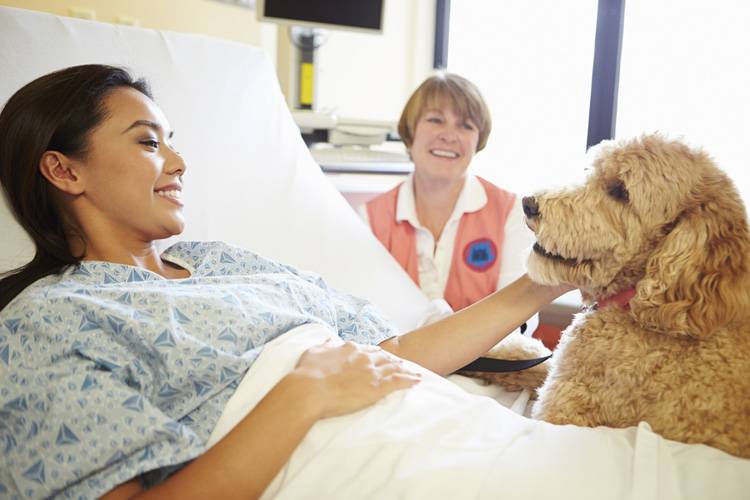
The healing magic that animals provide is no secret to health care professionals, who often utilize the calming presence of dogs to help patients heal. These specially trained canine angels are among the therapy dogs we celebrate on National Therapy Animal Day on April 30th.
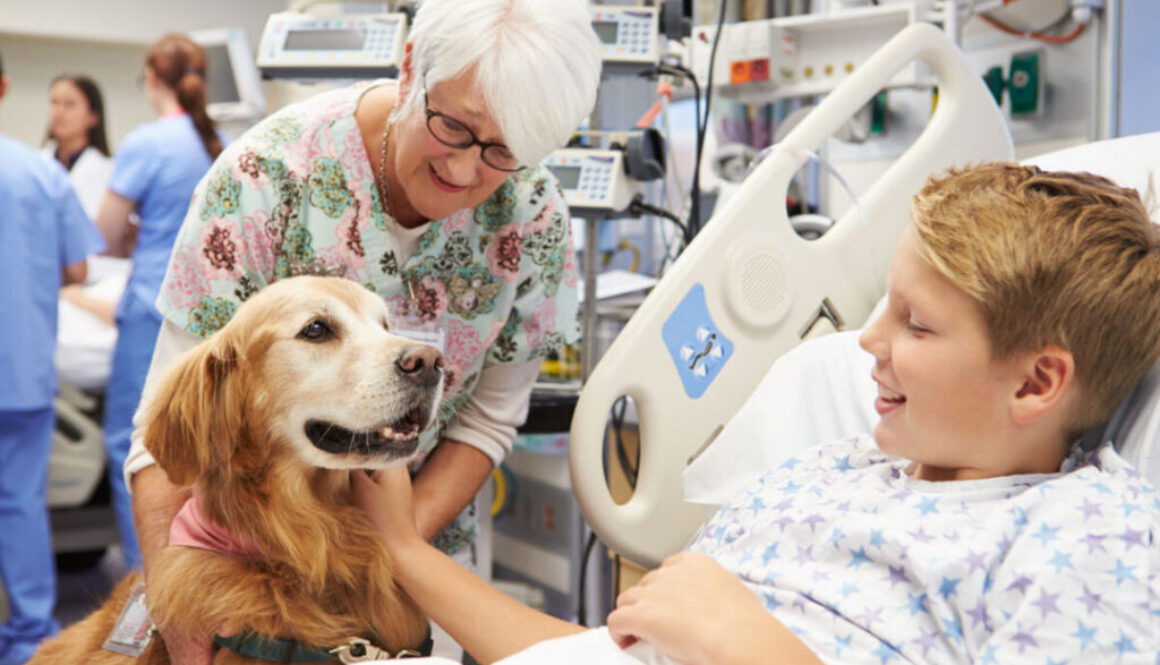
Therapy dogs provide help to people in all kinds of stressful situations. Nursing homes and hospitals are among the most common places visiting by therapy dogs and their handlers, but they also can provide comfort in a number of other settings.
What They Do
Therapy animals are amazing creatures. I know because I had one. My Pembroke Welsh Corgi, Nigel, was certified by Therapy Dogs International, and was authorized to visit hospitals and nursing homes.
Nigel’s very first therapy dog visit was to see my husband, Randy, who was in the hospital being evaluated for epilepsy surgery. Randy was bedridden and had a series of electrodes implanted in his skull. He had a wad of wires coming out of his head attached to a machine on the wall. It was a scary sight for anyone, let alone a dog. But Nigel’s training kicked in when he saw Randy in that bed. Instead of his usual jovial self at seeing his daddy, he was careful and subdued. I placed Nigel on Randy’s lap, and he lay there quietly while Randy rubbed his ears.
After visiting Randy, I took Nigel down to the waiting area where people were gathered while their family members were undergoing surgeries. We walked among the men, women and children, and saw their faces light up as we approached. Only a couple of people didn’t seem interested in petting Nigel. The rest reveled in their happiness at visiting with the cute Corgi and forgot their worries, if just for a moment.
This is the magic of therapy dogs!
Whatever the situation, whether a person is in the hospital recovering from an illness or permanently bound to a wheelchair, their problems are momentarily forgotten when they feel the love and attention of a therapy dog.
After the mass shooting at the Washington Navy Yard in Washington, D.C., where 12 people were killed in 2013, in the days following the incident, therapy dogs paid visits to the Department of Defense employees who worked there. Co-workers of the slain and wounded were extremely traumatized by the events of that day. In response, an all-volunteer organization called HOPE Animal-Assisted Crisis Response provided certified therapy dogs on the grounds so employees returning to work after the shooting had a way of receiving some comfort. Many were suffering from post-traumatic stress as a result of the event, and seeing the dogs helped calm their frazzled nerves. The dogs also helped some people talk about what had happened, enabling mental health professionals on site to provide some assistance to employees who needed help dealing with this horrific event.
Therapy Dog Qualifications
In order to do therapy work, dogs and other animals need the right kind of temperament. They must love people, but also be calm and trainable. That doesn’t mean they shouldn’t be enthusiastic about meeting new people, but they need to be gentle, and sit or stand quietly while being petted. Any type of aggression, even toward other dogs, disqualifies a dog for therapy work. Prospective therapy animals also need to be well socialized, and be able to handle being around objects like wheelchairs, canes, walkers and other types of medical equipment without showing fear or aggression.
Most pet therapy groups also require that dogs be certified by a therapy dog certification organization before they can visit people in need. The American Kennel Club (https://www.akc.org/sports/title-recognition-program/therapy-dog-program/therapy-dog-organizations) currently endorses five organizations for therapy dog certification: Therapy Dogs International, Alliance of Therapy Dogs, Pet Partners, Love on a Leash, Bright and Beautiful Therapy Dogs and Pet Partners.
These therapy dog associations require dogs to pass a certification test, which confirms that the dog has the training and temperament to do the job of a therapy dog.
Learning Basic Obedience First
Obedience training is the first step in getting a dog ready for therapy work. In order to earn the therapy dog certification, the dog must know how to sit, stay, come, lay down and walk nicely on leash when asked. These are behaviors that dogs need to know to be able to perform well as therapy dogs. Acting like a good canine citizen is imperative since they will be out in the world meeting new people, many of who may be sick or disabled.
Start Therapy Dog Training
Once a prospective therapy dog learns basic obedience, he next needs to learn to be around wheelchairs and other medical equipment, to sit quietly while being petted, to be calm around other dogs, jump up on a bed when asked, and ignore food when told to do so, in addition to other behaviors. Whether your dog can master these tasks will depend a lot on his inherent temperament, as well as his training.
You can find training and certification classes for therapy dogs at canine training facilities and dog training clubs around the country. Classes usually run from six to eight weeks, and will help both you and your dog learn how to provide canine comfort to those in need.
Getting Involved
After your dog has earned a therapy dog certification from a reputable organization, your next step is to get involved with a therapy dog group that regularly pays visits to people in need. Regional therapy dog organizations make arrangements for therapy dogs and their handlers to visit places that appreciate canine visitors. Some clubs focus on veterans’ groups and nursing facilities, while others get involved with library programs dedicated to helping children learn to read.
One group, 4 Paws of Love, is an all-Poodle pet therapy organization based in San Diego, Calif. They visit children in schools and libraries, college students who need stress relief, people in memory care and retirement facilities, hospice care patients and the developmentally challenged. Another group, Bright Spot Therapy Dogs in western Massachusetts, used all breeds and mixes to visit psychiatric facilities, rehabilitation centers, senior centers and hospitals, and even participates in reading programs for children. In the Houston, Tx., area, Smiles and Fur Friends Houston pet therapy program involves therapy dog teams making monthly and one-time visits to nursing homes, assisted living facilities, events for special-needs children and adults, schools, libraries, universities and hospitals.
If you and your dog would like to get involved in therapy dog work, visit one of the AKC recommended organizations for more information on training and certification. Search online for a pet therapy group in your area, or contact a local hospital for a referral to a group near you.
Many studies have shown that owning an freshwater aquarium can provide health benefits such as lowering blood pressure and reducing stress. The softly bubbling sounds produced by aquarium equipment can also help lull you to sleep at night. Beyond the health benefits it can offer, a freshwater aquarium can provide an aesthetically pleasing addition to your home and allow you to become the proud owner of many different types of fish.
Setting up and caring for a freshwater aquarium can be as simple as purchasing a small desktop kit or as complex as establishing a 100-gallon tank that includes multiple tropical species. Below are some basic tips on selecting an aquarium that meets your time constraints and maintenance requirements. When you are ready to set up your perfect aquarium, be sure to ask the staff at your local aquarium or pet store for their advice to ensure your chosen fish live happily.
Choose Your Freshwater Fish
Before you hit the aquarium aisle at your local pet store, put some thought into the types of fish you want to keep. Are you satisfied with a simple betta in a small desktop tank? Or do you hope to care for a large tank of exotic tropical fish? Consider the amount of space you can devote to an aquarium—and the amount of time you will commit to aquarium maintenance.
Not sure which type of fish you want? Take a look at some of the following species that make good choices for new aquarium keepers (note that this is a very small sample of appropriate “beginner” fish):
Rasboras: The many different types of the peaceful, schooling rasbora come in sizes ranging from tiny (neon green rasbora) to large-ish (scissortail rasbora), with many in between. The more popular harlequin and lambchop varieties grow to about 2 inches and are stocked by most pet stores.
Tetras: This is another species of small schooling fish that comes in many varieties, including the popular neon tetra, cardinal tetra, and Congo tetra. They prefer living in groups so plan to keep at least six. Tetras get along well with rasboras and other peaceful community types of fish.
Common Goldfish: While goldfish can grow quite large (up to 12-14 inches), they are also hardy and have easy care requirements. Keep in mind that this species requires about 30 gallons of water per fish. This species can accept fluctuations in water hardness and pH, but the tank water needs to be changed frequently. Common goldfish do best with their own species, as they will try to eat anything—fish or plant—that they can fit in their mouths.
Bettas: Looking to start small with a tank? The betta might make the perfect choice. This species can live on its own in a 5-gallon tank with a gentle filter or can co-exist with other peaceful fish in a 10-gallon or larger tank. Don’t put more than one betta in a tank—there’s a reason they’ve earned a reputation as a fighting fish!
Select a Tank Type
While having an idea of the type of fish you want to keep can help guide you to the best type and size of tank, space concerns and maintenance tasks can also influence your tank purchase. Below is a brief description of the features of common tank types used for a freshwater aquarium:
Desktop tanks: The compact designs of these tanks take up much less space but can hold a limited number of fish. Some models include built-in filters and lights.
Standard tanks: Small, medium, and large versions of aquariums are available in most pet stores, made of glass or acrylic. Keep in mind that larger tanks require strong stands to support the weight of the tank’s water. The varying sizes can accommodate varying amounts of fish, depending on the species.
Kits: These typically include a tank along with one or more additional aquarium component, such as a filter, hood, lamp, water additive, or fish food. Sometimes the filter and light are built into the tank. If you’re looking for a way to ensure you buy the appropriate equipment for your tank, a kit makes a good beginner’s choice.
Add a Filter, Light, and Heater to Your Aquarium
A tank is just the start of your aquarium setup. If you’ve opted for a standard aquarium that does not come with additional equipment, you will likely need to purchase some (or all) of the following to properly care for your fish in a freshwater aquarium:
Filter: The filter helps remove impurities using multiple types of media. Mechanical filters strain the tank water to catch debris, fish waste, and uneaten food. The biological filter media helps encourage healthy bacteria to break down ammonia and nitrites, while the chemical filter media removes toxins that can lead to water odor and discoloration. Most power filters fit over the edge of the tank and come in sizes designed for specific tank capacities (e.g., 10-gallon, 20-gallon, 50-gallon, etc.). For very large tanks, an external canister filter may be a better option.
Heater/thermometer: Some species of freshwater fish come from tropical climates and prefer water that remains warmer. To maintain a proper temperature in your aquarium, you will likely need a heater and a thermometer. External and in-tank versions are available for both heaters and thermometers.
Hood: As the name implies, the hood covers the top of the tank to prevent fish from escaping, other over-eager pets from sticking their paws in, and water from evaporating. Many hoods also include the necessary electrical components to house a lightbulb. Designs range from simple covers to adjustable hinged versions.
Light: A fluorescent light bulb is ideal for most freshwater aquariums, allowing you to view your fish. If you gravitate toward a more lushly planted aquarium, you may want to investigate a halide bulb. Keep in mind that a halide bulb likely will require a specially designed fixture and may produce excess heat. Other options include LED lamps (providing benefits such as energy efficiency and long life) and incandescent bulbs.
Stand: As mentioned previously, a large aquarium typically needs a strong stand to support the weight of the tank water. Stands come in many different styles and types, made of wood or metal (or both!), and can also include shelves and cabinets for storage.
Don’t Forget you Freshwater Aquarium Maintenance
Additional tank accessories can help make maintenance chores quicker and easier. Consider these items when purchasing the items for your freshwater aquarium:
Air pump: Most filters circulate the water throughout the tank to remove waste products, but the addition of an air pump can also oxygenate and circulate the water by creating a stream or curtain of bubbles.
Gravel vacuum: This makes tank cleanup easier by allowing you to remove waste that has settled into the gravel at the bottom of the tank.
Algae pad: Available in versions for either a glass or acrylic tank, these pads remove algae and other substances from the sides of the tank without damaging it.
Net: The safest way to move your fish when performing tank maintenance. Nets come in various sizes.
Water test kit: These kits typically provide the necessary items to measure water pH as well as levels of ammonia and nitrate.
Prepare the Water
Once you’ve selected the best tank for your chosen fish, it’s time to prepare the water. Ensure that you know the best water conditions for the types of fish that will live in your aquarium, and consider using these water additives to achieve ideal conditions:
Ammonia and chloramine remover: This additive helps neutralize these harmful elements in the tank water when first setting up the tank or changing the water.
Chlorine and heavy metal remover: Like the additive above, this helps neutralize harmful chlorine from tap water when first setting up the tank or changing the water.
pH conditioner: This will help you increase or decrease the tank water pH.
After the tank is up and running, you may want to use some of these additives to keep the water clean:
Clarifier: This conditioner helps eliminate elements that cause cloudy water.
Algae remover: Keeps water clean by controlling algae blooms.
Beneficial bacteria: Healthy live bacteria help maintain the health of the tank by supporting the breakdown of wastes.
Bring in the Fun Stuff!
With your tank equipment up and running, it’s time to add the décor to complement your aquarium vision! The aisles at your pet store likely will offer many varieties of the following:
Substrate: Gravel, rocks, and sand in a range of colors, sizes, and textures are available, all designed specifically for aquarium use.
Backdrops: You can add a background to the back side of the tank to create a fun scene, or you can decide not to use one so you can view the tank from all sides. Backdrops work well when an aquarium is placed in front of a wall to create a sense of depth.
Ornaments: The sky is the limit with the types and designs of aquarium ornaments. Choose from whimsical resin objects (a pirate’s treasure chest or Spongebob’s Pineapple) to natural (rocks and driftwood). These objects provide interest and can help you create a theme—and they also provide a place for fish to hide. Please note that when adding ornaments and items to your tank, you make sure that they will not alter the condition of the tank water and harm your fish.
Artificial plants: While you can certainly add live plants to your aquarium, plastic and silk fake plants made specifically for aquarium use provide a lush look without the maintenance. Artificial plants also give fish places to hide.
Freshwater aquarium keeping is a rewarding hobby that provides health benefits and adds a touch of nature to your home. With some guidance from an experienced aquarium or pet store professional, you can set up a tank in a day and enjoy your fish for many years to come.
A Year-Round Resolution for A Healthy Pet Lifestyle
It’s a New Year and a new you! Time to try different things and make realistic changes and to do the same for your pets. No doubt that four-letter word – DIET – is going to up come! And, if Fluffy and Fido were over-indulged by both friends and family over the holiday season, the chances are that a dog diet or a feline slim-down is on your to do list to lead your fur family into a healthy pet lifestyle.
Make your 2020 pet diet pledge a year-round resolution namely a healthy pet lifestyle, NEVER measure and equate love with copious amounts of food for your pets!
We want our pets to live longer and happy lives and overfeeding negates these goals.
It may not sound a lot in human terms, but a cat can be considered overweight by weighing an additional two pounds according to her size and build, and, an additional five pounds can apply the same label to dogs. Any additional weight puts pets at increased risk for developing serious weight-related disorders such as arthritis and joint/walking issues, high blood pressure, kidney disease, diabetes and various cancers.
“Obesity is the number one health threat pets face, and the most important pet health decision owners make each day is what and how much they feed,” says Dr. Ernie Ward, Founder of the Association for Pet Obesity Prevention (APOP) (https://petobesityprevention.org). Currently, according to APOP, 60 peer cent of cats and 56 per cent of dogs in the United States are overweight, or, considered clinically obese.
Simply put, both dogs and cats need to count calories too!
The place to start a healthy pet lifestyle is by booking a veterinary wellness visit and making a discussion about diet and exercise goals a top priority. It’s not easy to put a pet on a diet. Definitely no crash dog diet or feline slim-down strategies! Discuss your pet’s ideal weight with your veterinarian and their medical team and, together, set small weight loss goals and re-evaluate every time a goal is met.
And, don’t celebrate these successes with treats. Instead, shop for a new toy or accessory. As with humans, the weight loss must be gradual and undertaken over six months to a year.
Depending on the individual pet, the dog or cat diet may not necessarily involve a special food. Your veterinarian may suggest reducing your pet’s current food intake by 10 per cent and, in this regard, some simple changes at the kitchen counter can go a long way in a weight reduction program.
The Kitchen Counter Quiz
Start with this easy Kitchen Counter Quiz.
When you measure food:
Do you do use a standard measuring cup?
or
Grab the closest cup or mug of any shape or size in the cupboard?2. When you fill the cup with kibble:
Do you ensure the food is level with the top?
Or
Do you heap it up as much as you can?
If you answered B to both questions without realizing it, you are over-feeding your pet!
Nathan A. Elam, Ph.D., a consulting nutritionist for Nutrition Service Associates and Inline Nutrition, who also advises Merrick Pet Care, offers these tips.
Because kibble comes in different shapes and sizes, different recipes have different densities and thus weigh different amounts. Consequently, dry food is best measured gravimetrically using a standard kitchen scale that measures in grams. However, for convenience, kibble is usually measured volumetrically using a standard measuring cup that is the equivalent of 8 oz of fluid volume. When first feeding a particular kibble, in order to ensure you are feeding correctly, its best to determine how much a cup of the kibble weighs gravimetrically and, thereafter, work out the recommended calorie intake for your pet.
Dry food recipes show the calorie content of a cup of food in Kcals. For example, a recipe that has 384 kcal/cup ME (metabolizable energy) means that one cup = 8 oz of that food = 364 calories. Pouches and cans show the kcal content in terms of the weight of the food in that can/pouch too.
When measuring a cup of food, be sure it’s a level If you are heaping it to the max, you are overfeeding by that heaped amount! If you scoop of the heaped amount into a measuring cup, its each to see by how much you are overfeeding at each meal. And that really adds up.
Treats have calories too! The calories contained per treat will be on the packaging. Treats should account for 10% or less of the total caloric daily intake. Never in addition to the daily food amount.
Reading Labels and Finding the Right Food
If you have done your homework with regard to recipes, and you are already feeding a well-balanced and nutritious diet, your veterinarian may suggest reducing intake by a proposed amount rather than changing the diet altogether. Never guess it for yourself. Under-feeding is as dangerous as over-feeding!
With regard to measured meals, the one benefit of signing up customized meals created for your pet and shipped to your home, is that a lot of questions are a pre-requisite for them to create the meals in the correct amounts. They are portioned to last a month and it’s a great way of feeding the right amount. If you run out in week three – then you are overfeeding…
However, if your pet is really overweight and possibly even clinically obese, there are science-based weight control diets manufactured by many leading pet food manufacturers and your veterinarian will make the best suggestions and help plan wet and dry meals for your pet’s ideal weight reduction program helping to reach a healthy pet lifestyle.
Controlling the Bowl
Measuring food and counting treats is only part of the changes to create a healthier lifestyle for pets. In a multi-pet household, it’s imperative to monitor meals to ensure that pets eat their designated amounts and don’t steal from one another. Typically, dogs will eat all the food in their bowl the moment its placed in front to them. It’s a matter of making sure that the one who finishes first doesn’t then move on to its friend’s bowl.
There are bowls designed to slow fast eaters down which can help https://outwardhound.com/slow-eating-stop-bloat-dog-bowls-and-feeders.html. Also, puzzle toys can be used as a way to feed kibble and change eating habits. https://nina-ottosson.outwardhound.com. Dogs by nature like to forage for food, and, puzzle toys can recreate this in a domestic setting. There are some designed for wet food too. This allows a dog to work for its meal and simultaneously benefit from both the mental and physical stimulation this action provides.
Cats are a different story because they are nibblers and prefer to eat mini-meals throughout the day. This is where technology can really help. By investing in food bowls like the Surefeed from Sure PetCare https://www.surepetcare.com/en-us/pet-feeder that operate on the designated pet’s microchip, it means that the bowl will only open for that designated pet. If an intruder approaches, it will close until they get the message and move on! Such bowls are also a good idea for any pet in the household that is on a weight loss formula or is on a special diet food that addresses a particular medical issues. There are also other bowls such as Wireless Whiskers AutoDiet Feeder https://www.wirelesswhiskers.com/ec/ that allow pet parents to measure meals and also control who steps up to the bowl. They can be programmed for a multi pet household – provided all the pets are eating the same food.
Exercise: Come On, Let’s Go!
Exercise is a key daily component for a healthy pet lifestyle in any dog or cat weight loss regimen. But here is the good news. This is something you can all do together and reap the benefits.
Dogs make great exercise buddies and there are lots of ways that together you can burn calories. The amount of exercise a dog needs has got nothing to do with its size; it’s breed characteristics will determine the amount of daily exercise needed to offer both mental as well as physical stimulation.
If your dog is a mutt, A DNA test will reveal its primary genetic make-up and offer insight into its needs with regard to physical activity. There are lots of fabulous action toys for games of fetch played both in the garden or in a dog park to work off calories and pent up energy.
Some dogs are happy with daily neighborhood walks several times a day ranging from 30 minutes to an hour. Others may require more active canine activities such as sheep herding classes or a variety of doggie sports.
Dialing Up the Fun
Dog agility is an off-leash activity that takes your dog around an obstacle course working against the clock. Dogs love it and become keen competitors when there are people cheering them on.
Flyball is a canine team sport that has competitors jumping over hurdles to a box that releases a tennis ball when the dog presses the spring-loaded pad. The dog has to catch the ball and take it back to its handler before the next dog in the team can set off in relay fashion.
Athletic dogs such as Border Collies and other working breeds excel at this type of sporting activity, but smaller breeds such as the Jack Russell Terrier, Pomeranians and Poodles enjoy such pastimes too.
For dogs that have a competitive drive and love to pull things, there are lots of activities such as skijoring, where the dog pulls his owner along on skis, as well as carting and weight pulling.
Rally Obedience, also known as Rally or Rally-O, is a course activity that puts the dog and its handler through various paces, making the dog perform various obedience commands at each station. The average course is between 12 and 22 stations.
Senior Dogs that aren’t able to run, jump and pull objects as they could do in their younger days often enjoy tracking, because it’s a very rewarding walking activity. If you’re not so fit, it’s a great exercise that gets you out into the fresh air too.
The popularity of television programs such as Dancing with the Stars and So You Think You Can Dance! has brought renewed interest in canine freestyle dancing https://www.canine-freestyle.org with people signing up for dance classes to teach their dogs the Labrador Lambada, the Chihuahua Cha-cha or the Bulldog Bossa Nova. You may even make it onto a show such as America’s Got Talent…
Feline Fun and Games
When it comes to cats, games with lasers, wand toys and anything filled with catnip will entice play. Cats with a healthy pet lifestyle play for about ten minutes at a time and then the novelty wears off. So, it’s a great idea to introduce different games throughout the day. There are some electronic toys that work on a motion sensor and initiate games when Fluffy approaches.
Also move the food bowl a fair distance from a popular snooze zone. That way kitty will have to make a concerted effort and burn some calories when its meal time. Another great idea is to create a treasure hunt with toys and treats (part of the measure daily allowance) around the home. This will keep kitty on the prowl and honing her hunting skills. Cats enjoy puzzle toys too. The Catit Treat Puzzle https://www.catit.com/shop/treat-puzzle/ can be filled with food or treats from the daily allowance as well as small toys and catnip to make it a complete indoor amusement “arcade”.
Many pet stores now have special dog scales. So, it’s easy to monitor weight loss when you are out and about together. For small pets and cats, a baby scale is ideal to monitor those ounces as they add up to pounds and slowly decrease.
One final word, chubby pets on Instagram are not cute. They are uncomfortable in their own skins, have difficulty moving and breathing and totally relying on you to help so that you can truly appreciate their unconditional love.
You want to pamper your pet this holiday season but probably don’t want to spend even more money on gifts and decorations. What can you do to make your cat or dog part of the celebration without going broke?
Plenty! By creating your own pet centered gifts and decorations, you’ll save money and have fun at the same time.
Gifts for Pets
The toy-filled aisles at your local pet supply store are actually designed to attract you, the pet owner, more than your actual pet. Dogs and cats don’t care about the bright colors and the fun designs we commonly see in commercially made toys. They just want something they can chew or chase. Instead of spending upwards of $10 on a fancy toy for your pet, just make a one yourself.
Cats are the easiest pets to make toys for, any cat trainer can attest to this. It’s not hard to make
some fun items for your cat this season. Here are a few ideas.
Sock toy. Probably the easiest toy to make for kitties is a sock toy. All you need is an ankle
Woman wrapping DIY presents in craft paper. Gifts tied with white and red threads with toy train as decoration. Cute ginger cat shiffing it.
sockyou don’t want (one with a Christmas design can make this toy particularly festive), some crinkly paper and a permanent marker. Simply ball up the paper and stuff it into the sock. If your cat likes catnip, add a few pinches of it inside the sock too. Tie a knot at the end of the sock to keep it all contained, and draw eyes or a face on the sock if you’d like. Then toss it to your kitty and watch the fun begin.
Cat hideaway. Cats love to snuggle in cardboard boxes. Something about the cardboard seems to attract them. You can tap into that mysterious attraction by turning a large cardboard box (big enough for you cat to stand up in) into a perfect place for hide-and-seek. Simply cut off the flaps on the open side of the box, and then using a retractable razor blade or utility knife, cut a hole in one side of the box big enough your cat to enter. Cut another hole the same size on an adjacent side of the box. Turn the box over so the open side is facing the floor, and leave it where your cat will find it. It’s only a matter of time before Kitty is hiding inside the box, napping for hours on end and popping out at unexpected moments.
Menswear Mice. If you like to sew, you’ll enjoy making catnip mice for your kitty from scratch. Few toys are as fun for cats as cloth mice that they can bat around. All you need to do it yourself is some old menswear shirts made of material like cotton, wool or corduroy, a sewing machine, embroidery thread and a few other sewing items. Martha Stewart has a great pattern for making cloth catnip mice for your kitty: https://www.marthastewart.com/908084/menswear-mouse-toy.
Dogs can be a bit more challenging to make toys for because they tend to be hard on their playthings. Just remember that any toy you make for your pooch has to be able to stand up to those tough jaws. Here are a few:
Ball and Rope Toy. If your dog likes both rope toys and balls, this combo do-it-yourself toy will
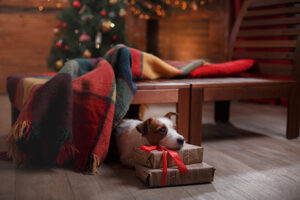
Dog Jack Russell Terrier holiday, Christmas and New Year
be a big hit. You only need cotton rope, a lacrosse ball and electric tape to make this toy, which is good for both tugging and chasing. Instructables.com (https://www.instructables.com/id/How-to-make-a-ball-and-rope-dog-toy/) has complete instructions. Any Certified Dog Trainer would recommend keeping a close eye on your pet when introduced to this toy. Rope can easily be swallowed and lead to a medical issues, so many sure your pet plays with this toy correctly.
Plastic Bottle Toy. Lots of dogs like to chew on empty water bottles. There’s something about the sounds and sensations of the crunching that gets them going. Rather than just giving your dog a water bottle to munch on, make him a pretty toy that provides him with even more satisfaction. All you need is about a yard of fabric, a plastic water bottle and a pair of scissors. Cut four 1-inch wide strips of the fabric to use for ties, and then wind the rest of the fabric around the bottle as if you were wrapping a burrito. Tuck in the excess fabric as your reach the end of it. Then tightly tie the 1-inch strips around the bottle to secure the fabric in place, all the way to the top of the bottle. Next, cut the excess fabric at the top of the bottle into 2-inch strips that hang down. Then braid three of these strips at a time to together, knotting each one at the end. The resulting toy will look a bit like an octopus—and your dog will love it.
Tennis Ball Treat Toy. If your dog is the busy type, he might enjoy a homemade tennis boy treat toy. You need a tennis ball, some aromatic crunchy treats and a serrated knife. You can turn the tennis ball into a treat dispenser that only gives its rewards when your dog figures out how to get them out. Visit Instructables.com https://www.instructables.com/id/Easy-amp-Cheap-Dog-Toy for instructions.
Pet Decorations
The holidays are a great time to let your family and friends know how much you love your pets with some homemade pet-oriented decorations. Here are some ideas:
Cat Face Ornaments. If you have an artistic flare, you can make your own cat-themed Christmas ornaments for your tree. Start with plain, round ornaments, and dip them in a light-colored acrylic paint. Once they dry, use a felt pen to draw a cat’s face on each ornament: eyes, whiskers, nose and mouth. For a sample of what these look like, take a peek here: https://www.pinterest.com/pin/149533650115848407
Salt-Dough Puppy Paw Print. Your dog can participate in the making of this adorable Christmas tree ornament. Using dough you make at home, along with some paint and glitter, you can help your dog provide a pretty paw print memento that you can hang on your tree for years to come. This video walks you through the steps: https://www.youtube.com/watch?v=N2b-I5x96fA.
Pet Christmas Wreath. A Christmas wreath adorned with photos of pets both past and present can be a special and unique ornament for the holiday. You can buy a ready-made wreath already decorated and add a few photos of your pets amidst the existing decorations. Or, you can make your own wreath from scratch, with either a living pine wreath or an artificial wreath. Whether you are working with a ready made or a DIY wreath, use small craft picture frames for your photos. You can get these at your local crafts store or online. Print photos of your pet sized to fit the frames, and place one photo in each. Using a small paintbrush, cover the front of the frames with glue and then dust the glued area with red, gold or silver glitter. This will make your photos stand out with a real holiday sparkle. If you are making a wreath from scratch, you’ll need more decorations. Wind a pretty wired ribbon around the wreath, and add small Christmas balls throughout. Then place your photos throughout the wreath, amidst the ornaments. Affix all the decorations with floral wire you can buy at a crafts store. Hang your wreath over a fireplace or another spot in your home where the photos are easily visible.
Christmas Collars. Want your cat or dog to look festive this year but can’t find just the right Christmas collar? Make your own! For this design, you’ll need felt, floss, elastic, jingle bells and sewing tools. Follow this pattern (https://dogue.com.au/club-dogue/dog-diy/diy-christmas-dog-collars), or make your own design. Your home will be brimming with holiday spirit once you don your cat or dog with one of these cheerful collars.
Doggy Advent Calendar. A great way to include your dog in the days leading up to Christmas is with an advent calendar with a canine twist. Advent calendars for humans feature a piece of candy for each day leading up to December 25th. Advent calendars for dogs mean a dog treat for every day. You can buy treats that will fit in a calendar, or make them yourself. For advice on making your own Doggy Advent Calendar, Cooking For Dogs has a how-to video: https://www.youtube.com/watch?v=5irUuFXB-9A&t=15s
Dogs and puppies can easily and accidently expose themselves to hazards. Take a few minutes to remove and store hazards that loom inside your home. Sometimes things we wouldn’t dream of as harmful can be toxic to our canine companions. The xylitol in sugar free gum, for example, can kill your dog. Here are some general guidelines to follow, but you may want to ask your veterinarian’s staff for a more detailed list, including harmful houseplants.
Medications
All medications, regardless if human or canine; should be stored in tightly closed top cabinets. While it’s tempting to keep medication within arms reach, it’s not worth the risk to your pet. So many times, dog owners will leave dog medications on top of kitchen or bathroom counters, and their dog grabs, chews up the bottle and ingests all medications, which can be deadly. Many chewable dog or children medications are very attractive to dogs, so keep all medications in upper cabinets.
Cleaning Products
For the most part, dog owners should be using chemical free options because they work very effectively. If not, store all cleaning products behind closed doors, such as inside a pantry. If cleaning products must be stores in lower cabinets, invest in childproof locks to prevent dogs from opening cabinet doors and ingesting harmful chemicals.
Food
Store all food in refrigerators, tightly closed cabinet doors and pantries. No food should be left on top of counter tops, unless it’s inside a tightly closed container. Food, inside plastic bags, are easily destroyed and consumed, plus plastic can be a choking hazard or cause an obstruction. Take a moment and make sure your dog’s peanut butter or treats do not contain xylitol, onions, chocolate, grapes, raisins, macadamia nuts or fatty foods. Also, don’t forget to invest in a tall, heavy lid trashcan, with a foot pedal opener. This type of trashcan is not easily opened by small, medium or large dogs. If a dog has learned how to open a heavy smooth trashcan lid, then keep the trashcan behind a closed cabinet or pantry door.
Pesticides
Keep all pesticides, such as insecticides and rat poison, in the garage. Store in tightly closed plastic containers and place on high shelving. Pesticides are deadly, even to dogs, so keep them out of reach. Hopefully, owners are using natural options, such as cedar and peppermint oils, which are extremely effective at deterring pests from hanging around their home. If not, they should consider switching to natural options.
Take a few moments and follow these tips. We assume it will never happen to our dog, until it does.
Dog parks have been in the news more and more these days. As populations grow and families move closer to cities, we need places for our dogs to be dogs.
Dogs experience many benefits from playing at the dog parks. They get a chance to socialize, expend some energy, interact with other pets, and fine tune their social skills. In most cases, your dog will come home content and relaxed, sleeping through the night.
But, there is also a dark side to dog parks. You are taking a chance of injuries or coming home with parasites, increased exposure to disease, and a chance your dog may pick up some bad habits.
So, what’s the best option for you and your dog?
To begin, it’s important to know there are two types of dog parks: On-leash and off-leash. Both have vastly different “rules” and you should know the etiquette of both before you go.
Off-leash Dog Parks
Off-leash dog parks can range from, “here is a fenced area where dogs can run and play in a controlled area,” to “here’s 1,000 acres where your dog can run and play in the wild.”
These types of off-Leash dog parks tend to be more laid-back on the “rules,” are popular with higher energy dogs and frequented by dogs who tend towards rougher play. You should never take a smaller breed dog to an off-leash dog park that doesn’t observe strict play group rules. Usually off-leash parks have specific days for large breeds and small breed dogs.
They can be fun for dogs who get along well with other dogs (aka, never bully or fight other dogs). They are also great if you have a well-trained dog who responds well to commands. If your dog does not have a good recall, the off-leash park is probably not for you.
Off-leash dog parks are only as good as the people who frequent them. Just because your dog listens and comes when calls and never fights, does not mean that other dogs will do the same. If you take your dog to an off-leash park, they could easily fall victim to any of the casual packs that form or to another dog who is not well-trained.
On-Leash Dog Parks
These parks tend to be far more regulated and are often common areas for people without dogs. The dogs tend to be more well-mannered (largely due to being under control) and the owners are a bit more aware of their surroundings.
In these cases, off-leash play is not allowed. You’ll need to find some fun things to do with your pet while they are leashed. Always be courteous to the other patrons because sadly, non-dog people will always have priority over dogs.
Whether you choose to visit an on-leash or off-leash park, just one bad owner can ruin the experience for dogs who have been coming to a park for years. So today we’re taking a look at some common dog park etiquette you should observe.
Finding the Perfect Dog Park
PetFriendlyTravel offers one of the most extensive lists of dog parks throughout North America. You can search by state or country. But, there may be closer pocket park near you. Ask around on NextDoor or Facebook for the dog park that might work best for you.
There is also a new app called the Dog Park Finder, which lists every app in a 20-mile radius of your current location. This is ideal for people who travel with their dogs or work as pet professionals. The information is fielded from DogGoes.com, another great resource for finding dog parks.
Dog Park Essentials
Whether you choose to visit an on-leash or off-leash park, it’s important to know the ground rules. These are some good starting points:
Leave toys and treats at home or in the car. Unfortunately, bringing toys to the dog park can create anxiety and maybe even a little jealousy with the other dogs. So it’s best to leave these things in the car.
Know the hours: Dog parks are only open at certain times of the day or night. Be sure you know what those hours are and don’t harass park employees into opening early or staying late.
Never leave your pet unattended. It’s not doggie daycare. No one is there to monitor your pets and it’s very rude to drop your dog and go.
When in Rome… If you’re at an off-leash park, don’t leave your dog’s leash on. It can create lots of problems and even result in leash aggression. No matter what type of park you’re at, extendable leashes are a no-no. There is just too much potential for injury to you, your dog and the other animals.
Clean up after your dog. Nothing chaps my hide more than a person who says, “Don’t worry, they have people for that.” It’s arrogant, it shows a sense of entitlement, and it is unpleasant to see in people and pets. Not only that, it’s not very hygienic. So, pick up after your pets wherever you are.
Pay attention to your dog, not your phone. Leave your phone on camera mode or leave it home. Make sure that any photos you take are only posted with the owner’s permission – it’s best to treat dogs the same way you might treat their child.
Exercise your dog before the park: This may sound akin to “cleaning the house before the housekeeper comes over”, but the same premise holds true. If you give a housekeeper a good basis to start with, they will do an even better job by focusing on the areas that may not be your strength.
Commands Dogs Should Know
In a perfect world, every dog who visits a park would understand and respond to every command. But just as people are people, dogs are dogs. However, they should know (and usually respond) to the following commands:
Come – this is the most important. You should be able to retrieve your dog with a word and always have them under voice control.
Leave it.
Settle down – be sure your dog understands when enough is enough.
Understanding Body Language
At the very least, you should know a little about your dog’s own body language, but it’s also important to understand the body language of other dogs.
For example, a dog running up to your pet does not mean the world is coming to an end and your dog will be consumed in a vicious fight. Sometimes the approach of another dog is awkward (just as humans are sometimes awkward). Let your dogs be dogs.
Good play usually consists of a play bow, pawing, rearing and pawing, and maybe even a playful nip to the shoulder.
Bad play includes slow, calculated movements: arched backs, sideways walks, stiff gaits, or repeated “attacks” on a dog who is clearly not having fun.
You also need to understand human body language. Every park has a different vibe. Some cater to large dogs, others to herding dogs, some are designed specifically for dogs who love water, others prefer the small dogs park. Some parks prefer positive reinforcement, in others they don’t. Find a vibe that works for you and your dog. It will make the difference between a great experience and a potential catastrophe.
Know your Dog
This is especially true if you’re planning to visit an off-leash park. Never, never ever bring an aggressive dog to a dog park. Never bring a fearful dog to the park. Never bring an unsocialized dog to the park. The dog park is not a place to learn these things, it’s a place to celebrate the achievement of overcoming these things.
Some of these places have had the same people coming, with the same dogs, twice a day for the last few years. As the newcomer, you need to respect their seniority. It’s a good idea to visit the park first and talk to a few of the veterans. They can give you some valuable tips on getting along with the other patrons, and it’s a great way to meet people.
Dogs that don’t belong in dog parks:
Dogs in heat.
Unneutered dogs, especially males.
Unsocialized dogs.
Packs of dogs.
Dogs that haven’t been fully immunized.
Dogs that are ill.
Puppies under 12 weeks old.
Dogs that are socially inappropriate (humping other dogs or people).
Dogs that nip or bully others.
Dogs that resource-guard.
Dogs that don’t recall (come).
Dogs that the owner clearly has no control over.
Dogs that bully other dogs do not belong in a group environment. They belong in training.
Owners who don’t belong in parks:
People who constantly check their phone rather than checking on their dog
Owners who are irresponsible (don’t visit vet, don’t train, don’t vaccinate and don’t care)
Owners who drop the dog off and leave the park
Owners who are bullies
With a little preparation, we can make dog parks a very fun place to be. In this day and age, it’s more important than ever to have a place to take our pets for some socialization. But, it’s important to know your dog, yourself and the vibe of each dog park before you go.
Cats are famous for their cleanliness. Spend some time watching your cat, and it won’t be long before you see her grooming herself fastidiously, rarely missing a spot. But does that mean she doesn’t need your help staying clean? Absolutely not! Cats needs human help with their grooming needs, and there’s plenty of reasons why.
Reasons to Groom
Although your cat does a good job at keeping herself tidy, you can do a lot to contribute to both her cleanliness and her good health. Here are some important reasons you should regularly groom your cat:
Looking good
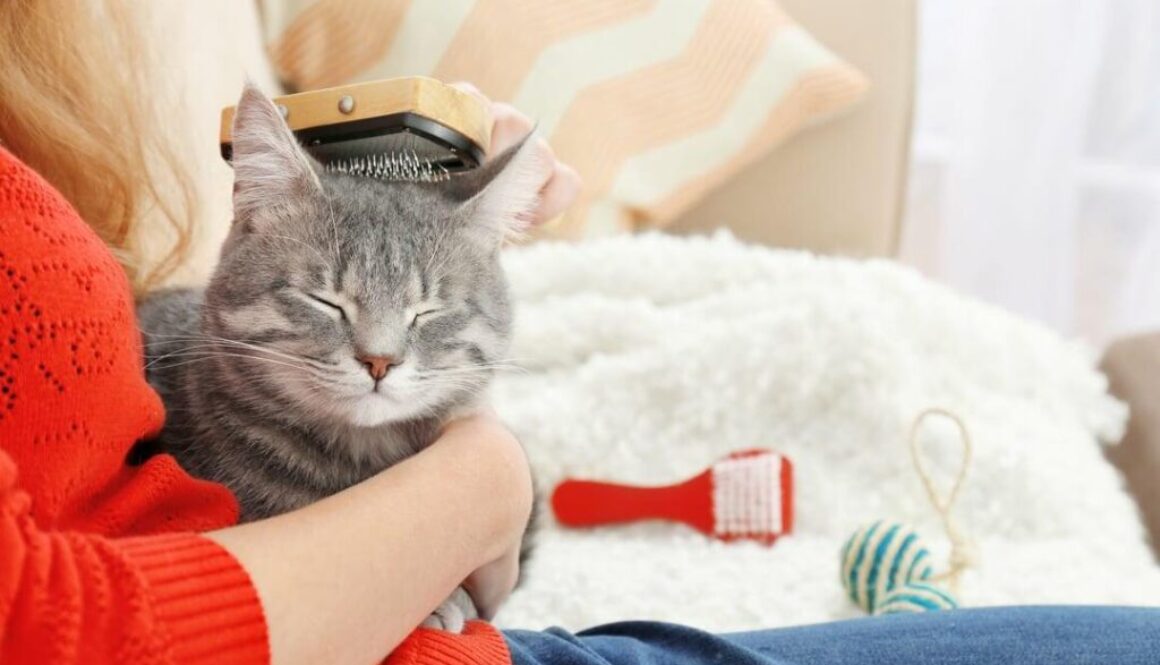
If you think your cat is pretty attractive, she’ll look even better if you give her a good grooming yourself. While her scratchy tongue does a lot to remove dirt and other substances that stick to her coat, a good quality grooming brush can make her even cleaner. A brush will remove whatever dirt and dust remains on your cat’s fur, particularly in places your cat finds difficult to reach.
Besides removing dirt and debris from your kitty’s coat, regular brushing will also help bring out the natural oils in her skin. These oils will keep her hair looking shiny and healthy, and also discourage drying and flakiness of her skin.
Help with hairballs
All cat owners are familiar with hairballs, those disgusting wads of hair your cat vomits up on the floor. Hairballs form when your cat ingests large amounts of fur while grooming herself. The tiny hook-like structures on her tongue are good at pulling out loose hair, which is then swallowed.
Some of the hair passes through the intestines and is deposited in the litter box, along with your cat’s poop. Other times, the hair wads together and sits in your cat’s stomach, where it causes irritation. Your cat eventually throws up these wads in a tube-like shape after they have passed through the esophagus on the way out.
Even worse for your cat than vomiting up the wadded up hair is trying to pass it. Your cat’s digestive system may try to move the fur ball from her stomach into the intestines, instead of up through the esophagus. If the hair gets stuck here, it can cause a blockage. An intestinal blockage can be life threatening and requires immediate intervention from a veterinarian.
By brushing your cat weekly—or even daily in the spring and fall when shedding is at its highest—you can help keep hairballs to a minimum. If you are brushing away loose hair, less of it will end up on your cat’s tongue and inside her stomach.
Cleaner furniture
You have no doubt noticed that your cat leaves hair on your furniture—and likely your clothes and your rugs, too. This happens when loose hair falls off your cat’s body and clings to soft surfaces. You can try getting it off with a heavy-duty lint roller after the fact, but a better idea is to regularly brush your cat so that loose hair gets caught up in your brush instead of on your belongings.
Daily brushing is most effective for minimizing the amount of cat hair deposited on furniture and flooring. The more hair you can remove yourself, the less there will be to scatter around the house.
Trimming nails
Another important aspect of grooming your cat is trimming her nails. Cats’ nails grow continuously, just like human fingernails do, and if you don’t trim them, they will become longer and sharper over time. The won’t grow past a certain point since they simply shed out the top layer the old nail and replace it with a new one, but your cat will still have some pretty crazy talons if you don’t intercede.
You can eliminate a number of problems by trimming your cat’s nails on a regular basis, at least once a month. By doing so, you will minimize the damage on your furniture and carpeting. Hopefully your cat has learned to use a scratching post to work out her nails, but in the event that she’s inclined to use the couch or your new rug, the destruction will be less if the sharp tips of her nails have been trimmed.
Another reason to keep your cat’s nails trimmed is for your own safety. Have you ever been accidentally scratched by your cat when she is playing with you, leaping off your lap or resisting medication you need to give her? The damage in these situations is a lot less if your cat’s nails are trimmed, and the sharp points have been removed.
And finally, a good reason to trim your cat’s nails is to keep her from getting stuck on things. Window screens, scratching posts, throw rugs and your clothing are all items that can easily snag a sharp feline claw, leaving its owner helpless to remove her paw. If you keep the sharp tips clipped off your cat’s nails, you’ll prevent “claw catching” from happening.
Physical exam
If you are like most cat owners, you spend quality time petting your cat. When caressing your kitty, you are likely to accidentally discover any unusual wounds, lumps or bumps that might be present.
Rather than randomly coming across problems that might exist on your cat’s body, you can also use grooming sessions to deliberately look for anything abnormal on your cat. Skin irritations, lumps, cuts and even ticks and fleas are most easily discovered when you are focusing on grooming your cat and keeping an eye out for problems rather than absentmindedly stroking her fur.
As part of your grooming sessions, take a look into your cat’s eyes and look for any irritation or discharge. Peek inside her ears too and make sure they look clean. Note any dark discharge deep inside the ear as this may signal a problem like ear mites or a bacterial infection. Before or after you trim her nails, examine her paw pads to make sure they are free from cuts or abrasions. (If your kitty goes outdoors, keep a look out for trapped burrs and foxtails too.) Give your cat’s entire body a once-over with your hands to feel for any lumps, and be sure to conduct a visual inspection of the skin around her neck and on her belly to look for any skin irritation.
If you uncover something on your cat’s body that shouldn’t be there, contact your veterinarian and veterinary team for advice. The problem may be small, or could indicate a more serious condition.
Bonding
If you ask any Cat Trainer, one of the greatest rewards of regular grooming sessions with your cat is deep bonding. The time you spend with your cat as you brush her coat, trim her nails and examine her body will go a long way toward fostering the relationship between the two of you. Most cats love to be brushed—the sensation replicates the grooming they experienced as kittens from their mom—and they often seek out this kind of attention.
You’ll know your cat is enjoying her grooming sessions because you will hear her purring while you are brushing her. After a while, she will come running when she see’s you take out the grooming brush. Whether you position her in your lap or on a table, it won’t be long before your kitty comes to associate grooming time with love and affection from her favorite human: You.
Learn the dangers of leaving a dog alone in a parked car—even for a few minutes.
No Single Riders
We’ve seen them in the parking lots of strip malls and supermarkets. Dogs left in parked cars, maybe sitting in the driver’s seat quietly looking out the windshield or pacing in the backseat, barking at passersby. We may even have been tempted to run into the store quickly ourselves while our canine friend was in the car.
But it’s never a good idea to leave a dog alone in a parked car. Never. And dog experts from breeders and dog trainers to vets to behaviorists strongly advise dog owners to either leave their pets at home while running errands, or only visit those stores where the dog is welcome inside. Now that summer has arrived, here is what you should know about the dangers of leaving a dog inside a parked car.
How Hot Can Your Car Get?
If you stop to think about it, you may realize that a car is a heat trap waiting to happen. Made of metal and often painted in dark colors, cars attract heat instead of repelling it. Plastic, rubber, vinyl, and glass components also trap, conduct, and distribute heat efficiently and effectively. You know that feeling when you sit on a hot vinyl or leather seat when you get back into your car? Or put your hands on the plastic steering wheel? Parking in the shade only does so much to reduce these effects.
Multiple studies have revealed that the temperature inside a parked car rises rapidly—more rapidly than you might expect. One study conducted in 2002 found that the temperature inside an enclosed car rose 19 degrees F in just 10 minutes. The study further found that 80 percent of the overall temperature rise inside the car occurred in the first 30 minutes, and that cracking windows was not effective at reducing or delaying the temperature rise.
Canine Anatomy and Rising Temperatures
A dog’s physical makeup only exacerbates the effects of the rising heat inside a parked car. While dogs can sweat, their sweat glands are located only in their noses and paw pads—not much surface area to deal with hot temperatures. A dog primarily deals with heat through panting, but panting alone cannot keep up with the rapid rise of temperature in a hot car. When a dog pants, he releases moisture, and the more he pants to keep up with a car that continues to get hotter, the greater his risk of dehydration.
Additionally, a dog’s average normal body temperature—taking into account the wide variety of sizes and types of dogs—ranges from 99.5 to 102.5 degrees F. When his temperature reaches 106 degrees F, a dog can begin to show signs of heat stroke, including drooling, reddened gums, vomiting, diarrhea, loss of consciousness, uncoordinated movements, and collapse. Heat stroke can cause unseen problems, too, such as kidney failure, intestinal bleeding, and swelling of the brain. And the longer a dog is exposed to extreme heat, the more intense the damage to his body.
According to the American Kennel Club, a dog can begin to feel the adverse effects of the heat when the temperature is just 81 to 85 degrees F. And as we’ve already learned, the temperature in a car can rapidly climb much higher than that in just 10 minutes.
Some dogs are more sensitive to heat and may show signs of heat stroke sooner than others. Young puppies and senior dogs are more fragile health-wise to begin with, and dogs with thick fur, short noses, or pre-existing medical conditions also are predisposed to heat stroke. (If you suspect your dog has heat stroke, follow the steps in the sidebar “Cooling Off” and take him to the vet immediately.)
Taking Action Against Pet Hyperthermia
You may be saying to yourself, “Of course I would never leave my dog in a hot parked car.” But what should you do if you see this situation in the parking lot of the supermarket?
Most animal care specialists suggest that you first try to locate the owner of the car in question. Write down the car’s make and model, as well as its color and license plate number. Step into the store nearest to the car, and ask the manager to page the owner. If you locate the owner, express your concern politely, perhaps even offering to stay with the dog outside while the owner finishes up their errand. Remember that not everyone understands the dangers of leaving a dog in a parked car. While you might be understandably upset, confronting someone angrily could lead to their unwillingness to cooperate. Your primary concern should be the safety of the dog.
If, despite your best efforts, you can’t locate the owner, call the local animal shelter or the non-emergency number of the local police department to report the situation. Stay near the car to keep an eye on the dog until help arrives.
What do you do if the dog is showing signs of extreme distress? Your actions to help a dog in this situation may be protected by “good Samaritan” laws, depending on which state you live in. As of May 2019, these 28 states have laws prohibiting leaving an animal confined in a vehicle under dangerous conditions: Arizona, California, Colorado, Delaware, Florida, Illinois, Indiana, Kansas, Maine, Maryland, Massachusetts, Minnesota, Nevada, New Hampshire, New Jersey, New York, North Carolina, North Dakota, Ohio, Oregon, Rhode Island, South Dakota, Tennessee, Vermont, Virginia, Washington, West Virginia, and Wisconsin. The exact language of these laws can be found at www.animallaw.info.
Cooling Off Your Canine
Your canine companion can start to show signs of heat stroke when the temperature is just 81 to 85 degrees F. Even if he isn’t left in a hot car, your dog can be susceptible to the effects of higher temperatures during warmer summer months. Luckily, you can take steps to make sure your dog stays cool and safe.
Make sure your dog has a shady spot to rest if he must be left outside during the day. Keep him inside the cooler temperatures of your home during the hottest parts of the day.
Always provide clean, cool water for your dog. To help your dog maintain his regular temperature, consider adding ice cubes to his water bowl.
Avoid playtime in the hottest parts of the day. Save long walks and games of fetch for early morning or late evening.
Despite your best efforts, your dog may still succumb to hot summer temperatures. If you suspect your pet has heatstroke, immediately remove him from the hot environment, call your veterinary team, then follow these steps:
Cool him off with cool water. Put him in the bathtub, hose him down (make sure the water in the hose isn’t hot), or place a soaking wet towel on his back and apply cool water to the paws. If he is disoriented or unconscious, take special care not to get water in his nose or mouth.
Let your dog drink as much cool water as he wants—but don’t force him to.
Do not administer any medications as you would for a human experiencing a fever.
Get him to the vet as soon as possible for further treatment.
Never use cold water when trying to cool your pet off. This could pose a shock to their system.
Your long-haired dog’s beautiful coat is one of her most endearing features and may be one of your favorite things about her—until her coat needs serious grooming attention. You likely already follow a regular grooming routine to keep her looking her best—but did you know this regular attention also helps you keep her healthy? Learn how regular grooming tasks improve your dog’s appearance AND her overall well-being, and help you prevent the dreaded mats that can occur with long-haired breeds.
Brushing
Beyond just smoothing your dog’s fur and preventing potential tangles and mats, regular brushing helps to remove dead hair, dirt, debris, and dandruff. The stimulation of the brush against your dog’s skin also helps to bring out natural oils and distribute them throughout the fur. Regular brushing also helps you identify any potential pests, such as fleas, or skin problems that may be related to allergies or illnesses. This regular activity can help you catch a health issue early.
How often should you brush your dog? For long-haired breeds, groomers recommend brushing every day to keep the hair free of tangles and prevent matting. Pay attention to areas of friction, such as the armpits or under your dog’s collar, or the spots that rub against her bed when she’s relaxing, such as her hips and shoulders. Brush one small section at a time. If you encounter a tangle or a mat, consider using a bit of cornstarch to help loosen the fur as you gently brush out the tangle.
Petting
Regular petting also serves as a form of grooming, as this human contact helps remove loose hair in addition to the fur you remove when you brush and comb. Petting your dog also allows you to detect any changes in her skin or body in ways that brushing alone may not. Another benefit of regular petting? Improved contentment for both you and your dog.
Bathing
Occasionally your dog may require bathing in addition to regular brushing. To bathe a long-haired dog without causing tangles in the fur, follow these tips:
Brush your dog BEFORE bathing. The water can cause any tangles or mats to set even tighter.
Work from the top down to go with the natural flow of the fur. This includes directing water downward and massaging shampoo in from top to bottom.
Use your fingers to gently (emphasis on the word gently) comb through the fur while you massage in the shampoo. This is another opportunity for you to notice any unusual lumps or bumps on your pet’s skin and body.
Rinse thoroughly (again, from the top down), and consider using a conditioner formulated for dogs to help prevent mats. Make sure to follow the directions on the label for the conditioner to avoid buildup on the dog’s hair and skin.
Allow the fur to dry before brushing.
Trimming
Some long-haired breeds have hair down to their feet—even growing around their foot pads! These dogs may need some trimming around the foot pads to prevent slipping and to remove any dirt that might naturally accumulate. Trimming may also be used as a last resort for mats that refuse to budge after attempts to brush or comb them out.
Rating A+ The BBB only accredits the business management of a school, not the quality of the curriculum, or training programs.
STATE LICENSURE AND APPROVAL
Animal Behavior College is a private vocational school approved by the Bureau for Private Postsecondary Education (www.bppe.ca.gov) under the California Private Postsecondary Education Act of 2009 and Title 5. California Code of Regulations Division 7.5. Private Postsecondary Education. The Bureau for Private Postsecondary Education approval means that this institution and its operation comply with the standards established under the law for occupational instruction by private postsecondary educational institutions. Institutional approval is subject to continual review and the institution must reapply for approval every five years.
DISCLAIMER
Please be advised that Animal Behavior College (“ABC”) is the exclusive entity authorized to provide certifications and/or degrees from Animal Behavior College. Moreover, such certifications and/or degrees are only conferred by ABC following a student’s completion of an ABC-administered program. No other entity or individual has authority to confer certifications and/or degrees on ABC’s behalf. Any other entity or individual who attempts to do so is acting without express or implied authority from ABC.
GI BILL® TRADEMARK ATTRIBUTION
GI Bill® is a registered trademark of the U.S. Department of Veterans Affairs (VA). More information about education benefits offered by VA is available at the official U.S. government Web site at https://www.benefits.va.gov/gibill
Animal Behavior College, 27509 Avenue Hopkins, Santa Clarita CA 91355-3910 Contact Us



 After your dog has earned a therapy dog certification from a reputable organization, your next step is to get involved with a therapy dog group that regularly pays visits to people in need. Regional therapy dog organizations make arrangements for therapy dogs and their handlers to visit places that appreciate canine visitors. Some clubs focus on veterans’ groups and nursing facilities, while others get involved with library programs dedicated to helping children learn to read.
 vision! The aisles at your pet store likely will offer many varieties of the following: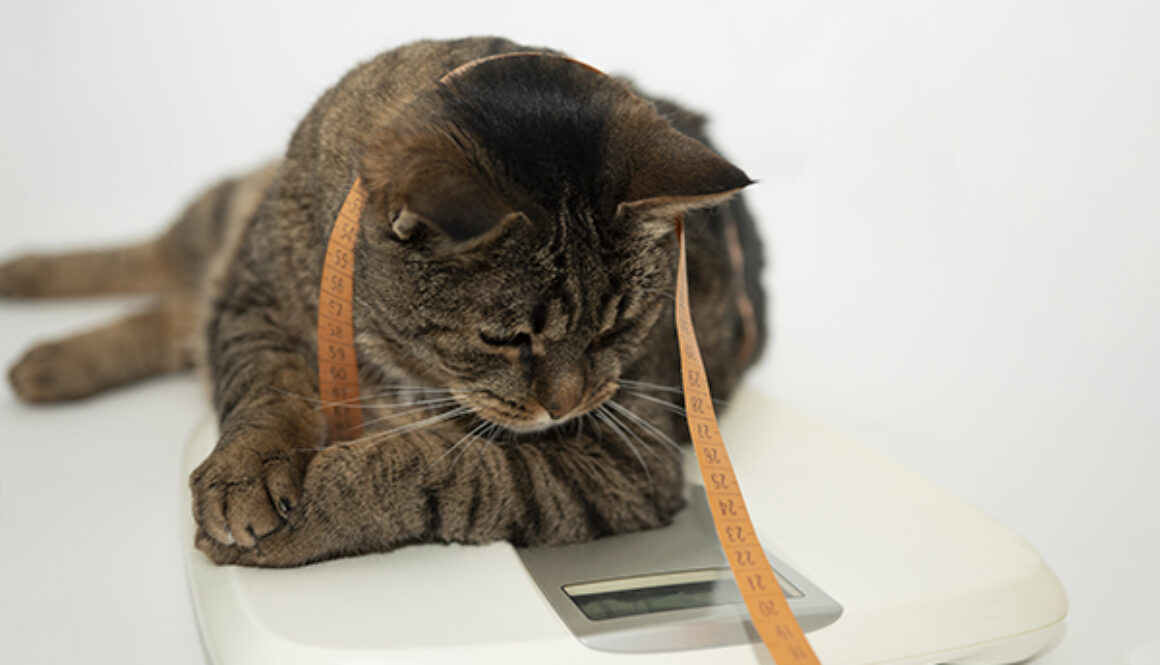
 multi-pet household, it’s imperative to monitor meals to ensure that pets eat their designated amounts and don’t steal from one another. Typically, dogs will eat all the food in their bowl the moment its placed in front to them. It’s a matter of making sure that the one who finishes first doesn’t then move on to its friend’s bowl.


 like human fingernails do, and if you don’t trim them, they will become longer and sharper over time. The won’t grow past a certain point since they simply shed out the top layer the old nail and replace it with a new one, but your cat will still have some pretty crazy talons if you don’t intercede.