Hi everyone! My name is Jodi Murphy, and I want to share a little about myself with ABC graduates.
I have been a member of Groom Team USA for four years ranking within the top four groomers in the country.
In 2004 I was ranked the number one groomer in the United States. I was also awarded Best American Groomer in 2005 and 2006 for my multiple wins in the contest ring.
I stamped the international contest ring in 2004, where I won both gold and bronze medals in Barcelona, Spain.
I captured the World Championship title in the prestigious Oster Invitational Tournament of Champions in 2006.
Becoming one of the top four groomers in the country landed me a position on the travelling team for Groom Team USA. It was one of my biggest accomplishments. International competition was an unbelievable experience, plus travelling to these amazing places while doing something I love made it that more fabulous.
In Milan, Italy, I defeated the best of the world in a competition consisting of 13 countries of world renown groomers and walked away with yet another gold in 2007.
After achieving all my goals in the contest ring, I am now here to share my many years of knowledge and experience.
Some of you might wonder how any of what I just shared is relevant.
First, current GIP students of Animal Behavior College have started to watch several of my videos, which are now part of the curriculum at ABC. I am very excited about this. My passion has always been to educate groomers!
Secondly, for ABC alumni, I would love for you to have the opportunity to learn from me as well. I have produced a complete instructional video series available to help educate new groomers and help seasoned groomers hone their skills. My continuously growing library of videos is now available through my streaming site; watch.jodimurphy.net.
As part of my support for continuing groomer education and special for ABC alumni, all GIP alums who subscribe to my library can get the following discounts.
10% off on a monthly subscription
15% for three months
20% for 12 months
I sincerely hope that ABC groomer graduates will subscribe and continue their educational path. In future editions, I will share more offers, stories, and opportunities, but for now, I will close by saying it’s great to be a part of this group, and best wishes for your continued education!
We know that animal lovers like you are all about helping pets. We also understand you want to assist pet lovers. The desire to help and make a difference is a hallmark of what is known as giving professions. Examples of giving professions include medical professionals; (human and animal), teachers, social workers, animal trainers, groomers, and more.
This is in no way to suggest that there aren’t many people from all walks of life that love helping others. It does mean that high percentages of people who devote their time to assisting pets and people live better lives are inclined to share what they know and aid others in getting involved.
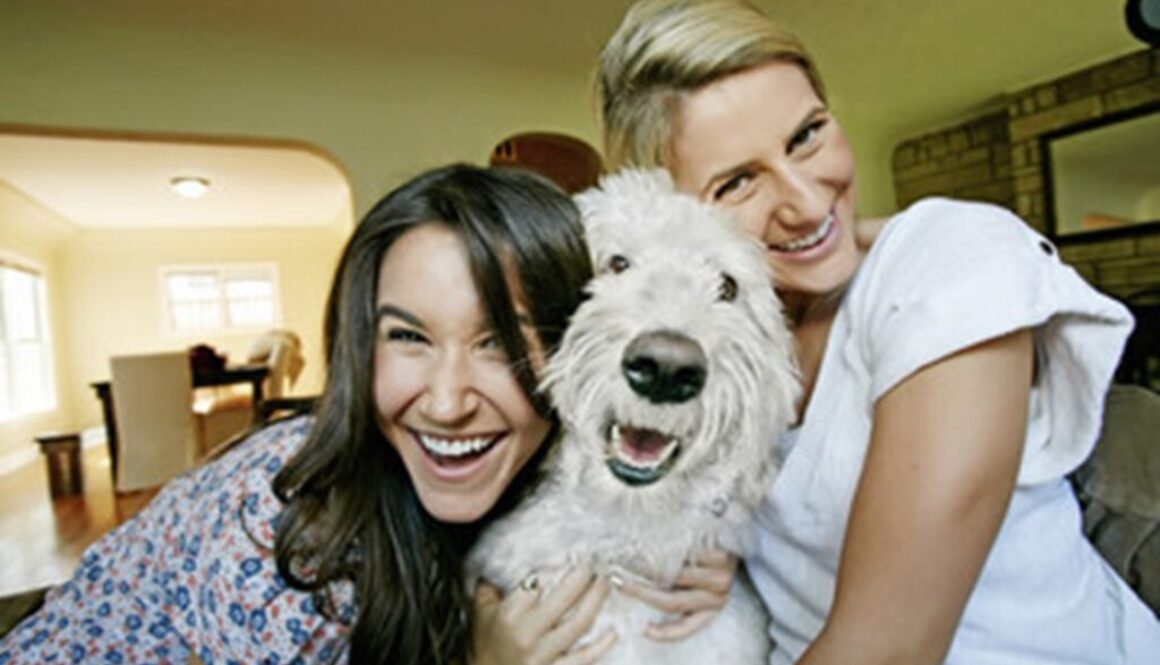
The motivation to help and give back can sometimes create challenges. It’s one reason why some folks are uncomfortable with the idea of charging people for assistance.
The desire to give back is why so many people in animal-related professions, dog trainers, veterinary assistants, pet groomers, feline behavior experts, aquatic experts, and zoo/exotic animal team members volunteer to assist shelters, rescues, veterinary vaccination clinics, and more.
Giving back is what makes Students Saving Lives so successful. Did you know that since 2004, ABC students have donated over 185,000 hours to shelters and rescues across North America?For many of you reading this article, ABC provided a stepping stone for your entry into the pet industry. For some, ABC gave you the knowledge to take your careers to the next level. We hope you all live your dream of working with and helping animals. Why not guide and encourage others to take a similar journey?
Refer a Friend or RAF because, at ABC, we love acronyms, is a referral program in which ABC graduates or mentors who refer someone to the school earns $100. Of course the person you refer has to enroll in one of our main programs. Moreover, anyone who refers a student who enrolls in our on-campus classroom program will make $300. Some restrictions apply. You can submit your referral through your alumni center, or go here.
In today’s economy, why not earn extra cash by sharing the possibilities open to fellow animal lovers?
RAF is open to all ABC graduates and mentors.
Helping animals makes the world a better more loving place. Special thanks to all of you for your devotion and caring.
*Note: Active students may earn a referral gift card valued at $100, 1 referral per year.
Hello everyone, and welcome to this newsletter’s edition of What’s Waggin.
So, what is going on?
Well, on a personal note, this year, my wife and I will attend two weddings and the birth of our first grandchild. A girl is due in September. That’s been on my mind quite a bit, and while I don’t often share personal things, this one is exciting and noteworthy enough to share. The weddings are fun, although perspective is such an interesting thing. When I was my kids’ age, I thought of myself as a mature adult with 10+ years of adult experience under my belt. Looking at the early 30s through the prism of twice those years, I marvel at how young they are.
Anyway, enough about me, let’s talk about ABC.
All programs are doing well. We are finishing a revamp of our Veterinary Assistant Program, having completed revisions on our Dog Trainer Program earlier this year. All programs are works in progress as information changes over time.
Enrollments are steady, with the Zookeeper Assistant Program showing exceptional gains this year. It doesn’t surprise me that this program is so popular.
We get a lot of feedback from students and graduates about our programs. With 35,000+ alumni and 3,000-4,000 students in our programs at any given time, the fact that we get feedback on our courses should be a surprise to none.
One thing that surprised me is how many people tell us about the emotional and mental health benefits they gain from our programs.
Since Covid, we have all heard about an increase in people reporting feelings of isolation and dysconnectivity. While working remotely has benefited many, workers don’t have the same opportunities for in-person interaction in office working environments. While this is not a sociological report and commentary, the 24-hour news cycle, social media, economic stress, and the ability for people to isolate and remain in their bubbles have increased anxiety and depression. I understand complex challenges like those mentioned above do not have simple solutions. I also know numerous ABC students and graduates have reported tangible emotional health benefits from taking our programs.
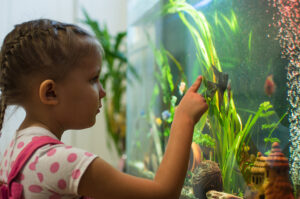
For example, when we created our Aquatics Maintenance Program, I assumed people interested in designing, building, and maintaining fresh and saltwater aquariums, primarily hobbyists but also people looking to start their own businesses, would take this program.
There is an interesting correlation to emotional health with this program. Some people feel as though the world is out of control. So much around us is beyond our ability to influence, and at times many things we can’t control feel like they can negatively impact us. This can be anything from Covid to feeling isolated, disconnected, etc. About 30% of the students who take this program reported a sense of calm and additional confidence.
Frankly, when I first heard this, my reaction was; really? How would keeping fish and designing aquariums help? The answer was surprising. For some folks, the ability to create beautiful environments, control and regulate how those miniature worlds function, help living animals thrive in this environment and assist like-minded people with this passion is a blessing to them. It gives some students a sense of control, which is lacking in other parts of their lives. It’s also meditative for some. Plus, anyone who can keep a goldfish alive for more than six weeks is magical in my eyes.
Anyway, I have gone on long enough, and thanks to all who have read this far. I look forward to sharing more with you again in our next edition!
Dog grooming can be one of the most exciting and rewarding jobs in the world, but it comes with some difficulties. The days you dream of in the salon with animals you adore may come with stressful schedules, challenging appointments, and lots of fur! Wahl Animal ELITE Educator Sue Zecco offers five pieces of advice to beginner and current groomers.
The first thing is to AWAYS continue education but be careful!
You shouldn’t just go to YouTube for your education. Although you will find some very good and informative videos on there, you will also find some unreliable grooming/advice, so be careful. If you’re just starting, enrolling in a grooming school or subscribing Super Styling Sessions will give you credible education to help you develop.
Tools and equipment are very important
There are various tools and equipment from tables, crates, clippers, shears, shampoos, etc. that you will need when grooming. Exploring your options may help you decide, but I always try to work with companies that have good customer service, such as Wahl. I have tried clippers from most companies out there and have made Wahl my clipper of choice for over 25 years now.
Start with the necessities
When you are choosing equipment, remember that grooming is tough on our bodies. High quality products should be in your toolbox, like good clippers and trimmers. Additionally, a table and tub that are easier on your body. Invest in tools that will help preserve your health as much as possible. Electric tables save our backs, clippers like Wahl are made to be balanced and fit your hand more comfortably. When purchasing a clipper, try to imagine clipping all day, 5 days a week – will the clipper fatigue your hand? Anti-fatigue mats, such as PawMat, for you and the dogs will help make grooming more comfortable.
Don’t sell yourself short
Charge what you are worth. Don’t make up prices, see what the going rate is in your area and charge accordingly. We do quality work here and are worth every penny we charge. Never put down other salons or groomers, even if they are charging less than you. Pay attention to your own salon, including those within and the clients. They are who matter most.
There is a book by Khris Berry called “Rosetta Bone, the Language of Dogs”, which I would highly recommend to new groomers.
Sometimes being able to properly read the dogs the second they walk through your door is so important for a pleasant grooming experience for you and the dogs. I really think it takes lots of experience to do this, but this book will definitely open a lot of eyes and possibly keep you a bit safer.
We hope that these tips are encouraging and fill you with excitement when it comes to your future as a groomer. We wish you the best of luck in the future, and thank you for helping keep all animals healthy, happy, and beautiful!
“Believe in the me, that believes in you.” I say this frequently in my seminars and in the salon I co-own with Corina Stammworthy – The Laundromutt. It resonates with me because many groomers, including myself, say “I can’t do what they do, because…” *Insert endless reasons here.* But there is always someone looking up at you saying the same thing.
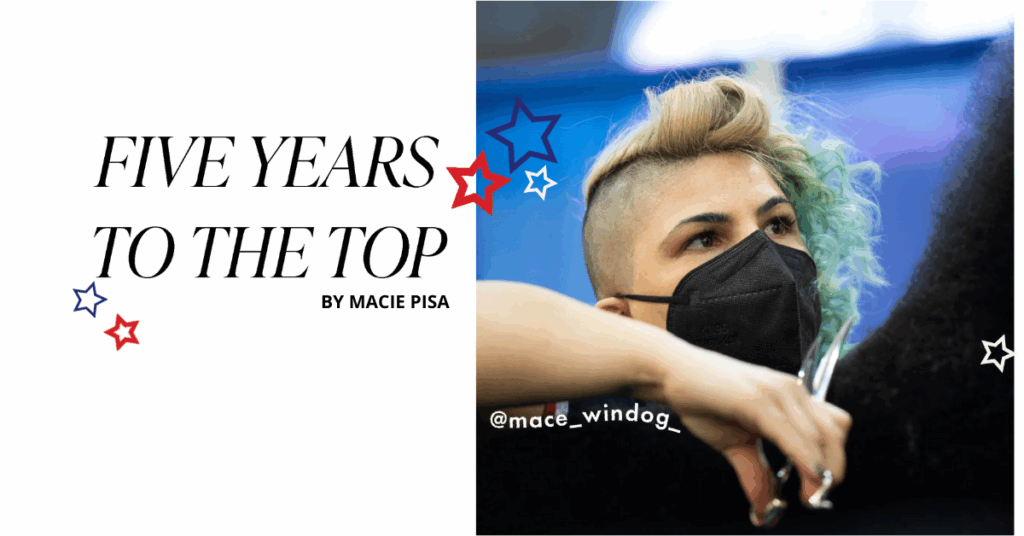
My name is Macie Pisa. As a second-generation groomer, I grew up saying there was no way I was going to be a groomer. It seemed hard, stressful and messy. I wanted to be an interior decorator! I wanted to live in Seattle! I would be cool and artsy! Well, here I am in Buffalo, New York, doing exactly what I said I wouldn’t. I love it, and I still get to be cool and artsy.
I began grooming in 2014 after working two years as a bather for a local salon in Buffalo. I finally decided this was where I wanted to be. I was a cocky, know-it-all kid (some would say I still am), and I give a lot of credit to the owner of that salon for sticking it out, teaching me and giving me an excellent foundation.
She was a kind woman, always helping her community and offering her salon and staff to the city shelter anytime they had a dog in need. It was a great opportunity for me, as I decided to take one of those dogs on as a foster in hopes I could take him to my very first grooming contest. We went on to compete at Groom Expo in Hershey, Pennsylvania, in September 2014. We placed second in Entry, and I was hooked!
At PetQuest in 2015, I competed in Entry again with my 9-month-old, black Standard Poodle puppy, Vlad. We placed first, and I was on my way out of Entry! (There are three levels in competition grooming – Entry, Intermediate and Open, and it takes three first place wins to move to the next level.)
PetQuest was also the first show Corina and I traveled to together, and it was the start of one of the best years of my life. I made lifelong friends, learned, traveled and had a blast. We stuck to the East Coast shows and ate bags of salad, cups of noodles, PBJs and stayed at some questionable hotels. I’m pretty sure we split tacos and margaritas after my placement at that show.
It is expensive to travel all the time. Plus, Corina and I had a baby salon at home to take care of, but we had so much fun it was worth it! That first year we learned how important making friends and splitting the cost of all the expenses was. By March of 2016, I had made my three first place wins, and I was in Intermediate. Then in September of 2016, I was nominated for Up-and-Coming Groomer of the Year AND had made it into Open with the big kids, ready to earn some points!
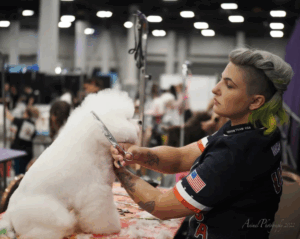
The New England Grooming Show was next, and that’s where I decided GroomTeam was going to be my goal. I hadn’t dared to think I was capable of making it. But it was my first Open show, and I received my first points, seven points on my Bedlington Terrier.
Seven points. It doesn’t seem like much, but it put me on the scoreboard. What is the scoreboard? It’s a list of every competitor that has earned points in that calendar year. It’s kind of a big deal, especially the first time you make it. And I was No. 20! I became determined to get to the top 10 – the cut off for who gets their GroomTeam jacket and who doesn’t.
The next year was interesting. When you are in the lower levels, you hear about the drama and the stress of Open, but it’s easy to stay out of it and keep things exciting. At my first show of 2017 – my second ever show in Open – I was told I had only made it this far because I was pretty and that I wasn’t ready. It was a big blow to my confidence and a rude awakening of my new REAL world of competitive dog grooming. I started to hear more criticism and become paranoid about my skills. I started to wonder if this was really for me. I stopped having fun and ended the year with three points and a lot of frustration.
In 2018, I decided to take time for myself and took the year off. But I didn’t stop grooming. I practiced, learned and watched from the internet as my friends did amazing things. I started to really miss being out there. I missed the rush, the stress, the excitement; and I missed my friends! When competing, you make friends from all over the country, and you see them pretty regularly at shows. It’s special to have people around you who understand your drive and passion for such a bizarre and niche sport. Yes, I said it – SPORT!
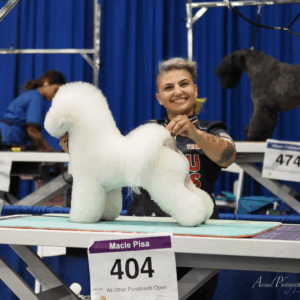
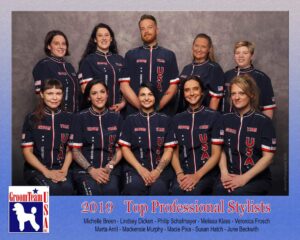
I came back in 2019, and I came back strong. I was determined to make the top 10! I wasn’t going to let other people ruin my fun. So, Corina and I packed up the dogs and hit the contest circuit. We taught classes and started trying to get more time to enjoy the places we visited. It was a great year filled with amazing dogs, and I ended the year in the TOP FIVE! I had surpassed my goal and was going to receive my jacket.
I had so much fun competing against so many amazing groomers and pushing myself to see how far I could get. It felt so good to prove to myself and to the people that told me I couldn’t that I absolutely could! In March of 2020, I received my team jacket and my official recognition as a member of GroomTeam USA.
Making it onto GroomTeam isn’t the end all. It’s a constant struggle to stay on top. Every year everyone grows and improves, and the competition gets more challenging. It’s great encouragement to continue learning.
But why? Why do we do it? Many competitors strive to be on GroomTeam as a mark of validity as an instructor. We see it as a way for people to know that we know what we’re talking about.
It’s more than just that. There’s something amazing about being the best, about having proof that all your hard work was for something. That out of everyone in your country who competed, you were at the top. You get to the top 10, and then you start to dream bigger – you start to realize there’s another level and you could be the best in the world.
And that is where they get you. Where you get sucked in forever. Where you can never slack or you’ll lose – not an actual game, but the game you play with yourself where you can never fall behind. There’s always another dog, another breed, another trim.
It’s not an easy goal, and it’s not an easy life; but we wouldn’t want it if it was easy.
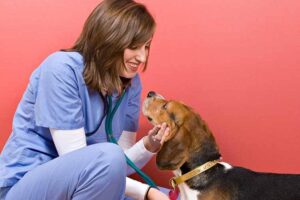
Welcoming home a new pet comes with many responsibilities, one being to make sure that our furry friend has necessary vet visits. While vet visits are essential in maintaining a pet’s health and wellbeing, they can be stressful and sometimes difficult for the pet and its owner. Teaching new pet owners’ different strategies to help make these experiences more enjoyable will not only save time, but also make the pet more comfortable and prepared for future visits. Here are a few tips to share with your clients!
Ensuring a successful vet visit begins at your client’s home. By prepping their pet before heading out the door, the pup is more likely to be calm and comfortable once in the veterinary office. One way to do this is to have your client play with their pet or take them for a walk before leaving for their visit. This allows their dog to release energy and also gives them time to go to the bathroom. That way, once they’re at their appointment, your client won’t need to worry as much about accidents or their pet being too energetic to listen to commands.
Loading a pet into the car can also be tough for new pet owners. To help ease the process, clients can put their dog in a crate with a comfortable blanket or pet bed to make their dog feel more relaxed. Some dogs are comfortable traveling in a dog seat belt/car harness which is also great. Regardless, positive reinforcement is always important, which is why your client should reward their pet with a treat after loading them into the car. This helps their dog know that they’re behaving, teaches them to make more positive associations while in the car, and may help keep them calm during the ride to their vet appointment. Charlee Bear’s Original Crunch is a perfect option since it won’t leave crumbs or stains. Plus, your clients won’t have to feel guilty about overindulging their pet since each treat contains less than three calories. However, some health tests may require your client’s pet to fast the day before their appointment, which is why it’s always critical for them to consult their veterinarian beforehand.
Arriving at the vet is usually the most overwhelming part of the visit, as the pet is introduced to a variety of new smells and sensations, along with the presence of other pets and pet parents. Your client should allow their pet to familiarize themselves with the environment little by little by sniffing and exploring their surroundings. But most importantly, your client should stay close to their pet at all times and reassure them that they are safe. Holding the pup in their arms, if possible, or petting them throughout their appointment are other ways your client can keep their dog calm and collected. It can’t hurt to bring along a comfort item from home as well, like a favorite chew toy, so that the pup has something familiar to ground them while waiting to see the vet. Packing the dog’s favorite treats can also prove beneficial, especially if they are easily motivated by food. Freeze dried and infused with real fruits or vegetables, Charlee Bear’s Meaty Bites are a great reward that will help your client keep their dog focused and well behaved when they first arrive at the veterinary office.
Your client should be mindful of their own actions and demeanor, as this is another way to assure their dog that there’s no need to worry. A pet owner’s own emotions can impact those of their dog, so if a client is stressed or worried during their veterinary visit, their dog will pick up on it. Clients should always speak and react gently to their pet before, during, and after a vet visit in order to create a pleasant experience for the dog and themselves. Rushing the dog into the car, raising one’s voice at the dog, or pulling tightly on their leash are actions that will only cause more stress for the pet. Taking things slow and simple with a relaxed demeanor will surely make room for more success during your client’s next vet visit.
Just like a human’s visit to the doctor, visits to the vet can sometimes be stressful for our pets. Following the above tips can help improve your client’s and their pet’s next veterinary visit, ensuring a more pleasant experience and making future visits much easier. It may take time for clients to introduce these strategies to their pet, so encourage them to start the process now! Overall, the preparedness and patience of your client is essential to a less overwhelming vet experience.
Positive reinforcement, in which a reward (commonly food treats) is provided for the dog for performing a correct response, has become the most commonly used method among professional trainers and pet parents alike. It is easy to see why. Not only is it more humane than using something the dog finds aversive to teach a behavior, it can also be very effective when done correctly.
Using a reward that’s highly desirable is the key to success in positive reinforcement training. The treat must have such an irresistible taste that a dog told to “Sit” will want it more than he wants to chase the squirrel running in front of him. A mildly flavorful treat that elicits a positive response to a training command under normal circumstances might not be tempting enough to keep the dog focused in an environment that is filled with distractions such as people and other dogs.
Inequality of Training Rewards
In other words, all training rewards aren’t created equal. Think of it the same way as with human desserts. Both chocolate fudge layer cake and a wafer can be considered desserts, but which one would you rather have! There is a similar hierarchy in dog training treats. Dogs favor certain treats over others and will learn faster and perform better when these “high-value” rewards are administered during training.
Many trainers and pet parents have discovered this on their own, but now it has actually been validated by science. An international team of animal behaviorists led by Stefanie Riemer of the University of Bern conducted research to determine which works better as a reinforcer in dog training — the quality or the quantity of food rewards. Dogs in the study were required to traverse a 20-meter runway, at the end of which was a bowl with either a high-value food (one the canine subjects had previously shown a preference for) or a much larger quantity of lower-value food. It was found that the dogs ran down the runway significantly faster for the high-value food than for the lower-value food. The study concluded, “Higher quality rewards therefore appear to entail greater incentive motivation in dogs than a greater quantity of a lower value reward.” This was shown to be true, the researchers noted, even though “classic models assumed that an animal’s response strength in operant tasks . . . was directly related to the magnitude (i.e. ‘quantity, intensity, or duration’) of the reward provided.”
Pet Botanics Is #1
So, quality beats out quantity as a training motivator. But how do trainers and pet parents identify the most effective high-value rewards to use in their classes or training their pets? They can try conducting taste tests, of course, but there’s an easier way to sniff out treats that canine’s rate high on the value scale. At Pet Botanics, we’ve done the work for you. We’ve created one of the highest-value rewards you can use to motivate dogs during training.
But don’t take our word for it. Pet Botanics is the #1 training reward brand sold in Pet Specialty retailers throughout the US! Pet Botanics Training Rewards are used and recommended by top professional trainers nationwide because they make training easier, more effective and more enjoyable – for both pets and people.
Quality ingredients are what’s behind Pet Botanics’ longstanding success. Made in the USA, our treats use only the best ingredients, starting with high-quality protein like real chicken or pork liver (which is many dogs’ favorite flavor!). The enticing meaty aroma captures pups’ attention, while the mouthwatering taste keeps the dog focused throughout the training session. Additional flavor sensations are provided by our exclusive blend of BotaniFits™ natural botanical foods, including blueberries, cranberries, rosemary, dandelion, chamomile, peppermint, and more.
We know that individual dogs may favor different tastes and textures, so Pet Botanics offers variety in its range of treats. Our Soft & Chewy Training Rewards come in Beef, Bacon, Chicken, Cheddar and Grain-Free Duck & Bacon varieties. We also offer Jerky Bites and Freeze-Dried treats, two extremely appealing formats that have become popular for use in high-value rewarding.
Puppy Training and Other High-Value Situations
Pet Botanics has also introduced a new reward formulated specifically for puppies, Puppy Bites Training Rewards. Mini-size and just 1.5 calories each, Puppy Bites are easy on tiny teeth and sensitive gums, and won’t overload developing digestive systems, even when given repetitively as a training reinforcer. With a yummy peanut butter aroma and flavor, they offer big motivation in every mini bite, keeping young pups with even the shortest attention spans focused on learning. Pet Botanics Puppy Bites also support puppies’ development with DHA for cognitive health and high-fiber ingredients like pumpkin to promote easy digestion.
A high-value reward is an especially important tool for training puppies, because they get so easily distracted. Not only will a highly coveted reward hold their attention better when learning commands, it’s also very valuable during essential early socialization training, since it can be used to create a positive association when the puppy is exposed to new sights, sounds, experiences, people and other animals.
While high-value rewards produce superior results in general, there are certain extra challenging situations, like puppy training, where they can make an extremely big difference. One of these is training dogs of any age in highly distractive environments, like a group class or a park or outdoor area. Another circumstance that calls for high-value rewards is when the learning difficulty level is high, such as when a brand-new behavior is first introduced. Counter-conditioning and desensitization to erase undesirable behaviors such as fear, anxiety and aggression are other instances in which reaching training goals will be a lot easier with high-value rewards. It is clear that these ultra-desirable treats hold “high value,” not only for dogs, but also for trainers and pet parents, helping them navigate the trickiest training challenges.
For more information on Pet Botanics High-Value Training Rewards, please visit https://petbotanics.com/
To subscribe to the Pet Botanics newsletter, click here.
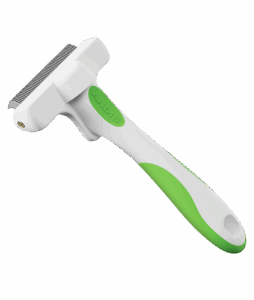
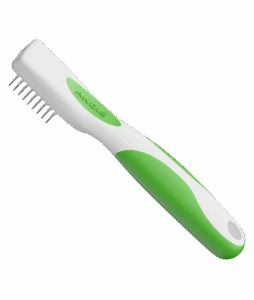
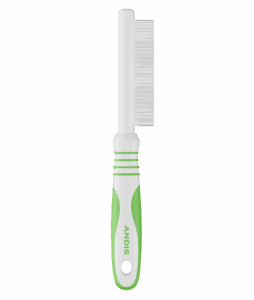
The spring rush is upon us, and we are not only seeing our regular clients, but also those dogs that have not been in the salon in quite some time. This is the time of year where undercoats are packed tight and mats and tangles are more abundant. Owners want their pets to get a spring refresh in time for the warmer months to come. In addition to Andis clippers, these grooming tools will effectively and efficiently help you get through this busy time of year. A few of my Andis ’go-to‘ tools are the Fine-tooth Deshedding Rake, Demattting Tool, Flea Comb, Slicker Brush, and 10” Stainless-steel Comb.
De-shedding
Shedding is a natural process that cannot be stopped, but a deshedding treatment will help to accelerate the shedding process in order to help the skin breathe and will reduce the amount of hair that falls out naturally. The Andis Fine-tooth Deshedding Rake is a great choice to help remove excessive coat when doing a deshed treatment. This rake works excellent with clipped terriers and clip and strips. When used properly, it helps to maintain the integrity of the color and texture of the coat.
Dematting
With an abundance of desheds coming into the salon in the spring, more dogs come in with matted coats as well. This is due to the fact that coats become more dense in the winter months to help provide warmth. The denser the coat, the more likely it will mat. The Andis Dematting Tool breaks up mats and tangles, making it much more manageable to get through the coat. It is so important to break up those mats, because if you leave them in the coat, they will make it more difficult for the skin to breathe, which will increase the likelihood of the dog developing skin issues. After using the Dematting Tool, I always go back in with the Andis slicker brush and a 10” stainless-steel comb. I use this slicker brush and comb on every dog that is on my table. It separates and divides the coat in order to properly prep it for grooming.
Flea Comb
During this spring rush, don’t forget to keep a few Andis Flea Combs handy. They easily remove dirt, debris and pests that find their way into the coat. They are also a great way to remove any excessive eye discharge when the dog is lathered up and soaking in the tub. You can also put a dab of your favorite shampoo on the flea comb and gently comb the corners of the eye. It is a great way to make sure that every pet that leaves the salon is exceptionally clean.
Cleaned and Ready to Clip
You will know that the coat is properly cleaned and prepped when a comb can easily glide throughout the entire coat. At that point, it’s time to grab your favorite Andis corded or cordless clipper and let your passion and creativity help you to create your way. Happy grooming!
Many people thinking about starting a dog grooming career don’t realize the options for specialization within the profession. By choosing to specialize, you can set yourself apart and attract a clientele in search of your specific services.
Dog groomers can specialize in several areas:
Grooming show dogs
Grooming special needs or disabled pets
Grooming senior dogs
Offering creative grooming services
Providing spa treatments
What Does Each Specialization Require? Read on to get a better idea of the different services each type of groomer provides.
Show Dog Grooming
You might think that show dogs require a lot of fancy grooming techniques, but the truth is show grooming is comparatively minimal. Because show dogs are judged against written breed standards, conformation and movement figure more prominently than elaborate cuts.
Dogs should have an impeccably clean, well-brushed coat and clean ears and teeth; and they should have no “doggy” or unusual odor. Show groomers aim for a neat cut that shows off good conformation and downplays any of a dog’s less desirable features.
Grooming Special Needs Dogs
Dogs, like people, can have various special needs. Some might be missing a leg or an eye. Others might be blind or hard of hearing. Any of these challenges require special treatment from a groomer.
Dogs with a missing limb may need a special hammock or harness for support, or they may need to be groomed lying down. A dog missing an eye will have soft, sensitive skin in the empty socket.
Blind dogs may need you to keep a reassuring hand on them at all times. They need extra help understanding what you are doing, so allowing them to smell or listen to the sound of your grooming tools before you use them can ease anxiety. The same sort of advice applies to dogs with hearing loss. They will be less nervous if you go slow and let them understand what you’re doing. Groomers who work with special needs pets find a way to signal their actions.
Grooming Senior Dogs
Because aging dogs can have many issues, this is an ideal opportunity to provide mobile grooming. Senior dogs can be anxious, stiff-jointed, or achy, and their skin thins with age. It’s far better to groom them on their familiar home turf with their beloved human nearby to assist.
In the case of senior dogs, comfort or humanity should always trump vanity. Senior dogs often cannot stand long enough for a full groom. Fancy cuts should not be the focus; health and comfort should be.
Special equipment may be needed, such as belly bands or hammocks for support, a “Happy Hoodie” for ear protection, a mat to cushion feet and prevent slipping, or padded loops to protect necks and underarms.
With a senior dog, groomers often concentrate on the most important task first. That way, if a groom has to stop before it’s done, the main problem areas have been tackled.
It is important to take it slowly and gently. Seniors require a very light touch. Their thinner skin can be sensitive or painful to the touch. Legs should not be pulled out to the side to avoid hurting stiff joints.
Older dogs may need frequent potty breaks, and groomers should keep cleaning supplies within easy reach in case of accidents. Finally, it’s important to know any health concerns ahead of time, such as heart or respiratory problems. That way you can watch the dog more carefully for signs that he needs a rest break or that the groom needs to be stopped altogether.
Creative Grooming
Only recently has creative grooming exploded in popularity. Shows like Pooch Perfect and HBO’s documentary Well Groomed have exposed more of the population to this quirky niche segment of the grooming world in which dogs become art.
Groomers use non-toxic dyes, accessories like ribbons and googly eyes, and their wild imaginations to transform dogs into cartoon characters, flower gardens, or zoo animals like tigers, giraffes, or pandas. A poodle’s top knot might be trimmed and dyed to mimic a bowler hat.
Increasingly, competitive grooming contests offer divisions for creative groomers. Carving and clipping, away, groomers compete in a carnival-like atmosphere. The dogs are so used to it, they often doze through much of the process.
Because of its popularity, many pet groomers are now specializing in creative services. Some dog owners want their dogs turned into tigers or pandas, but many are happy adding a little pop of purple or green to their pups’ ears or tails.
Spa Treatments
More and more groomers are specializing in spa treatments, the more luxurious the better! Clients are willing to pay top dollar for services such as:
an ozone spa bath infused with green tea and aloe
mud treatments to detox and remove dead skin, dirt, and oils
blueberry facials to deep clean and prevent odor, especially in dog breeds with a lot of wrinkles
deep conditioning to nourish and moisturize the coat
coat whitening
“pawdicures” which can include paw soaks, nail trimming and filing, steam towel wrap, massage, and dog-safe nail polish
acupuncture to relieve joint pain or allergies and asthma symptoms
massage
sugar scrubs to exfoliate and unclog pores
salt soaks to relax stiff muscles and nourish the skin and coat
For pups who can’t take the heat, spa groomers may provide non-heat drying cabanas that dry a dog’s coat slowly via air jets in the floor.
Today’s pet owners are willing to spend lavishly on their pets, and spa grooming services are becoming more and more widespread.
Learn Grooming from the Pros
Whether you want to specialize or whether you want to offer more traditional services, dog grooming is a great career that offers lots of job satisfaction without requiring years of study.
Animal Behavior College has been training dog groomers online for many years. Their approved certification program features an externship, so you get hands-on experience working with a mentor groomer near you. Students give ABC (Animal Behavior College) high marks for its student support and quality curriculum. For more information or to enroll, call 800-795-3294 today.
Rating A+ The BBB only accredits the business management of a school, not the quality of the curriculum, or training programs.
STATE LICENSURE AND APPROVAL
Animal Behavior College is a private vocational school approved by the Bureau for Private Postsecondary Education (www.bppe.ca.gov) under the California Private Postsecondary Education Act of 2009 and Title 5. California Code of Regulations Division 7.5. Private Postsecondary Education. The Bureau for Private Postsecondary Education approval means that this institution and its operation comply with the standards established under the law for occupational instruction by private postsecondary educational institutions. Institutional approval is subject to continual review and the institution must reapply for approval every five years.
DISCLAIMER
Please be advised that Animal Behavior College (“ABC”) is the exclusive entity authorized to provide certifications and/or degrees from Animal Behavior College. Moreover, such certifications and/or degrees are only conferred by ABC following a student’s completion of an ABC-administered program. No other entity or individual has authority to confer certifications and/or degrees on ABC’s behalf. Any other entity or individual who attempts to do so is acting without express or implied authority from ABC.
GI BILL® TRADEMARK ATTRIBUTION
GI Bill® is a registered trademark of the U.S. Department of Veterans Affairs (VA). More information about education benefits offered by VA is available at the official U.S. government Web site at https://www.benefits.va.gov/gibill
Animal Behavior College, 27509 Avenue Hopkins, Santa Clarita CA 91355-3910 Contact Us







 The motivation to help and give back can sometimes create challenges. It’s one reason why some folks are uncomfortable with the idea of charging people for assistance.
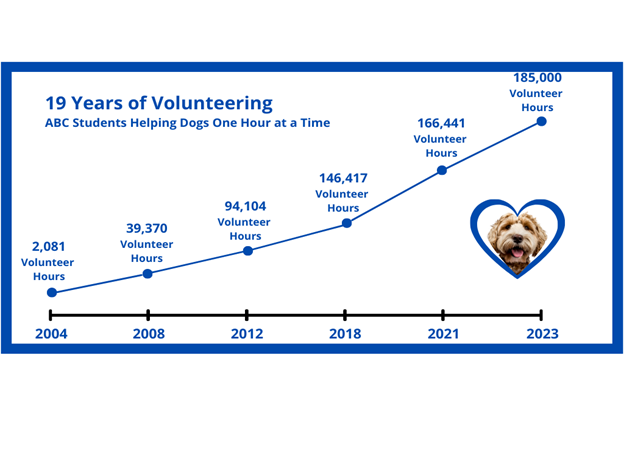 For many of you reading this article, ABC provided a stepping stone for your entry into the pet industry. For some, ABC gave you the knowledge to take your careers to the next level. We hope you all live your dream of working with and helping animals. Why not guide and encourage others to take a similar journey?


 By: Steven Appelbaum, ABC President & CEO
 Enrollments are steady, with the
  For example, when we created our
 Start with the necessities

 My name is
 The New England Grooming Show was next, and that’s where I decided
  I came back in 2019, and I came back strong. I was determined to make the top 10! I wasn’t going to let other people ruin my fun. So, Corina and I packed up the dogs and hit the contest circuit. We taught classes and started trying to get more time to enjoy the places we visited. It was a great year filled with amazing dogs, and I ended the year in the TOP FIVE! I had surpassed my goal and was going to receive my jacket.
 By: The Charlee Bear Staff
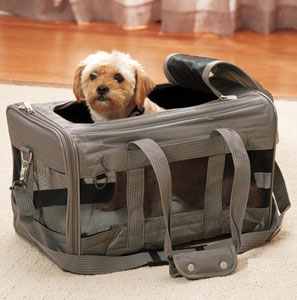 Loading a pet into the car can also be tough for new pet owners. To help ease the process, clients can put their dog in a crate with a comfortable blanket or pet bed to make their dog feel more relaxed. Some dogs are comfortable traveling in a dog seat belt/car harness which is also great. Regardless, positive reinforcement is always important, which is why your client should reward their pet with a treat after loading them into the car. This helps their dog know that they’re behaving, teaches them to make more positive associations while in the car, and may help keep them calm during the ride to their vet appointment.
  Your client should be mindful of their own actions and demeanor, as this is another way to assure their dog that there’s no need to worry. A pet owner’s own emotions can impact those of their dog, so if a client is stressed or worried during their veterinary visit, their dog will pick up on it. Clients should always speak and react gently to their pet before, during, and after a vet visit in order to create a pleasant experience for the dog and themselves. Rushing the dog into the car, raising one’s voice at the dog, or pulling tightly on their leash are actions that will only cause more stress for the pet. Taking things slow and simple with a relaxed demeanor will surely make room for more success during your client’s next vet visit.


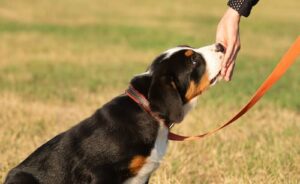 Many trainers and pet parents have discovered this on their own, but now it has actually been validated by science. An international team of animal behaviorists led by Stefanie Riemer of the University of Bern conducted
  Puppy Training and Other High-Value Situations


 Dematting
 Flea Comb


